

The year 1983 didn't announce itself with fanfare. There was no manifesto, no unified movement, no single film that dominated the cultural conversation so completely it eclipsed everything else. Instead, what made 1983 extraordinary was its sheer breadth. Science fiction masterpieces premiered alongside intimate character dramas. Teen comedies evolved into generation-defining statements. Genre filmmakers working in horror, action, and satire delivered works that would only grow more influential as decades passed.
Some of these movies from 1983 became immediate box office sensations, breaking records and defining the summer blockbuster landscape. Others arrived quietly, misunderstood or overlooked by critics who couldn't yet see what audiences would eventually recognize. But time, that most unforgiving critic, has rendered its verdict. These films didn't just survive the test of time; they became essential viewing, shaping everything from filmmaking techniques to pop culture dialogue to how we understand entire genres.
What follows isn't a nostalgia trip. These aren't films that matter simply because they're old or because they remind us of a different era. These are classic films that continue to influence modern cinema, that still spark debates, that remain as watchable today as they were 40 years ago. They earned their status the hard way: one year, one new generation of viewers, one cultural shift at a time.
Here are 10 films from 1983 that have transcended their original release to become undeniable classics.
-
1 Return of the Jedi (1983)
Lucasfilm Watch Now
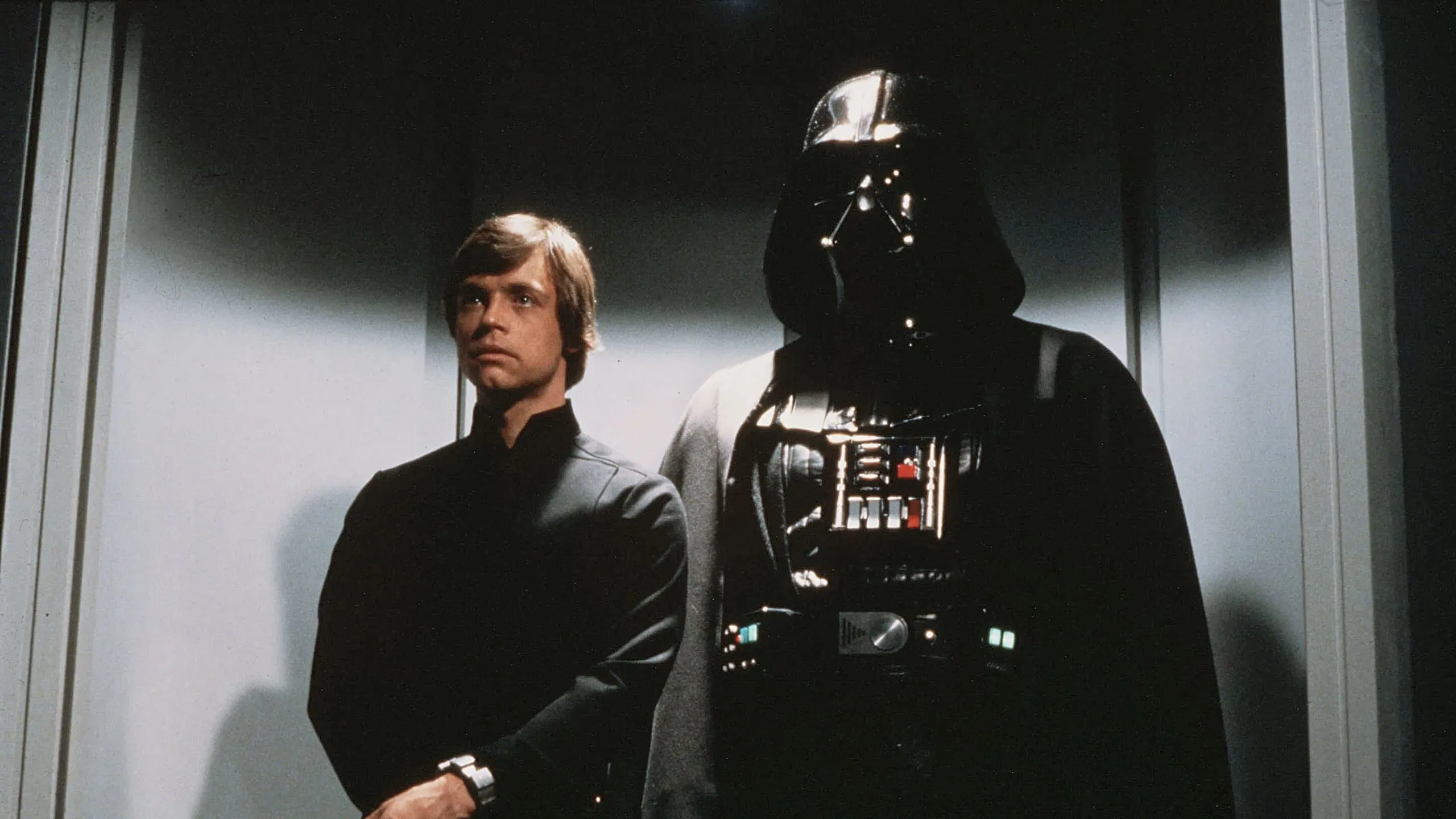
When Return of the Jedi landed in theaters on May 25, 1983, it faced expectations that would have crushed lesser films. George Lucas had already revolutionized cinema twice with A New Hope and The Empire Strikes Back. How do you conclude a saga that had become bigger than movies themselves, that had transformed merchandising, spawned a new generation of filmmakers, and fundamentally altered what audiences expected from summer entertainment?
Director Richard Marquand, working from Lucas's story, delivered something that initially divided fans but has since been recognized as a masterclass in mythic closure. The film's reputation suffered for years under accusations of being too light, too commercial, too focused on Ewoks and merchandising opportunities. Critics pointed to Empire as the superior film, the darker and more sophisticated entry. But that assessment has shifted dramatically according to Rotten Tomatoes, where the film now holds an 83% critics score and 94% audience score.
What modern audiences recognize is that Return of the Jedi accomplished something extraordinarily difficult. It provided emotional catharsis for Darth Vader's redemption arc without betraying the character's previous villainy. The throne room sequence where Luke refuses to kill his father and Emperor Palpatine unleashes Force lightning remains one of the most perfectly executed climaxes in blockbuster history. John Williams' score soars during these moments, turning space opera into genuine opera.
The film also established templates that blockbuster finales still follow today. The three-pronged climax cutting between the ground battle on Endor, the space battle above, and Luke's confrontation with Vader created a structure that everyone from Peter Jackson to the Russo Brothers would later emulate. The emotional stakes, the redemption arc, the sense of a saga truly ending rather than just stopping. These weren't givens in 1983. Return of the Jedi made them essential.
-
2 Scarface (1983)
UNIVERSAL PAY TELEVISION Watch Now
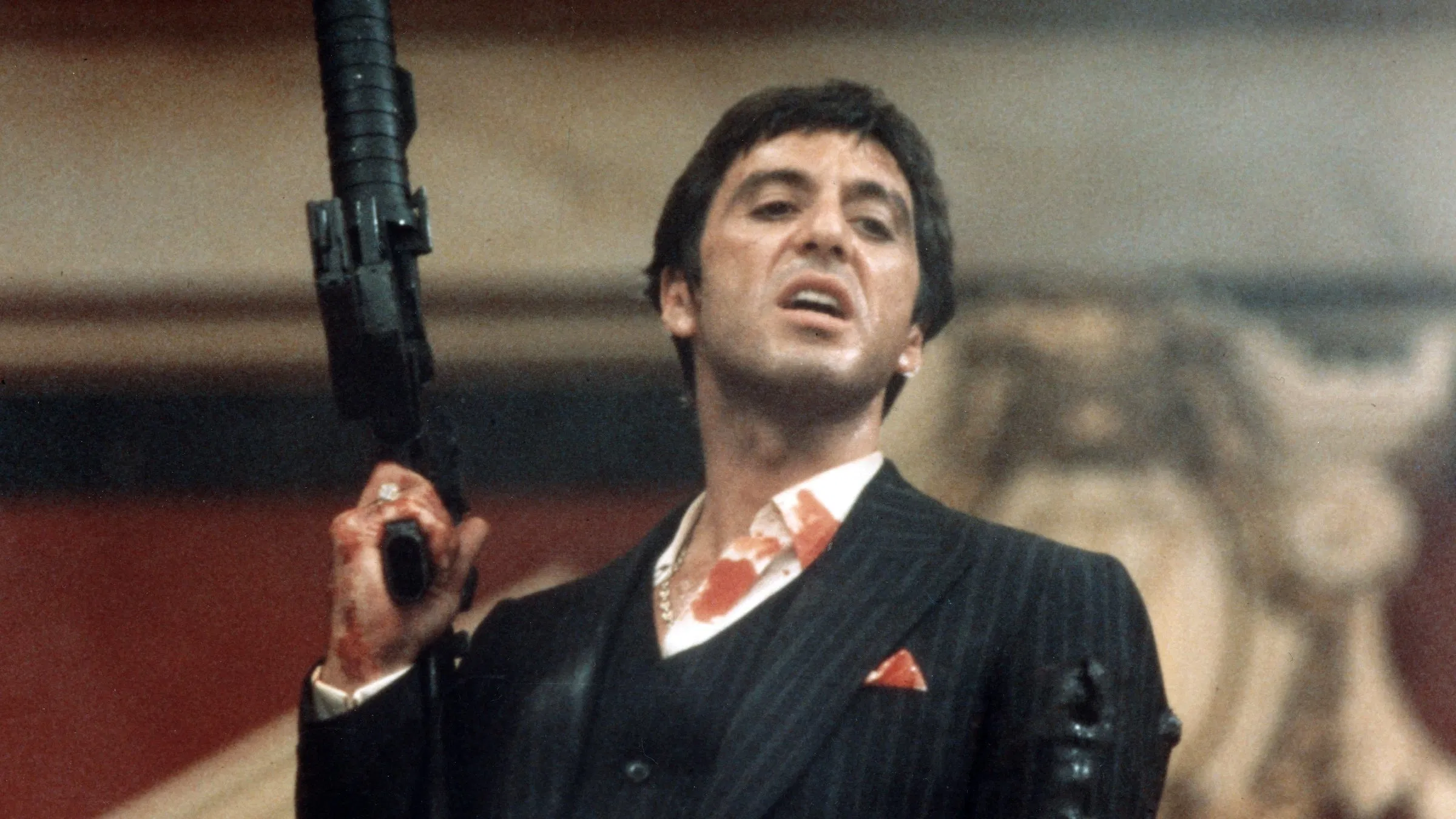
Few films have traveled as dramatic a journey from critical punching bag to cultural phenomenon as Brian De Palma's Scarface. When it premiered in December 1983, critics savaged it. Roger Ebert gave it one and a half stars. The violence seemed gratuitous, Al Pacino's performance over-the-top, the runtime bloated at nearly three hours. Oliver Stone's screenplay, inspired by the 1932 Howard Hawks film, drew accusations of empty excess and exploitation.
Then something interesting happened. The film found its audience, not in theaters but on home video and cable television throughout the late 1980s and 1990s. Hip-hop artists began referencing it constantly. Artists like Nas, Jay-Z, and the Notorious B.I.G. saw in Tony Montana's rise and fall a mirror of their own experiences with the American Dream's dark underbelly. The film's famous quotes became part of everyday language. "Say hello to my little friend" transcended the movie itself.
What seemed like excessive violence in 1983 now reads as unflinching honesty about power, corruption, and the cost of ambition. Pacino's operatic performance, once criticized as cartoonish, is now recognized as perfectly calibrated for a character who lives entirely without subtlety. Tony Montana doesn't do anything halfway, and neither does Pacino. The actor understood that this wasn't realism but rather Greek tragedy transplanted to Miami's cocaine trade.
De Palma's direction employs long takes, split diopter shots, and carefully choreographed violence that influenced everyone from Quentin Tarantino to Martin Scorsese's later work. The Babylon Club shootout, Montana's paranoid descent in the film's final act, and that apocalyptic finale where he goes down fighting, these moments have been homaged, parodied, and referenced countless times. According to IMDb, Scarface is now rated 8.3/10 by over 850,000 users, a complete reversal from its initial critical reception.
-
3 The Outsiders (1983)
WARNER BROS. Watch Now
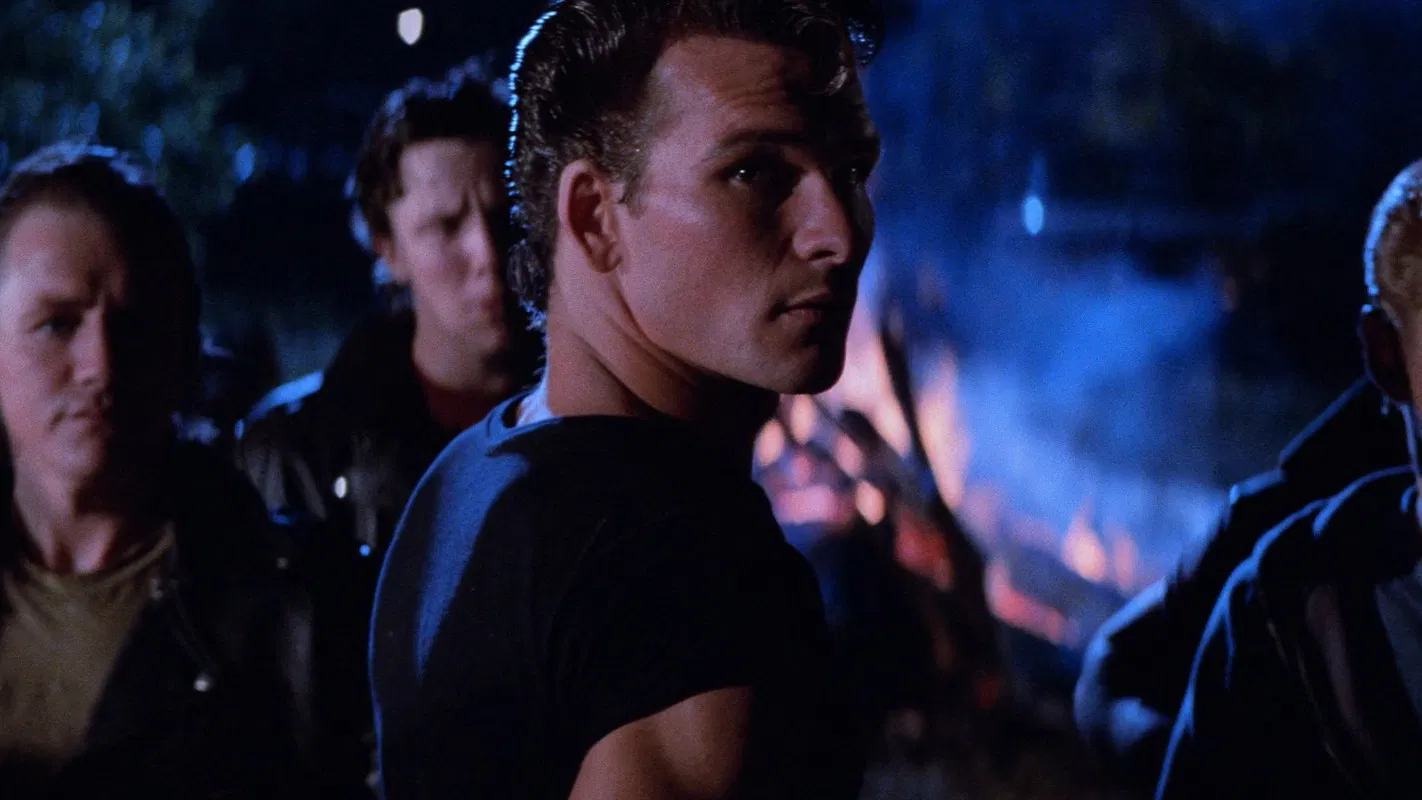
Francis Ford Coppola arrived at The Outsiders from an unusual direction. Fresh off the disaster of One from the Heart, which nearly bankrupted him, Coppola received a letter from a California librarian and a group of students asking him to adapt S.E. Hinton's beloved novel. Instead of another epic, Coppola delivered something more intimate but no less ambitious: a film about teenage alienation that treated its young characters with the seriousness usually reserved for adult dramas.
The cast Coppola assembled reads like a film school exercise in "spot the future star." Tom Cruise, Patrick Swayze, Rob Lowe, Emilio Estevez, Matt Dillon, Ralph Macchio, and Diane Lane were mostly unknowns in 1983. Within five years, they would collectively define 1980s cinema. But their youth and relative inexperience served the material perfectly. These weren't actors playing at teenage angst. They were teenagers navigating genuine uncertainty about their futures.
What makes The Outsiders endure isn't nostalgia for 1960s Tulsa or the novelty of seeing future stars in early roles. It's the film's understanding that class division doesn't disappear with adulthood, that the arbitrary lines drawn between Greasers and Socs reflect larger American divisions we still haven't resolved. The film's treatment of masculinity, particularly how boys perform toughness to hide vulnerability, feels decades ahead of its time.
Coppola's direction emphasizes golden-hour cinematography and classical imagery that elevates the story beyond typical teen drama. The way he films the abandoned church where Ponyboy and Johnny hide out transforms it into almost sacred space. When Johnny tells Ponyboy to "stay gold," it's not just advice from one friend to another. It's a plea to maintain innocence in a world determined to crush it. That moment still destroys audiences 40 years later.
-
4 Trading Places (1983)
Paramount Pictures Watch Now
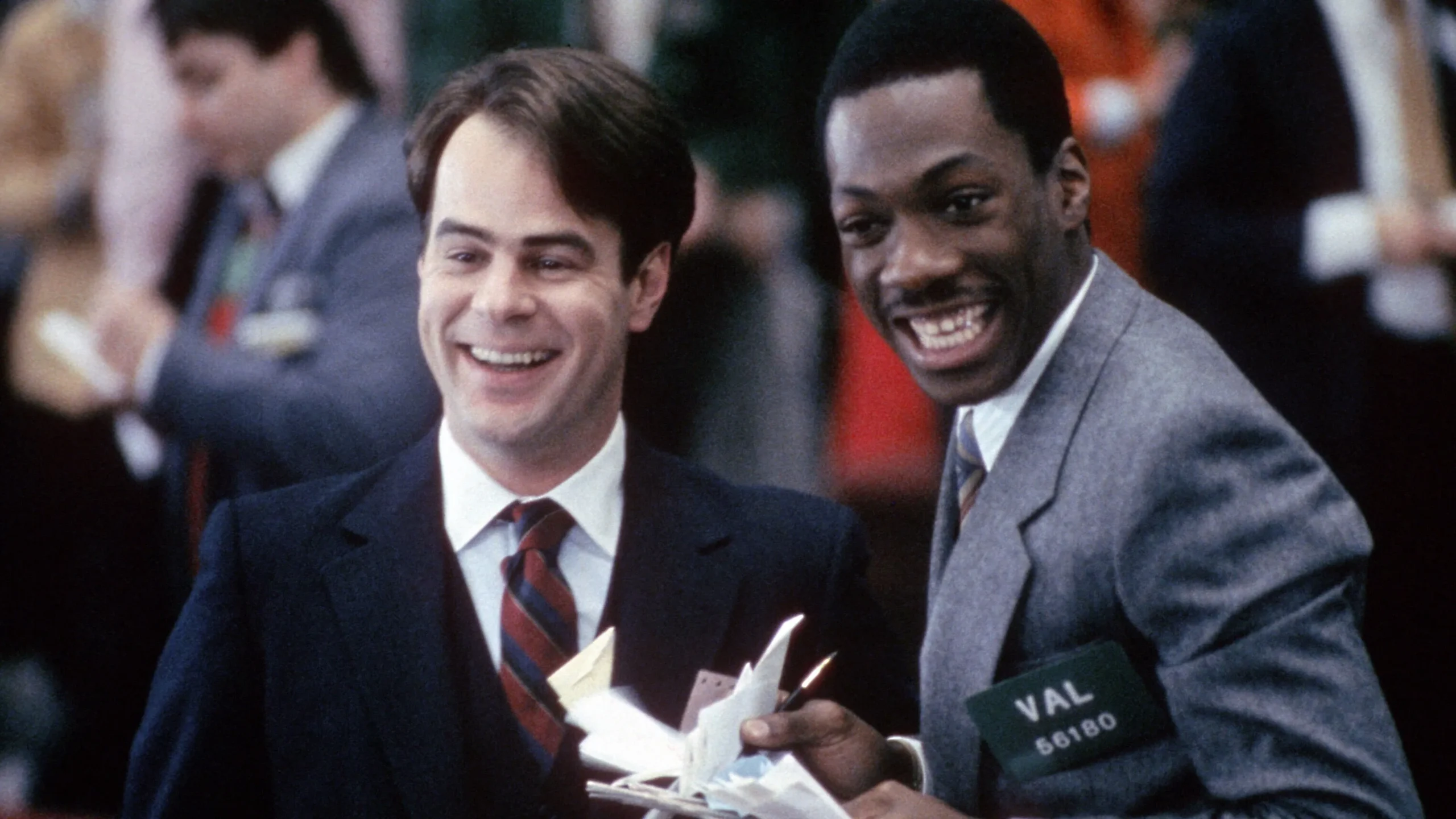
What could have been just another high-concept comedy instead became one of the sharpest social satires of the Reagan era. Director John Landis and screenwriter Timothy Harris crafted Trading Places as a modern update of Mark Twain's "The Prince and the Pauper," but with a vicious edge that exposed class privilege, institutional racism, and market manipulation with surgical precision.
The setup is deceptively simple. Two commodities broker brothers, Randolph and Mortimer Duke, make a bet: can environment overcome breeding? They frame their managing director Louis Winthorpe III and replace him with street con artist Billy Ray Valentine to see what happens. But Landis and Harris aren't interested in simple role-reversal comedy. They're interested in systemic power and who gets to wield it.
Eddie Murphy, in only his second film role, delivers a performance that showcases his complete range. He's hilarious doing physical comedy in his butler scenes and doing exaggerated "rich guy" impressions. But watch his eyes during the scenes where Valentine realizes the Dukes' manipulation. That's not comedy. That's genuine rage channeled through comic timing. Dan Aykroyd matches him beat for beat, playing Winthorpe's descent from entitled privilege to genuine desperation without begging for sympathy.
The film's climax, where Valentine and Winthorpe destroy the Duke brothers through commodities fraud based on advance knowledge of a crop report, is surprisingly complex for a comedy. Landis trusts his audience to follow the scam without over-explaining. The scene works as both satisfying revenge and pointed commentary: the system is rigged, but those who understand the rules can rig it right back. Screen Rant has repeatedly cited Trading Places as one of the most influential comedies for how it balanced laughs with legitimate social criticism.
-
5 WarGames (1983)
MGM Domestic Television Distri Watch Now
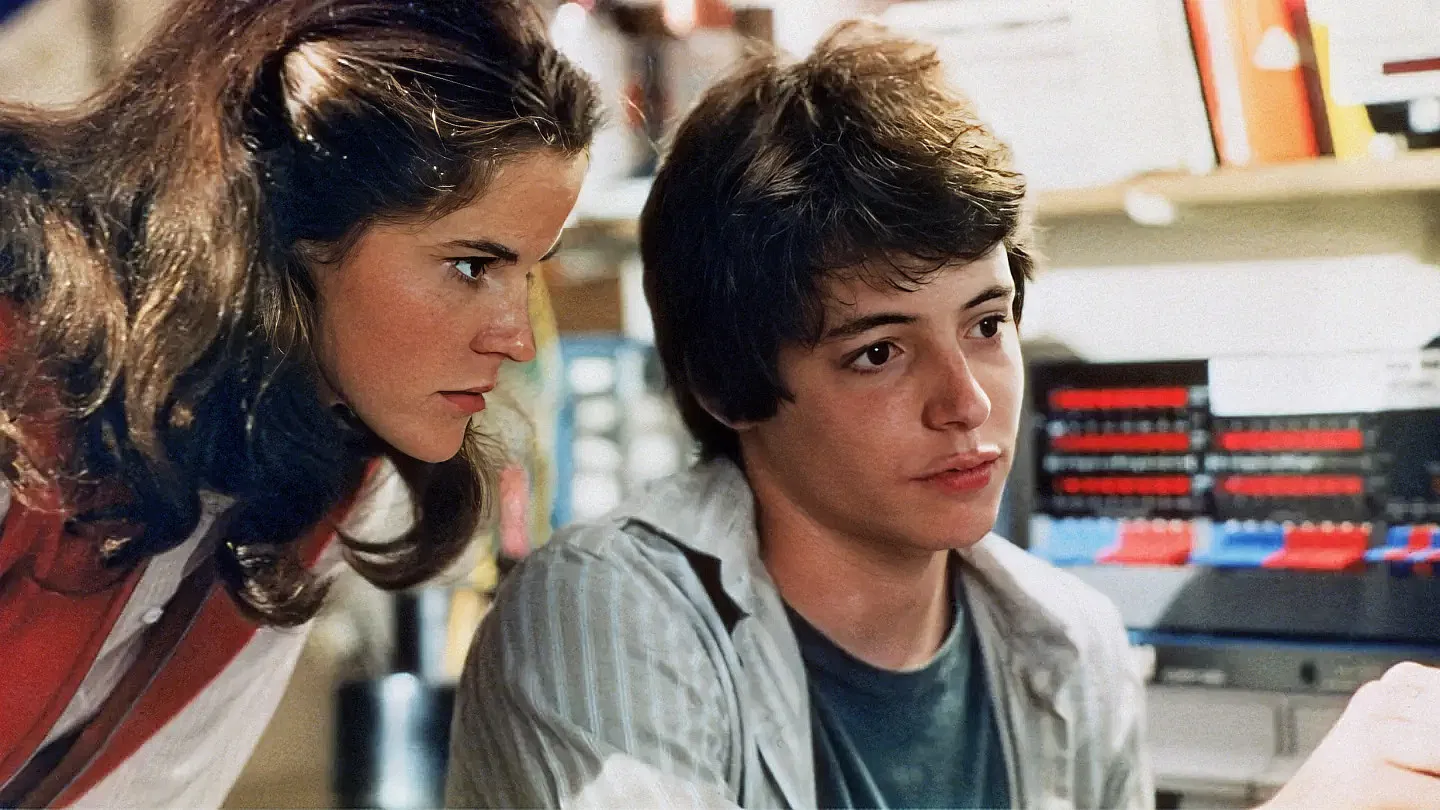
In 1983, the Cold War was entering its final decade, though nobody knew that yet. Nuclear anxiety was tangible, real, woven into everyday life. Children practiced duck-and-cover drills. Television movies like The Day After traumatized millions. Into this environment, director John Badham and screenwriters Lawrence Lasker and Walter F. Parkes introduced a terrifyingly plausible scenario: what if World War III started by accident?
WarGames follows David Lightman, a teenage hacker who accidentally breaks into NORAD's computer system while looking for video games. He unknowingly activates WOPR (War Operation Plan Response), a military supercomputer that begins running nuclear war simulations. The computer can't distinguish between simulation and reality. Neither, increasingly, can the military officials watching the scenarios unfold.
What makes the film a lasting classic isn't just its technical prescience, though it anticipated modern cybersecurity concerns by decades. It's the film's surprising philosophical depth. The climax hinges not on action heroics but on teaching a computer that some games can't be won, that the only winning move in global thermonuclear war is not to play. That lesson, delivered through a simple tic-tac-toe demonstration, provides genuine catharsis without sacrificing intelligence.
Matthew Broderick plays Lightman with perfect teenage arrogance slowly giving way to horror as he realizes what he's done. The film never talks down to its young protagonist or its young audience. It trusts them to understand the stakes, to grasp the moral complexity, to sit through scenes of adults debating first-strike protocols and acceptable casualty percentages. According to The Guardian's retrospective, WarGames helped shape public discourse about artificial intelligence and autonomous systems in ways that remain relevant today.
-
6 Christine (1983)

Paramount Watch Now
John Carpenter arrived at Christine after defining the horror genre with Halloween and The Thing. Stephen King's novel about a possessed 1958 Plymouth Fury gave him material that seemed straightforward: killer car terrorizes teenagers. But Carpenter and screenwriter Bill Phillips understood the story's deeper currents. This wasn't about a haunted vehicle. This was about obsession, masculinity, and the frightening transformation that happens when someone discovers they can control something, anything, after feeling powerless their entire life.
Arnie Cunningham starts the film as every high school underdog: bullied, invisible, desperate for identity. He finds Christine rusting in a yard and sees potential where others see junk. His restoration of the car parallels his own transformation, but Carpenter makes that transformation deeply unsettling. Arnie doesn't become confident. He becomes cruel, possessive, violent. The car doesn't free him. It consumes him.
Carpenter's direction favors atmosphere over jump scares, inevitability over surprise. The way Christine repairs herself, metal slowly bending back into shape while engulfed in flames, is more disturbing than any sudden shock. The film's visual style, all neon-lit darkness and reflections on chrome, influenced everything from Nicolas Winding Refn's Drive to the current synth-wave aesthetic movement.
What seemed like a minor Carpenter work in 1983 has grown in stature as critics recognized its formal elegance and thematic complexity. Keith Gordon's performance as Arnie charts a complete character transformation that's both tragic and terrifying. The minimalist score, dominated by Carpenter's signature synthesizers, creates dread through repetition and texture rather than bombast. It's Carpenter at his most controlled, which makes it all the more effective.
-
7 A Christmas Story (1983)

Warner Bros. Watch Now
A Christmas Story bombed in its original theatrical release, earning just $2 million despite being released during the holiday season. MGM barely promoted it. Critics were lukewarm. It seemed destined to disappear like countless other seasonal films. Then Ted Turner acquired the MGM library, and TNT started airing the film during Christmas programming in the late 1980s. Audiences discovered what the studio had missed.
Director Bob Clark and author Jean Shepherd, adapting Shepherd's semi-autobiographical stories, created something that felt fundamentally different from other Christmas movies. There's no magic here, no miracle on 34th Street, no reformed misers or guardian angels. There's just the specific, lived experience of one 9-year-old boy in 1940s Indiana desperate for a Red Ryder BB gun while navigating the small humiliations and occasional joys of childhood.
The film's genius lies in its absolute commitment to Ralphie's perspective. When he imagines defending his family from burglars with his BB gun, we see his fantasy in full color. When he decodes Little Orphan Annie's secret message and it's just an Ovaltine advertisement, we feel his crushing disappointment. The famous leg lamp that his father wins is simultaneously the tackiest thing ever created and a perfect symbol of working-class pride and joy.
What could have been treacly nostalgia instead feels sharply observed and honest. Clark doesn't sentimentalize the past. The kids are casually cruel to each other. The adults are distracted and sometimes unfair. Christmas morning brings joy, but it's the earned joy of childhood wishes fulfilled, not some cosmic reward for being good. The film's influence on holiday viewing culture is undeniable. According to Collider, the annual 24-hour marathon broadcast has been running since 1997, introducing the film to new generations who recognize its authenticity.
-
8 Videodrome (1983)

Universal Studios Watch Now
David Cronenberg's Videodrome arrived in 1983 and immediately baffled audiences. Too strange for mainstream success, too visually disturbing for comfortable viewing, the film seemed destined for cult obscurity. Instead, it has become one of the most studied and referenced works in horror cinema, its themes more relevant with each passing year.
Max Renn runs a small cable station specializing in softcore pornography and graphic violence. Searching for the next boundary-pushing content, he stumbles upon Videodrome, a broadcast signal showing torture and murder with no plot, no actors, just seemingly real violence. His investigation leads him into a nightmare where reality and hallucination blur, where television signals can cause brain tumors that make victims susceptible to programming, where his body literally transforms into videotape and weapons.
Cronenberg coined the term "body horror" with films like The Brood and Scanners, but Videodrome represents his purest vision of technological anxiety made flesh. The image of a television screen that breathes, that pulsates like living tissue, that Max can push his hand and eventually his entire head into, visualizes media consumption as physical violation. When Max's stomach transforms into a VCR slot that others can insert programming tapes into, it's a brutally literal metaphor for how media shapes identity.
What seemed like science fiction in 1983 now feels like documentary. The film predicted reality television, snuff content circulating online, conspiracy theories about media manipulation controlling behavior, the collapse of distinction between real and simulated violence. Professor Barry Keith Grant, in his study of the film published by BFI, argues that Videodrome essentially predicted social media's effect on consciousness decades before platforms existed.
The film's famous final line, "Long live the new flesh," has become a rallying cry for transhumanist thought and a warning about technology's power to fundamentally alter human experience. Cronenberg doesn't judge this transformation as good or evil. He simply presents it as inevitable, which somehow makes it more disturbing.
-
9 Risky Business (1983)

Warner Bros. Watch Now
Paul Brickman's directorial debut launched Tom Cruise into superstardom with that iconic scene of him dancing in his underwear to "Old Time Rock and Roll." But reducing Risky Business to that single moment misses everything that makes the film remarkable. This isn't a celebration of teenage rebellion. It's a surprisingly cynical examination of how American capitalism colonizes even adolescent sexual awakening.
Joel Goodsen is left alone while his parents vacation. Instead of the typical teen comedy trajectory of parties and hijinks, Joel falls into an affair with a call girl named Lana, accidentally destroys his father's Porsche, and ends up turning his house into a brothel to pay for repairs. The film treats these events not as moral failings but as entrepreneurial problem-solving. Joel doesn't learn that he's made mistakes. He learns that he's good at business.
The final scene crystallizes the film's worldview perfectly. Joel has been accepted to Princeton. The admissions recruiter explicitly tells him it's because of his "entrepreneurial spirit" in organizing the brothel night. Joel's friend Miles delivers the film's thesis: "Sometimes you gotta say what the [expletive]. If you can't say it, you can't do it." The film presents this not as corruption but as Joel's successful navigation of adult reality.
Brickman's direction employs film noir lighting and Tangerine Dream's synthesizer score to create an atmosphere of beautiful emptiness. The famous train station scene where Joel and Lana make love is gorgeously shot but emotionally hollow, all performance and surfaces. That's the point. The film understands that Reagan-era capitalism had turned everything, including intimacy, into transaction and opportunity.
Risky Business influenced countless coming-of-age films, but few matched its willingness to present moral ambiguity without judgment or easy resolution. Joel doesn't learn to be better. He learns to succeed. That the film presents this as both triumph and tragedy is what makes it lasting.
-
10 The Big Chill (1983)

Crowd Pleasers Watch Now
Lawrence Kasdan's The Big Chill gathered an extraordinary ensemble cast and asked them to play characters confronting an uncomfortable truth: they had become exactly who they swore they'd never be. College friends who marched against Vietnam and dreamed of changing the world reunite for a funeral and spend a weekend examining the compromises, betrayals, and quiet surrenders that define adult life.
The film opens with shots of the friends preparing for the funeral, intercut with one character (played by an uncredited Kevin Costner, whose scenes were cut) being dressed by a mortician. That juxtaposition sets the tone. These people are still alive, but something died anyway. Their idealism, perhaps. Their certainty. Their connection to who they were at 21.
Kasdan's screenplay, co-written with Barbara Benedek, gives each character specific failures and regrets. Sam runs his father's sporting goods business instead of pursuing social work. Sarah became a doctor but questions whether that's enough. Harold made a fortune but can't explain what it's for. The weekend becomes a space where they can temporarily pretend the intervening years didn't happen, where they can dance to Motown and smoke joints and feel like the commitments they've made aren't permanent.
What prevents the film from becoming either self-pitying or preachy is Kasdan's genuine affection for these characters. They're not villains for choosing stability over revolution. They're people who discovered that changing the world is harder than they thought, that paying mortgages and raising children creates its own legitimate demands. The film doesn't judge them for their choices. It mourns what was lost in making them.
The soundtrack became legendary, featuring Marvin Gaye, Aretha Franklin, The Temptations, and other Motown classics that serve as both nostalgia trigger and ironic commentary. These songs of love and hope underscore characters struggling to remember why they believed those things mattered. According to Rolling Stone, the soundtrack influenced every ensemble drama that followed, teaching filmmakers how music could function as additional dialogue.
Final Take
Looking back at 1983’s cinematic output reveals something fascinating about how classic films earn their status. These movies didn’t succeed because they captured a moment, though they did. They didn’t endure because of nostalgia, though that helps. They became classics because they were unafraid to take risks, to trust audiences, to tackle themes that seemed too complex or too controversial or too strange for mainstream success.
Return of the Jedi concluded a mythology that changed cinema forever. Scarface went from critical failure to cultural touchstone through sheer force of vision. WarGames asked audiences to think seriously about technology and warfare. Videodrome predicted our media-saturated present with disturbing accuracy. The Big Chill examined generational compromise without easy answers. These films didn’t talk down to their audiences. They challenged them.
What’s remarkable isn’t just that these films have survived four decades of changing tastes and evolving technology. It’s that they’ve grown more relevant, more influential, more essential to understanding both cinema history and the culture that shaped them. They set templates that filmmakers still follow, sparked debates that still continue, and created moments that remain embedded in our collective consciousness.
In an industry obsessed with the next opening weekend, the next franchise installment, the next viral moment, these 1983 classics offer a different lesson. Great films don’t announce their greatness immediately. They earn it slowly, proving their worth one year at a time, one new generation at a time. That’s not just how classics are made. That’s how they’re recognized, celebrated, and preserved.
The films of 1983 didn’t just entertain audiences. They expanded what movies could be, what they could say, and who they could reach. Forty years later, they’re still teaching us those lessons.