

The superhero genre has given us countless tales of triumph, but what happens when filmmakers strip away the optimism and plunge into the abyss? When they trade colorful costumes for blood-stained capes and replace heroic sacrifice with moral bankruptcy?
These aren’t your typical Saturday matinee adventures. The films we’re examining represent a radical departure from Marvel’s crowd-pleasing formula. They’re visceral, uncompromising explorations of what superhuman power actually costs. While traditional superhero stories ask “how will our hero save the day?” these narratives pose far more unsettling questions: What if heroes are just as broken as the rest of us? What if the line between hero and villain is simply perspective?
This isn’t darkness for darkness sake. The best entries use their grim atmospheres to examine genuine philosophical questions about justice, authority, and human nature. From Zack Snyder’s deconstruction of superhero mythology to James Gunn’s pitch-black comedy about delusion, these productions have permanently expanded what the genre can accomplish.
What Transforms a Superhero Story Into Something Sinister?
Graphic violence serves as the most obvious marker, but it’s about consequence. When bones break, we hear them snap. When heroes die, they stay dead. There’s no sanitized spectacle where cities crumble without casualties.
Moral ambiguity defines these protagonists. They don’t deliver inspiring speeches about justice. Instead, they wrestle with impossible ethical dilemmas where every choice carries devastating consequences. These heroes torture, kill, and manipulate, often becoming indistinguishable from their enemies.
The psychological examination goes deeper than traditional adaptations dare. These stories explore PTSD, addiction, and the corruption absolute power brings. Characters don’t emerge from trauma with renewed determination. They break. They spiral. They become cautionary tales.
-
1 Watchmen: Deconstructing the Mythology
Paramount
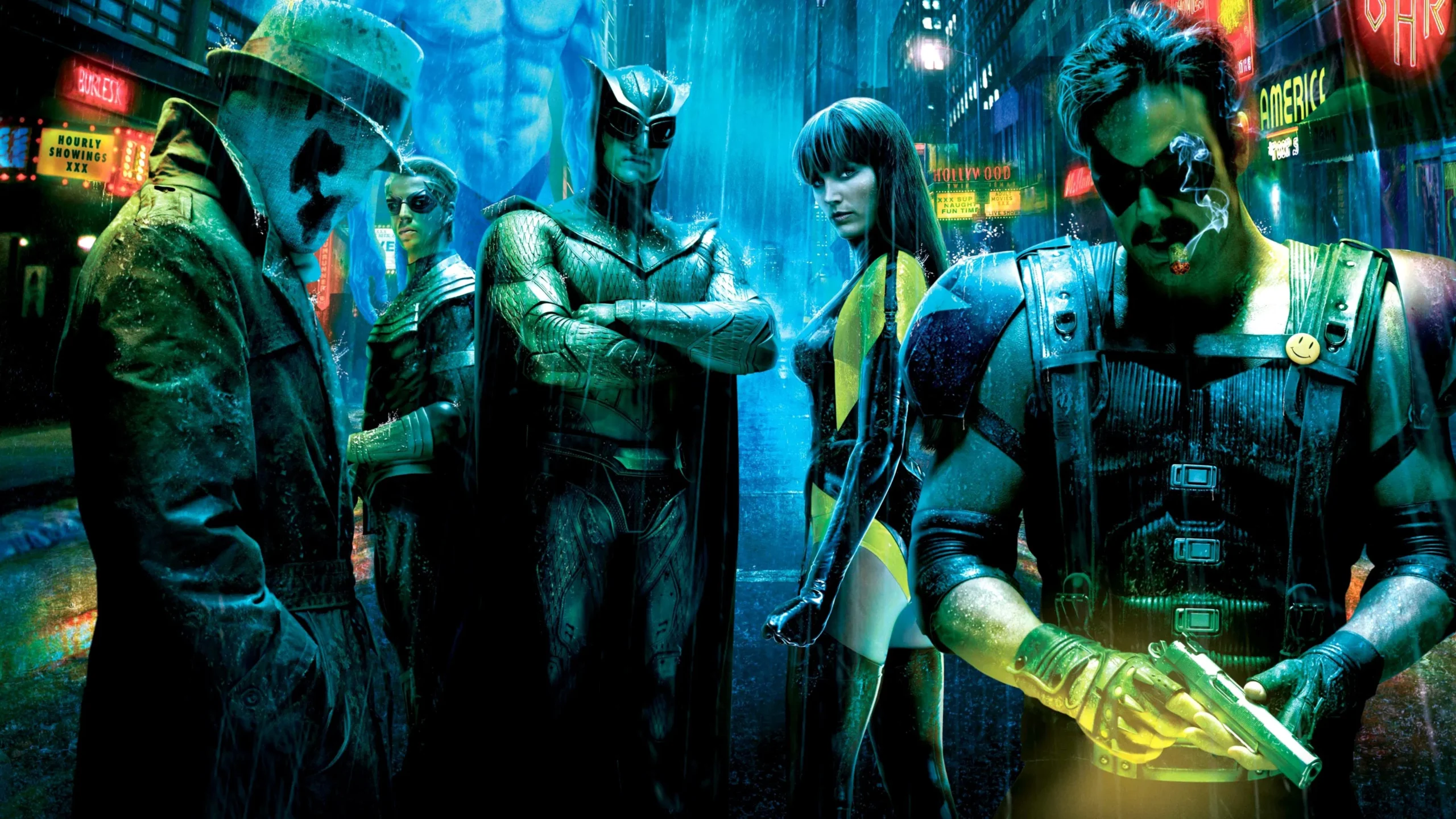
When Zack Snyder brought Alan Moore's seminal graphic novel to theaters in 2009, he faced an impossible task. Moore's masterpiece wasn't just a comic, it was a philosophical treatise, a scathing critique of American exceptionalism and the fascist undertones lurking beneath every vigilante fantasy.
Snyder embraced absolute fidelity, translating panels directly from page to screen. The opening montage chronicles an alternate history where costumed heroes shaped America's destiny, containing more visual storytelling than most films manage in their entire runtime.
The film's greatest achievement lies in its unflinching portrayal of damaged individuals playing dress-up. Rorschach, with his uncompromising moral absolutism, becomes a fascinating study in how trauma creates monsters who believe themselves righteous. Dr. Manhattan shows what happens when godlike power strips away humanity, leaving only cold cosmic perspective.
The violence isn't gratuitous, it's educational. When Rorschach attacks criminals, Snyder's camera doesn't look away. We see bones break through skin, watch cooking oil scar flesh, witness the brutal reality of vigilante justice.
The climax remains one of cinema's most morally devastating moments. Ozymandias's plan succeeds. Millions die. The heroes choose to maintain the lie rather than risk nuclear holocaust. Watchmen proved comic book adaptations could tackle genuinely complex ethical territory.
-
2 The Boys: Corporate Corruption in Spandex
Amazon Studios
What if Superman was a narcissistic sociopath? What if Wonder Woman was a burned-out alcoholic? Welcome to The Boys, Amazon's savage evisceration of superhero celebrity culture.
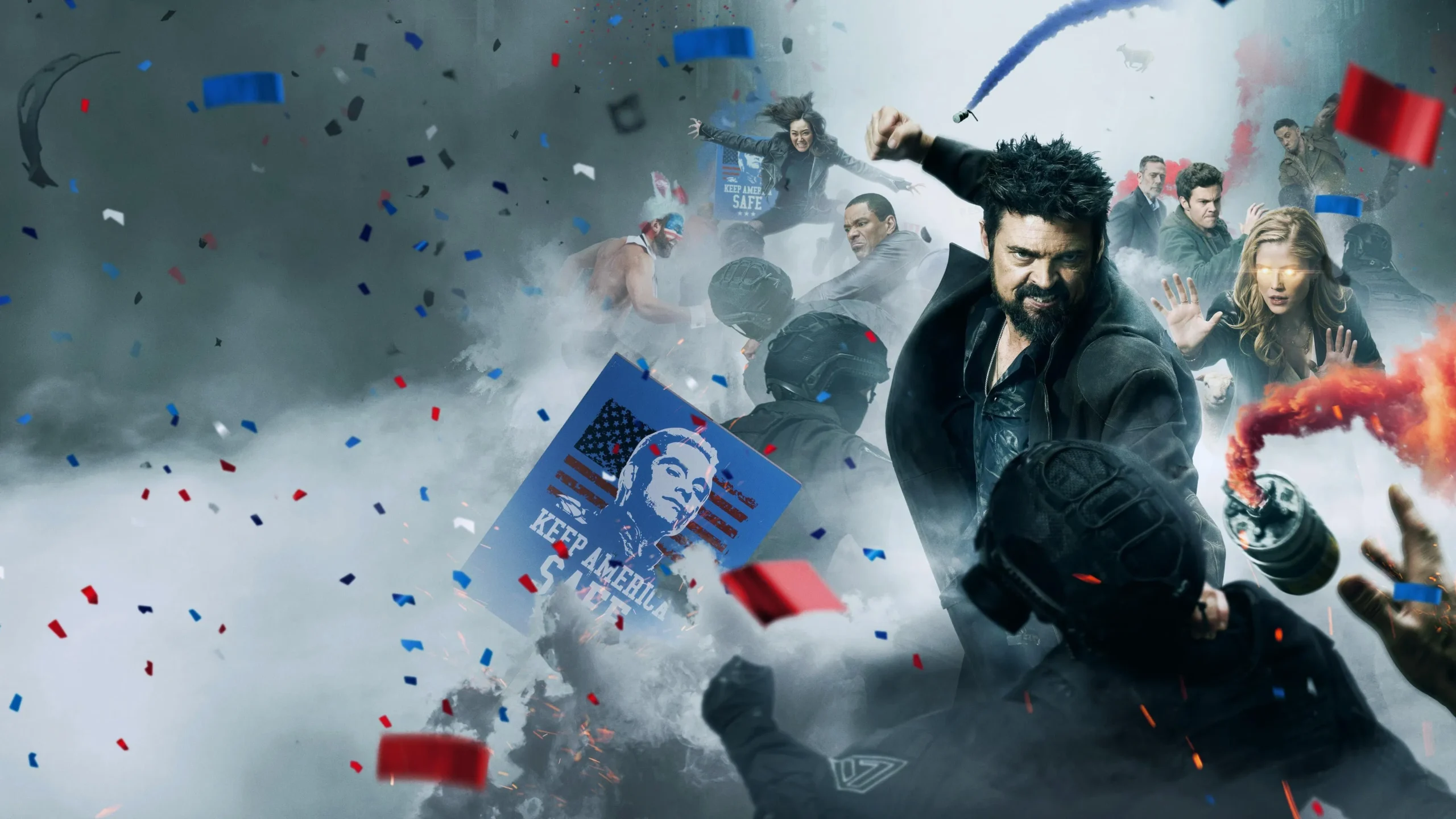
Eric Kripke's series takes every assumption about heroes and systematically destroys them. Powered individuals called "Supes" are products. The Vought Corporation manufactures them, markets them, and controls their image with ruthless efficiency. Heroes don't fight crime out of altruism, they do it for brand synergy and licensing deals.
Homelander stands as television's most terrifying antagonist precisely because he wears the aesthetics of heroism. Draped in an American flag, he's everything Captain America pretends to be on the surface. Underneath lurks a deeply disturbed man-child with zero empathy.
The series doesn't pull punches with its graphic content. The first episode features A-Train accidentally running through a civilian at supersonic speed, reducing her to a pink mist. It's shocking, but it serves a crucial purpose: showing what would actually happen if superhumans existed.
The genius lies in making powerless humans our protagonists. Billy Butcher and his team of regular people fighting superhuman threats creates David-and-Goliath tension. Unlike traditional narratives where might makes right, The Boys argues that ordinary people armed with knowledge and determination can challenge corrupt power.
-
3 Super: When Delusion Meets Violence
IFC Films
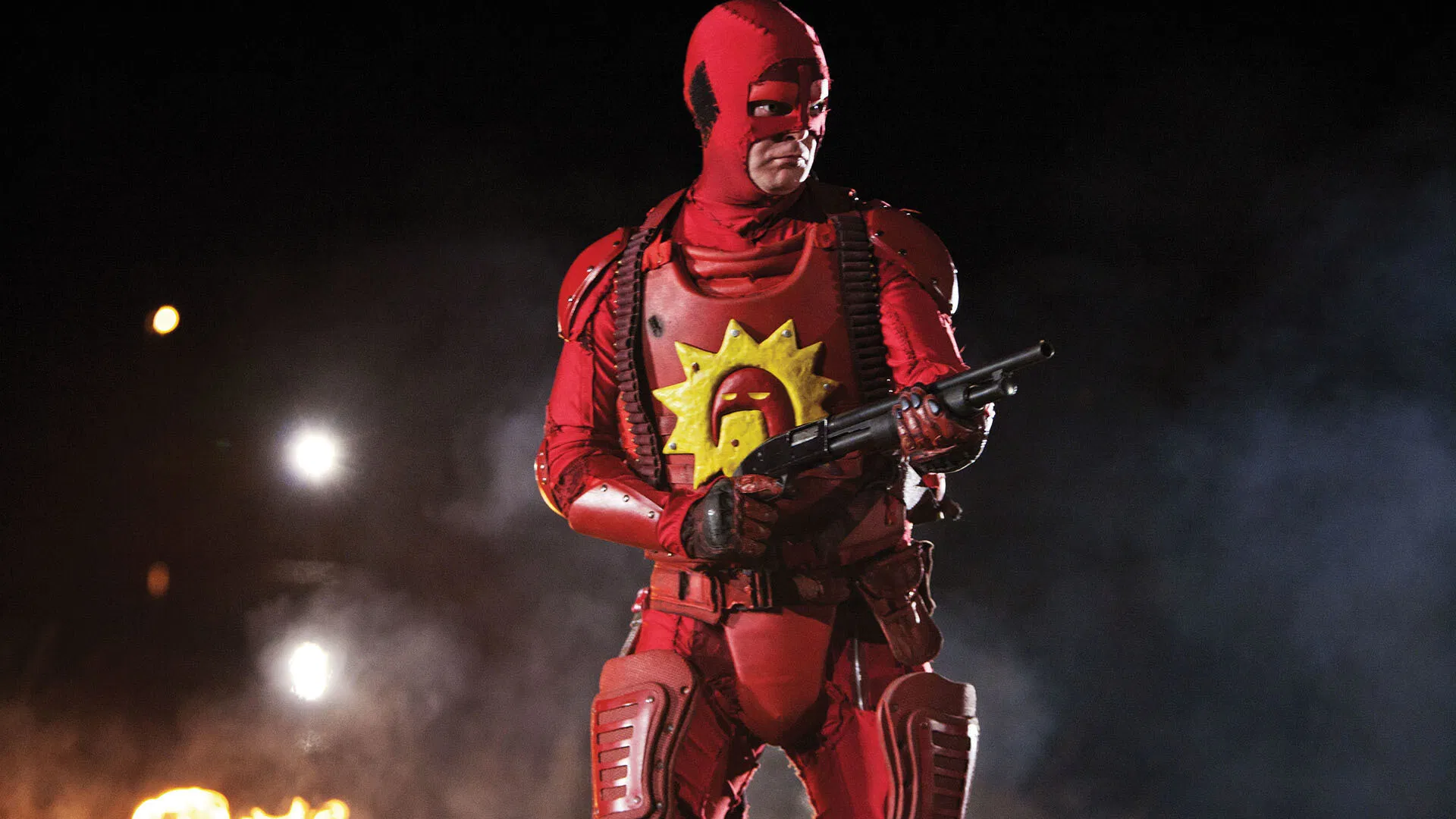
Long before James Gunn directed Guardians of the Galaxy, he crafted something far more disturbing. Super tells the story of Frank D'Arbo, a short-order cook whose wife leaves him for a drug dealer. Frank's response? Fashion a crude costume and start cracking skulls with a pipe wrench.
Rainn Wilson's performance is uncomfortably brilliant. We watch a deeply troubled individual spiral into violent madness, convinced he's receiving divine instructions. The film's most disturbing sequence involves Frank hallucinating that his skull is being surgically opened by tentacled creatures. This isn't metaphor, it's Frank's psychotic break rendered literally.
The Crimson Bolt operates with the moral complexity of a child. Someone cuts in line? Skull fracture. Gunn's camera captures every brutal impact. There's no stylized choreography, just a mentally ill man assaulting people with a blunt instrument.
Super functions as a dark mirror to Kick-Ass. Both examine amateur vigilantism, but where Kick-Ass celebrates its premise, Super condemns it. The climax involves a drug den shootout that's genuinely harrowing. When Frank finally rescues his ex-wife, she doesn't want to be saved. His entire violent crusade was built on delusion.
The ending offers no redemption. Gunn asks us to consider whether we've been watching a hero's journey or just a tragic case study of untreated mental illness turned violent.
-
4 Invincible: Animation's Most Brutal Betrayal
Amazon Studios
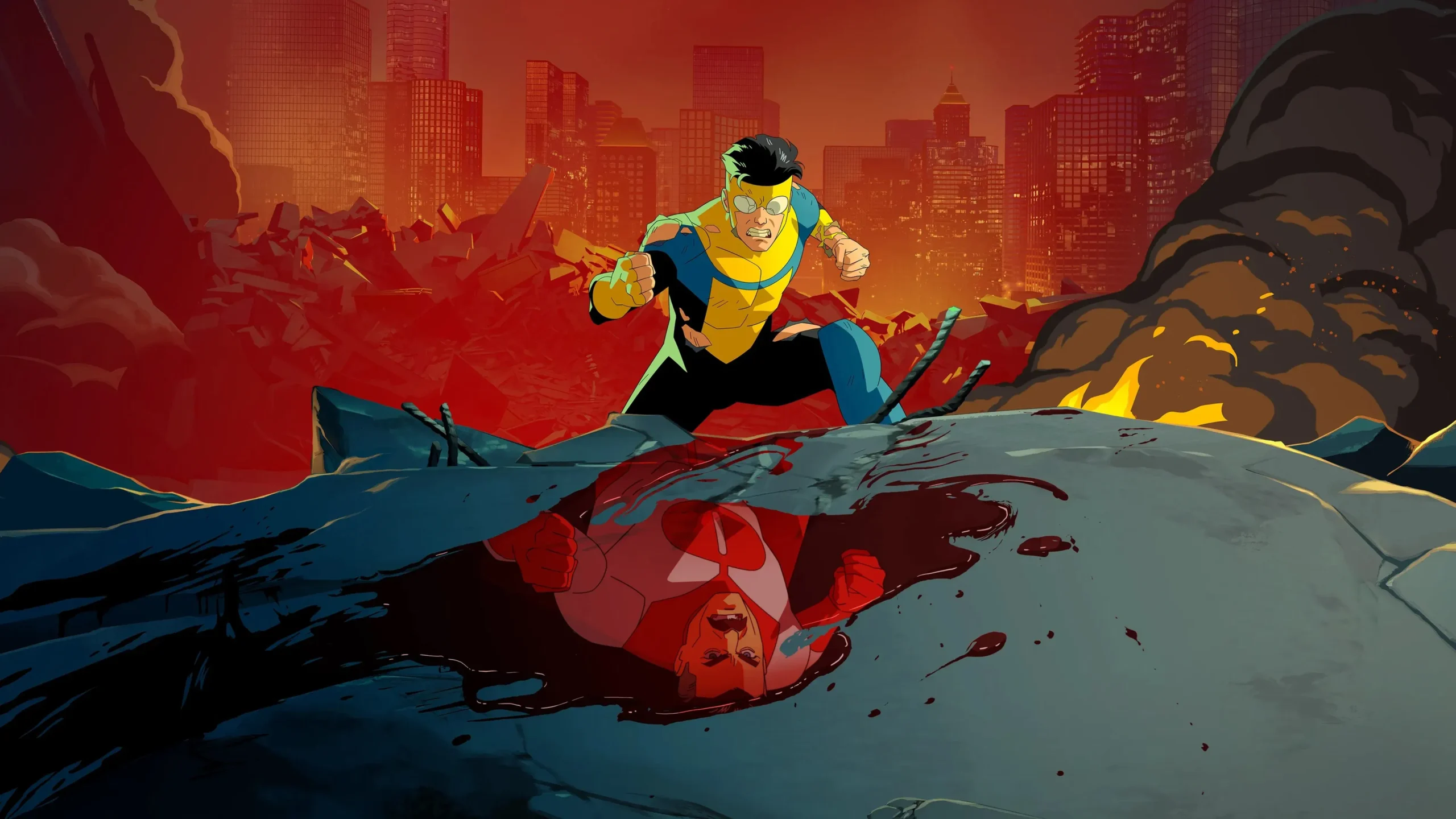
The opening episode of Invincible plays like classic superhero comfort food. Then, seventeen minutes in, Omni-Man systematically murders the planet's entire premier superhero team.
What follows is one of animation's most visceral sequences. Omni-Man crushes skulls, tears through torsos, rips heroes literally in half. The scene is brutal, shocking, and completely recontextualizes everything we've watched.
Robert Kirkman's series excels at exploring the psychological trauma of superhuman violence. Mark doesn't bounce back from discovering his father is a planetary conqueror. He develops PTSD, struggles with panic attacks, questions every childhood memory.
Invincible also confronts collateral damage unflinchingly. When heroes and villains battle, people die. Buildings collapse with families inside. The series maintains a running count of civilian casualties, refusing to let audiences forget that every spectacular fight represents tragedy.
The father-son dynamic drives the emotional core. The season finale culminates in Omni-Man trying to convince Mark to join him by dragging his son through crowds of people, turning bystanders into red smears. "Think, Mark!" has become a meme, but in context, it's a father trying to break his son's spirit.
-
5 Brightburn: What If Superman Was Evil?
Screen Gems
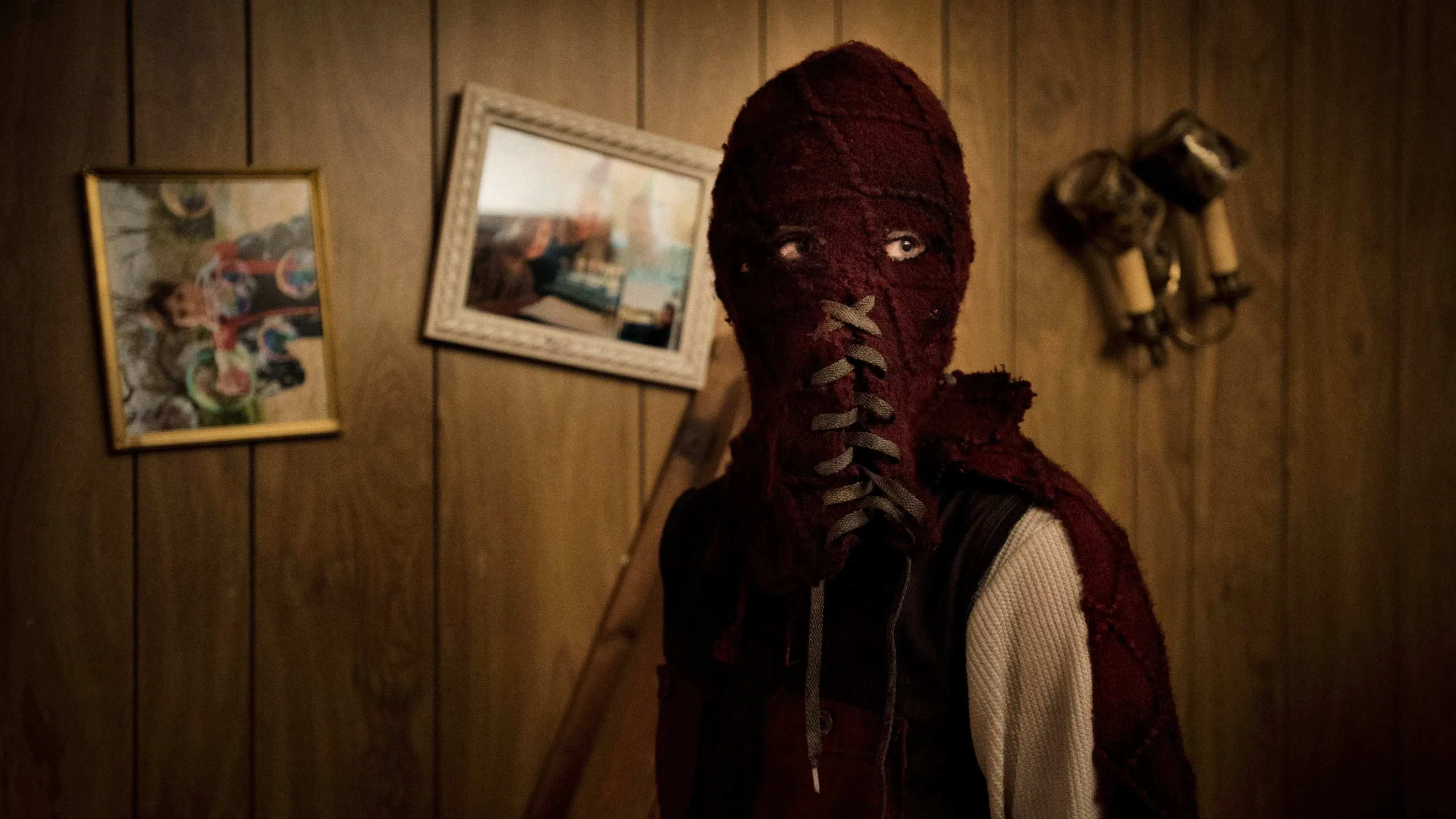
James Gunn's 2019 production Brightburn asks something disturbing: what if the alien child sent to Earth wasn't destined to save humanity but destroy it?
Brandon Breyer crashes to Earth and gets adopted by a Kansas farming couple, just like Clark Kent. But where Superman's heritage programmed him for compassion, Brandon's alien nature skews predatory. As his powers manifest during puberty, so does something sinister.
Director David Yarovesky leans into straight horror. Brightburn features sequences that would fit any slasher film. Brandon stalks a classmate who rejected him, culminating in a sequence involving shattered glass and a shattered jaw that's genuinely difficult to watch.
The most heartbreaking element is Tori and Kyle Breyer's desperate attempt to reach their son. Tori tries every parenting technique. Kyle recognizes the danger earlier but struggles with the unthinkable: they might need to kill their own son to save others.
Brightburn commits to its premise completely. There's no redemption arc. Brandon embraces his nature as an apex predator, systematically eliminating everyone who knows his secret, including his own parents. His mother's final attempt to reach him fails completely.
The ending is pure nihilism. Brandon begins a campaign of terror. News footage shows plane crashes and mass casualties. Brightburn presents a scenario where humanity is simply outmatched and doomed.
The Dark Legacy
These productions permanently relocated boundaries. The Dark Knight proved superhero films could achieve prestige status. Logan earned an Oscar nomination for Best Adapted Screenplay, a first for any superhero film.
The Zack Snyder’s Justice League phenomenon demonstrated unprecedented fan power. Their campaign resulted in the studio funding Snyder’s complete four-hour vision, permanently changing how studios approach creative control.
These films’ influence ripples through contemporary productions. Joker earned over a billion dollars exploring mental illness through a comic book lens. Even the MCU has begun incorporating more mature themes. The streaming era has accelerated this trend, with platforms seeking boundary-pushing content.
Why Darkness Matters
The best examples aren’t dark for shock value, they’re exploring genuine philosophical territory. Watchmen asks whether superheroes are inherently fascist. The Boys examines how capitalism corrupts everything. These are substantive themes dressed in capes.
The darkness also serves a corrective function. By showing genuine consequences of superhuman conflict, these narratives complicate simplistic messaging. They ask audiences to think critically about power and justice.
The darkest superhero movies aren’t aberrations. They’re proof the genre has grown up, that it can contain multitudes, that it’s capacious enough for both triumphant hope and devastating tragedy. And that’s worth celebrating, even in the darkness.