
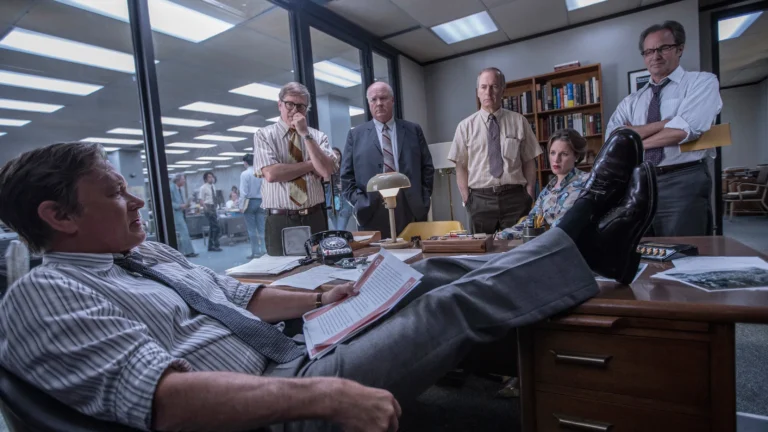

Journalism movies shouldn’t work as well as they do. On paper, watching people make phone calls, shuffle documents, and argue about sources sounds about as thrilling as attending a city council meeting. Yet somehow, when done right, these films transform the meticulous process of chasing truth into edge-of-your-seat cinema that rivals any action thriller.
The secret lies in understanding what actually makes investigative journalism cinematic. It’s not the byline or the breaking news chyron. It’s the mounting pressure when a source goes silent. The paranoia of wondering if you’re being followed. The moral calculus of deciding whose life gets upended when you hit publish. These are the stakes that great journalism films capture, and they’re every bit as visceral as any car chase or shootout.
In an age where “investigative journalism” can mean anything from a Twitter thread to a multi-year collaborative effort, these six films stand as gold-standard examples of how cinema portrays the real work of holding power accountable. They understand that verification beats speed, that accuracy matters more than clicks, and that the most important stories are usually the ones someone powerful doesn’t want told. From Watergate to the Catholic Church abuse scandal to #MeToo, these movies don’t just document history. They capture the painstaking, often thankless process of making that history visible in the first place.
-
1 All the President's Men: The Blueprint That Still Defines the Genre
Warner Bros.
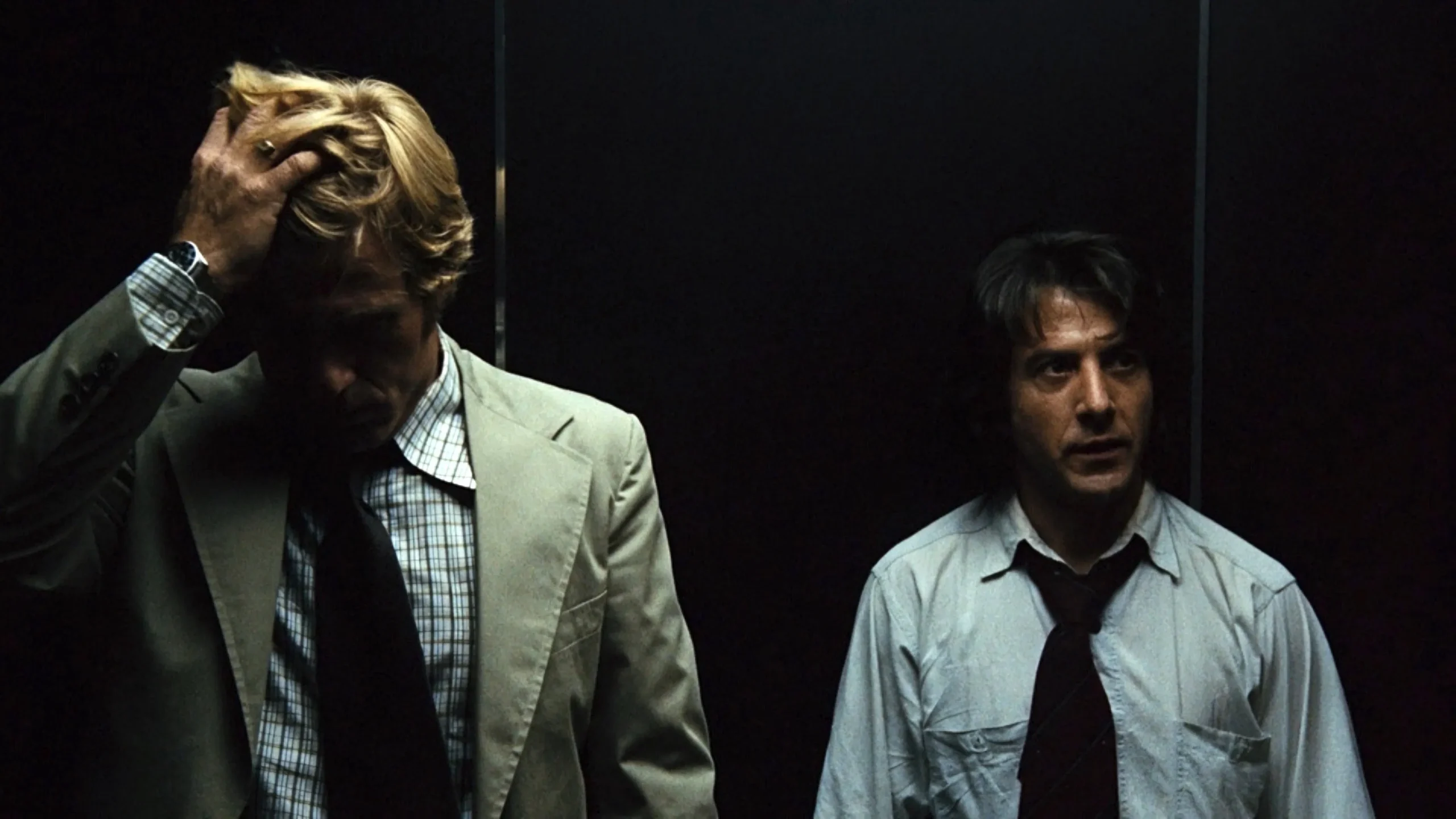
When Alan J. Pakula's All the President's Men hit theaters in 1976, it did something revolutionary. It made typing look intense. The film follows Washington Post reporters Bob Woodward and Carl Bernstein as they investigate what initially seemed like a minor break-in at the Watergate Hotel, only to uncover a conspiracy that reached all the way to the Oval Office. But what makes this film the foundational text for every journalism movie that followed isn't its historical significance. It's how Pakula transforms the mundane mechanics of reporting into genuine suspense.
Consider the famous scene where Woodward meets Deep Throat in a parking garage. There's no exposition dump or convenient plot revelation. Instead, we get cryptic hints, circular conversations, and the constant threat of exposure. This is journalism as spy thriller, where every confirmation requires two additional sources and every source could be the one that gets you killed or fired. The genius of William Goldman's screenplay is understanding that the audience doesn't need to fully grasp every detail of campaign finance law. They just need to feel the walls closing in.
What still resonates nearly five decades later is the film's obsessive focus on process. Woodward and Bernstein don't crack the case through brilliant deduction. They do it through relentless, unglamorous legwork: following paper trails, door-knocking reluctant witnesses, cross-referencing records until patterns emerge. In one sequence, they spend hours going through library slips to track who checked out which books. It's tedious work that Pakula somehow makes riveting through nothing but mounting dread and Gordon Willis's shadowy cinematography.
The film also nails something many journalism movies miss: the role of institutional support. Woodward and Bernstein could chase the story because editor Ben Bradlee (Jason Robards in an Oscar-winning performance) and publisher Katharine Graham backed them against enormous pressure. Good journalism isn't just brave reporters. It's entire organizations willing to risk everything on getting it right.
Why it endures: In an era of instant publishing and "first to tweet" mentality, watching Woodward and Bernstein obsessively verify every detail before publication feels almost radical. The message remains clear: being right matters more than being first, and rushing to publish before you're certain isn't journalism at all.
-
2 Spotlight: When Systems of Silence Finally Break

Open Road Films
Tom McCarthy's Spotlight takes a fundamentally different approach to journalism cinema. Where All the President's Men focuses on two reporters racing against time, Spotlight depicts investigation as institutional process. Following the Boston Globe's deep dive into systemic sexual abuse within the Catholic Church, the film transforms meetings, document requests, and editorial debates into compelling drama by understanding a simple truth: the biggest stories aren't about individual bad actors, but about the systems that protect them.
The "Spotlight" team (Mark Ruffalo, Michael Keaton, Rachel McAdams, Brian d'Arcy James) isn't chasing scoops or competing with rivals. They're methodically building an airtight case that will withstand the inevitable backlash from one of Boston's most powerful institutions. McCarthy's direction deliberately avoids melodrama, instead letting the horror emerge from accumulated facts. One priest abused children. Then another. Then dozens. Then the realization that church officials knew and simply moved predators to new parishes.
What makes Spotlight quietly devastating is its examination of complicity. The film doesn't just indict the church hierarchy. It forces its characters (and the audience) to confront how many people knew something was wrong but didn't look closely enough. Lawyers who negotiated quiet settlements. Journalists who heard rumors but didn't pursue them. Community members who chose institutional loyalty over uncomfortable questions. The real villain isn't any single person but a collective decision to look away.
The performances are perfectly calibrated to McCarthy's understated approach. Ruffalo's passionate outbursts feel earned precisely because they're so rare. Keaton's quiet authority as editor Walter "Robby" Robinson anchors the team's work in professional discipline. McAdams brings empathy without sentimentality to her interviews with survivors. And Liev Schreiber, as the outsider editor who pushes the investigation forward, embodies the value of fresh perspective unencumbered by institutional loyalty.
The film's most powerful choice is its ending. After the story publishes, we don't get courtroom drama or executive resignations. We get something simpler and more devastating: a list of cities where similar abuse has been uncovered. The screen fills with location after location, making clear that Boston wasn't an aberration but a pattern replicated across the globe.
Why it matters: Spotlight treats journalism as public service rather than personal crusade. It demonstrates that bringing down entrenched power requires collaboration, patience, and the willingness to make the story bigger than any individual byline. In an industry increasingly dominated by personality-driven media, that message feels almost countercultural.
-
3 The Insider: When Your Own Network Becomes the Obstacle
Touchstone Pictures
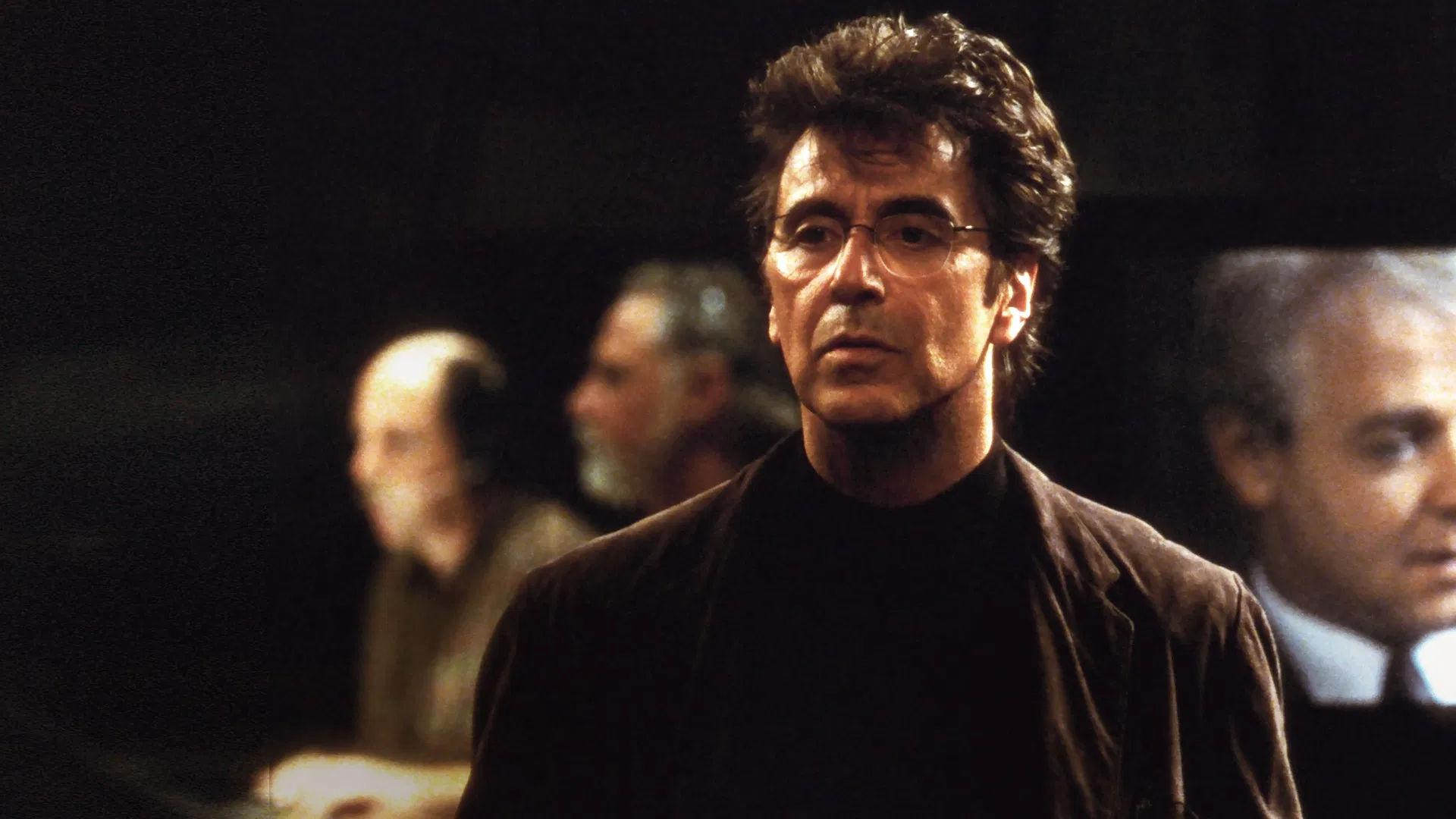
Michael Mann's The Insider asks the uncomfortable question most journalism films avoid: what happens when the media company telling the story has its own reasons to kill it? Based on the real 60 Minutes investigation into Big Tobacco, the film follows producer Lowell Bergman (Al Pacino) as he convinces whistleblower Jeffrey Wigand (Russell Crowe) to go on record about the tobacco industry's knowledge of nicotine addiction, only to watch his own network cave to legal and financial pressure.
This is journalism as psychological warfare, and Mann directs it like a paranoid thriller. Wigand receives death threats and finds his family's safety compromised. His reputation gets systematically destroyed through corporate smear campaigns. Meanwhile, Bergman watches helplessly as CBS executives and lawyers find increasingly creative reasons to delay or alter the story. The enemy isn't just Big Tobacco's vast resources but the media institution supposedly dedicated to exposing truth.
Crowe's performance as Wigand is a masterclass in portraying a man being crushed between competing pressures. He's not a traditional hero seeking redemption. He's an ordinary person with legitimate concerns about protecting his family, honoring non-disclosure agreements, and questioning whether destroying his life is worth the public good. The film never simplifies his dilemma or judges his hesitations. Instead, it shows how whistleblowing in America works: you sacrifice everything, and the institutions you trust to amplify your voice might still abandon you.
The scenes between Pacino and Crowe crackle with tension precisely because their goals aren't fully aligned. Bergman needs Wigand to go on camera. Wigand needs assurance his family will be safe and the story will actually air. Neither can fully deliver what the other requires, creating a relationship built on mutual need rather than trust. When CBS ultimately caves to pressure and kills the story, it's not presented as shocking betrayal but as the predictable result of corporate media's conflicting loyalties.
Mann's visual approach reinforces the paranoia. Characters are frequently shot through glass, framed by architecture that suggests surveillance and containment. Dante Spinotti's cinematography bathes scenes in cold blues and institutional grays. Even outdoor spaces feel exposed rather than liberating. The message is clear: in the world of corporate media and tobacco billions, there's nowhere safe to tell the truth.
Why it's essential: The Insider exposes how media institutions themselves can become obstacles to truth when profits, liability, and access come into play. The film remains bracingly relevant as media consolidation continues and newsrooms face pressure from corporate owners more concerned with stock prices than public service. Sometimes the biggest fight isn't getting the story. It's getting your own side to care enough to publish it.
-
4 The Post: The Decision to Publish Is Its Own Act of Courage
20th Century Fox
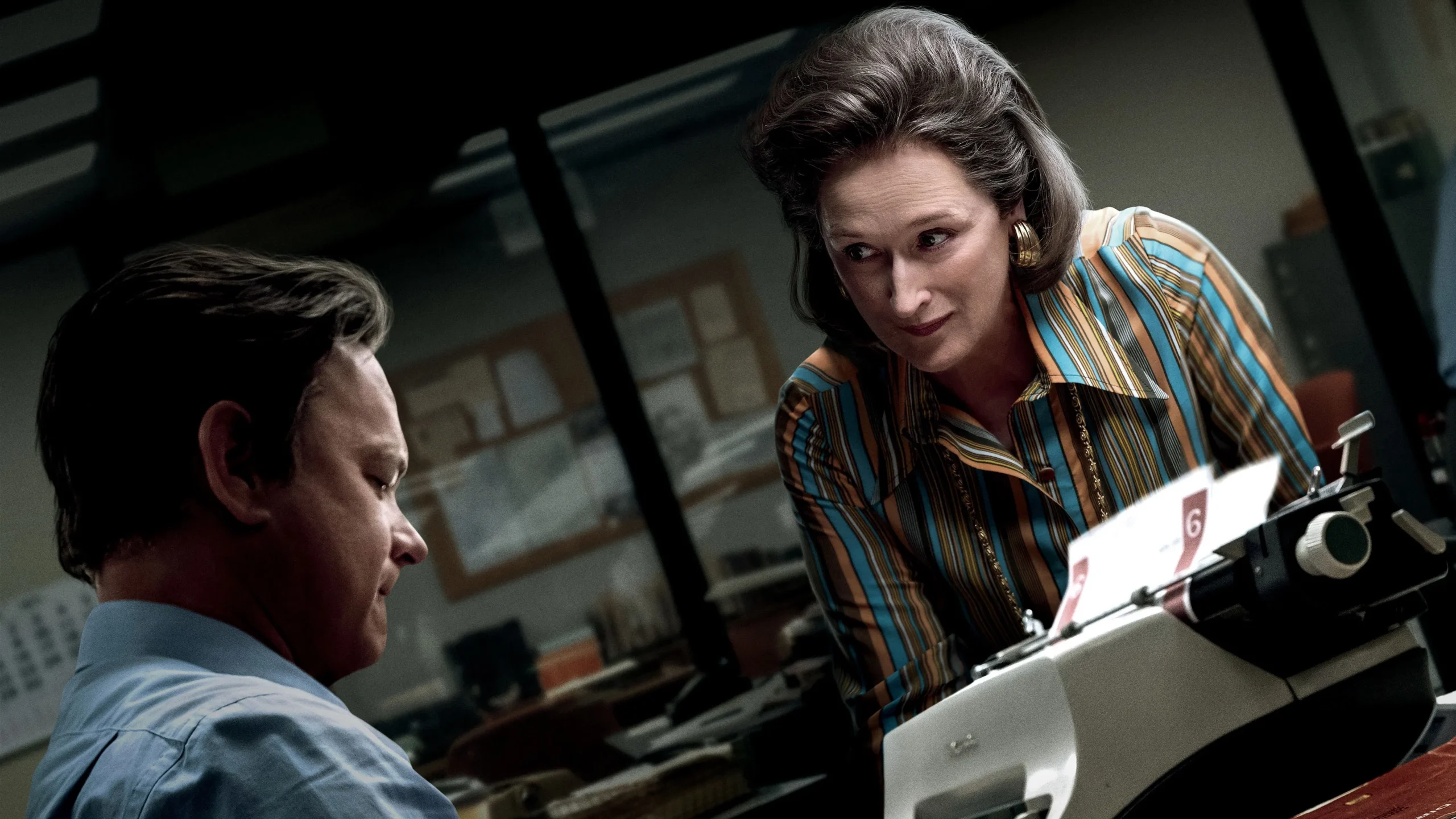
Steven Spielberg's The Post examines the aspect of investigative journalism most films treat as inevitable: the decision to actually publish. Set during the Pentagon Papers controversy, the film follows Washington Post publisher Katharine Graham (Meryl Streep) and editor Ben Bradlee (Tom Hanks) as they weigh national security concerns, Nixon administration threats, and the newspaper's financial future against the public's right to know the government has been lying about Vietnam for decades.
What makes The Post compelling is how it reframes journalistic courage. Bradlee and his reporters want to publish immediately. They've verified the documents and know the story is legitimate. But Graham faces pressures they don't: she's fighting for legitimacy as the first female publisher of a major American newspaper, the Post just went public and could be financially destroyed by legal battles, and publishing could mean jail time for everyone involved. The film understands that "should we publish?" is rarely a simple question when real-world consequences enter the equation.
Streep's performance captures Graham's transformation from uncertain inheritor to conviction-driven publisher. Early scenes show her deferring to male advisors and board members who treat her authority as provisional. But as the Pentagon Papers crisis intensifies, Graham finds her voice by recognizing that her unique position actually grants clarity. The men around her are worried about business implications or government access. She's worried about whether the Post will be a real newspaper or just another compromised institution protecting itself first.
The film's procedural elements are surprisingly gripping. Reporters race to obtain and verify portions of the Pentagon Papers before the government obtains an injunction. Editors debate what can be safely published without compromising national security. Lawyers argue over precedents and potential charges. Spielberg makes these scenes tense not through artificial cliffhangers but by making clear what's at stake: the Post's survival, the First Amendment's meaning, and whether the public will ever learn their government systematically lied about a war that killed 58,000 Americans.
Janusz Kamiński's cinematography reinforces the period setting without drowning in nostalgia. The newsroom feels lived-in and chaotic, phones ringing constantly, typewriters clacking, organized chaos defining every scene. When Graham finally makes her decision to publish, Spielberg shoots her surrounded by supportive women on courthouse steps, a visual reminder that her courage opened doors for generations that followed.
Why it resonates: The Post reminds us that a free press only exists if someone is willing to risk everything to defend it. Graham could have played it safe, protected the Post's finances, and maintained access to power. Instead, she chose principle over profit, setting a precedent that journalism's primary obligation is to readers, not institutions. In an era when news organizations regularly cave to pressure from tech platforms, advertisers, or political interests, that message feels urgent.
-
5 She Said: Journalism That Centers Survivors, Not Just Scoops
Universal Studios
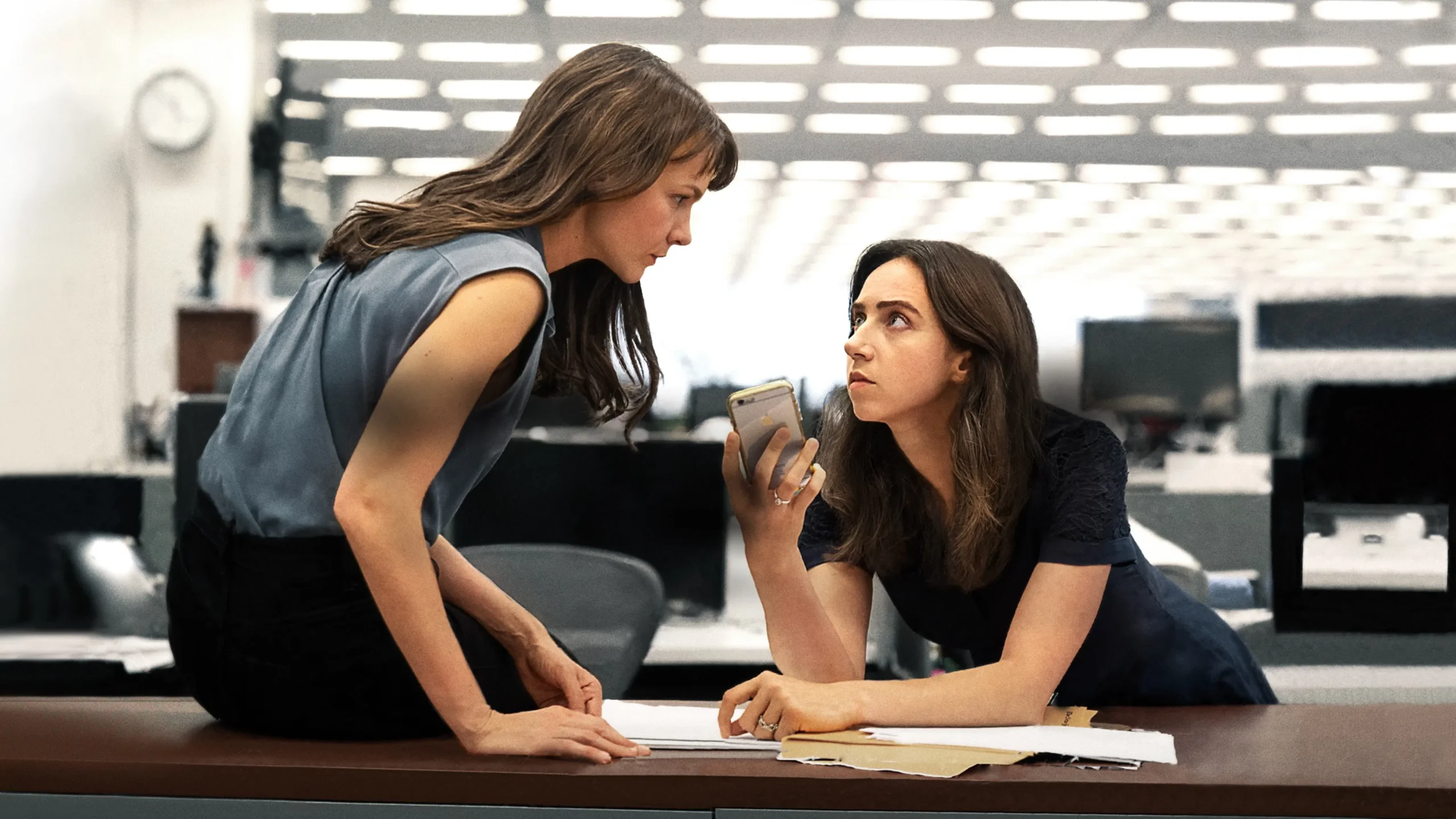
Maria Schrader's She Said brings investigative journalism into the #MeToo era with a film that understands how reporting on sexual misconduct requires fundamentally different approaches than traditional investigations. Following New York Times reporters Megan Twohey (Carey Mulligan) and Jodi Kantor (Zoe Kazan) as they investigate Harvey Weinstein's decades of abuse, the film emphasizes trauma-informed reporting, legal precision, and the immense responsibility journalists have toward sources whose lives may be destroyed by going public.
Unlike earlier journalism films where reporters chase reluctant sources, She Said depicts a more complex dynamic. Weinstein's victims have legitimate reasons for silence: non-disclosure agreements with punishing financial penalties, fear of career destruction in an industry Weinstein controlled, concern that they won't be believed, and the trauma of reliving abuse publicly. Twohey and Kantor aren't just gathering facts. They're asking women to sacrifice their privacy and safety for the possibility that exposure might stop Weinstein from hurting others.
The film's quietest scenes carry the most weight. Kantor on the phone with a source who falls silent mid-conversation, needing time to decide if she can go on record. Twohey conducting an interview while visibly exhausted from new motherhood, balancing professional obligation with personal crisis. Former Weinstein employees describing a workplace culture designed to facilitate abuse while protecting the abuser. These aren't dramatic confrontations but careful, patient conversations where trust gets built incrementally.
Mulligan and Kazan deliver performances rooted in observant intelligence rather than showy heroics. They listen more than they talk, creating space for sources to tell their stories at their own pace. When they do push, it's with empathy rather than aggression. The film makes clear that extracting information isn't the goal. Creating conditions where truth can emerge safely is what matters.
Schrader's direction deliberately avoids depicting the abuse itself, instead showing its aftermath and the systems that enabled it. We see Weinstein's assistants describing being forced to facilitate his predation. We hear about settlements designed to buy silence. We learn how an entire industry protected a serial abuser because he made profitable movies. The horror comes not from graphic details but from the realization of how many people knew and did nothing.
The film also doesn't shy away from the frustration and setbacks inherent to this kind of reporting. Sources back out at the last minute. Lawyers find new ways to threaten legal action. Weinstein's team deploys private investigators and PR operatives to discredit victims. Even after publication, the victory feels incomplete because decades of abuse can't be undone by a single article.
Why it matters now: She Said captures how investigative journalism has evolved to balance accountability with empathy. The film acknowledges that good reporting isn't just getting the story but honoring the people whose trauma made the story possible. In a media landscape that often prioritizes speed and clicks over careful sourcing, this patient, trauma-informed approach feels necessary and overdue.
-
6 Zodiac: When Obsession Replaces Investigation
Paramount Pictures
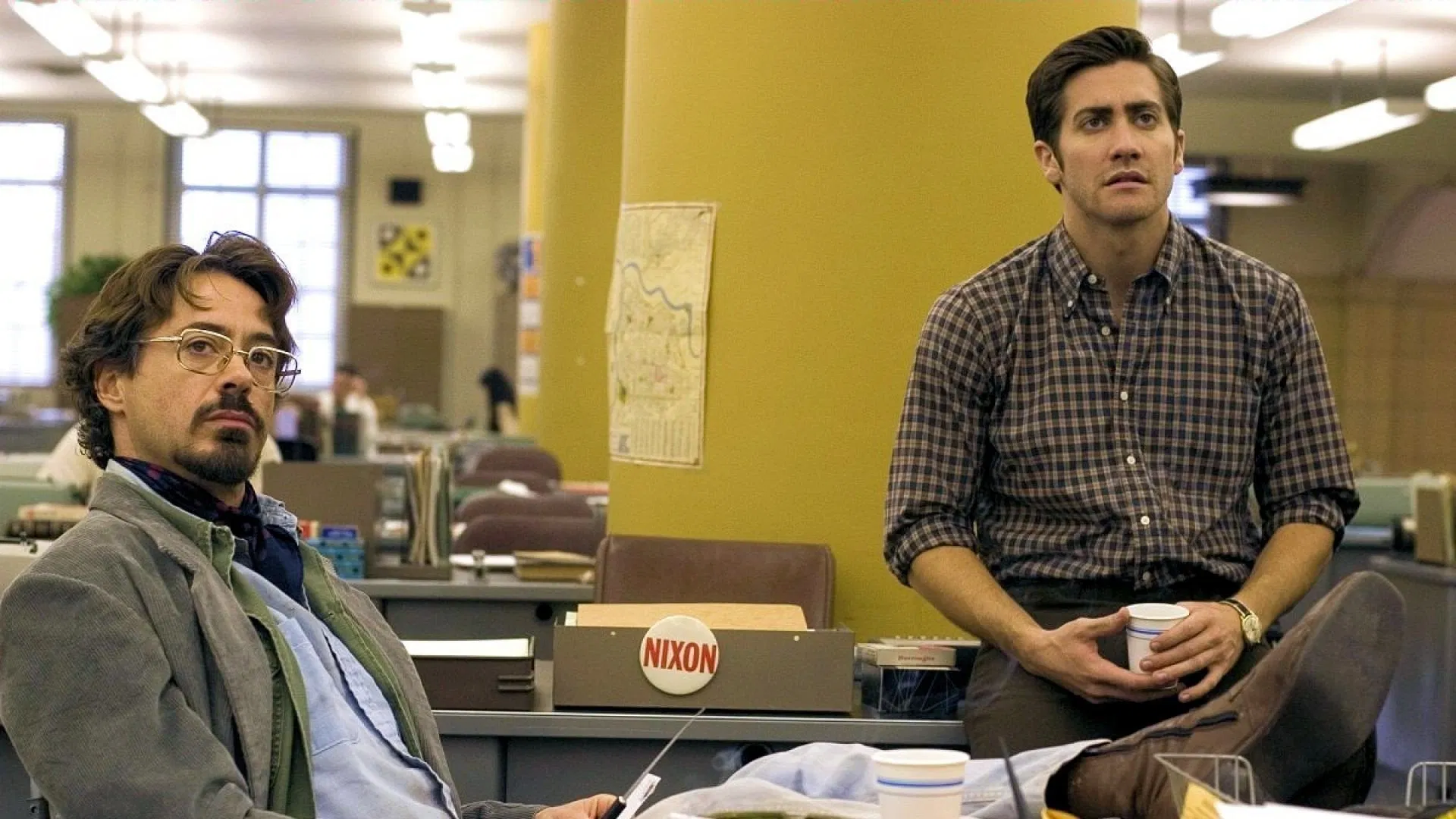
David Fincher's Zodiac isn't a traditional journalism film, but it may be the most honest portrait of investigative obsession ever put on screen. Ostensibly about the hunt for the Zodiac Killer who terrorized San Francisco in the late 1960s and early 70s, the film gradually becomes a study in how unresolved mysteries can consume the people chasing them. Told partly through the lens of San Francisco Chronicle reporters Paul Avery (Robert Downey Jr.) and political cartoonist Robert Graysmith (Jake Gyllenhaal), Zodiac explores what happens when the search for truth becomes untethered from rationality.
The film's structure mirrors its theme of endless, fruitless pursuit. For two hours and forty minutes, characters chase leads, develop theories, and come tantalizingly close to identifying the killer, only to watch everything fall apart. Evidence goes missing. Suspects have alibis. Jurisdictions refuse to cooperate. The investigation becomes a maze with no exit, and Fincher refuses to provide the cathartic resolution most films would impose.
What makes Zodiac fascinating from a journalism perspective is how it depicts the profession's self-destructive tendencies. Avery starts as a successful crime reporter with sources throughout law enforcement, but his obsession with Zodiac gradually destroys his career and health. He drinks heavily, grows paranoid, and eventually flees to another state, convinced the killer is targeting him. Meanwhile, Graysmith, a cartoonist with no investigative training, becomes so consumed by the case that he neglects his family, spends years pursuing dead ends, and sacrifices any semblance of work-life balance.
Fincher and screenwriter James Vanderbilt capture how media coverage can become part of the story rather than simply reporting it. The Zodiac Killer explicitly targets newspapers with coded messages and taunting letters, understanding that media attention feeds his ego. The Chronicle's decision to publish his writings, while journalistically defensible, gives the killer exactly what he wants: infamy and terror. The film asks uncomfortable questions about media complicity without offering easy answers.
The performances are perfectly calibrated to the film's slow-burn dread. Downey Jr. plays Avery's decline with tragicomic energy, a talented reporter undone by his inability to let go. Gyllenhaal makes Graysmith's obsession seem almost innocent at first, boyish enthusiasm gradually curdling into something darker. Mark Ruffalo, as the exhausted detective David Toschi, embodies the cost of caring too much about cases that may never close.
Unlike the other films on this list, Zodiac offers no triumph. The killer is never definitively caught. The investigation consumes years of multiple people's lives and produces no legal resolution. In the film's final scene, Graysmith confronts a man he's convinced is the Zodiac, seeking only acknowledgment that he got it right. He doesn't get even that satisfaction. The case remains open, and the obsession continues.
Why it belongs here: Zodiac shows the shadow side of investigative work, the moment when the need for answers overtakes reason, balance, and self-preservation. Not every investigation ends with justice or even clarity. Sometimes the story consumes you without offering anything in return, and learning when to walk away might be the most important lesson journalism can teach.
Why These Films Matter More Now Than Ever
Across five decades, these six films arrive at remarkably consistent conclusions about what makes investigative journalism essential. The work is painstaking, often thankless, and requires institutional support to succeed. Speed matters less than accuracy. Access to power is worthless if you’re not willing to alienate that power by reporting truth. And the decision to publish, especially when powerful interests want silence, is its own form of courage.
In our current media landscape, where “investigative journalism” can mean anything from a well-sourced multi-year collaboration to a viral Twitter thread, these films offer a useful corrective. They remind us that real investigation requires time, resources, verification, and the willingness to withstand enormous pressure. They show that journalism’s purpose isn’t generating clicks or engagement but serving the public interest, even when the public isn’t particularly interested.
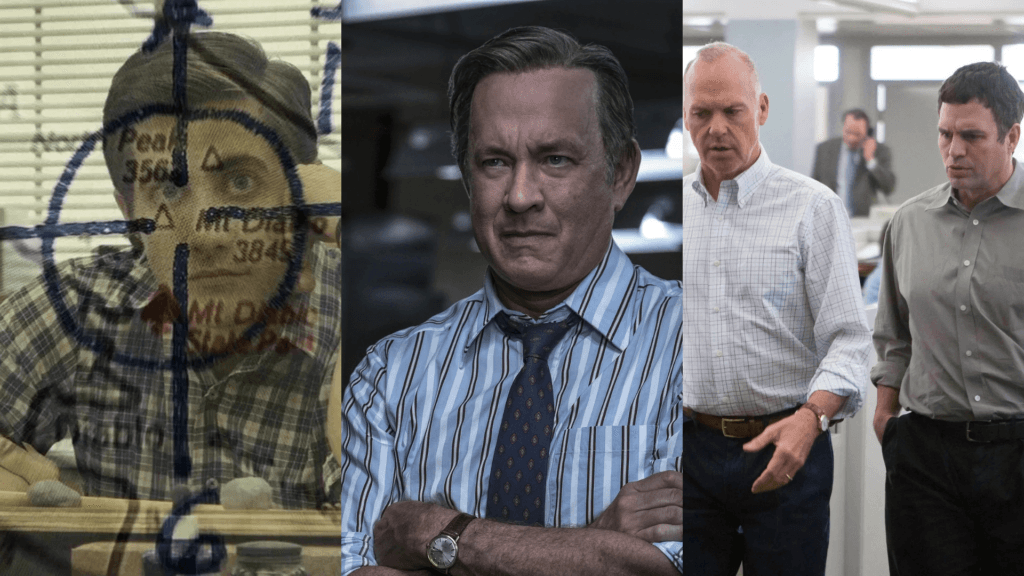
The films also share an understanding of journalism’s fragility. Whether threatened by government prosecution (The Post), corporate media cowardice (The Insider), institutional complicity (Spotlight), personal obsession (Zodiac), or the challenge of trauma-informed reporting (She Said), the work is always under siege. Truth doesn’t emerge inevitably. It requires people willing to sacrifice comfort, security, and sometimes their careers to drag it into public view.
These movies matter because they capture something essential about democracy itself: accountability requires transparency, and transparency requires someone willing to make powerful people uncomfortable. In an age of algorithmic feeds, partisan echo chambers, and information overload, the painstaking verification and institutional courage these films celebrate can seem almost quaint. They’re not. They’re more necessary than ever, and cinema remains one of our most powerful tools for remembering why that work matters and honoring the people who do it.