
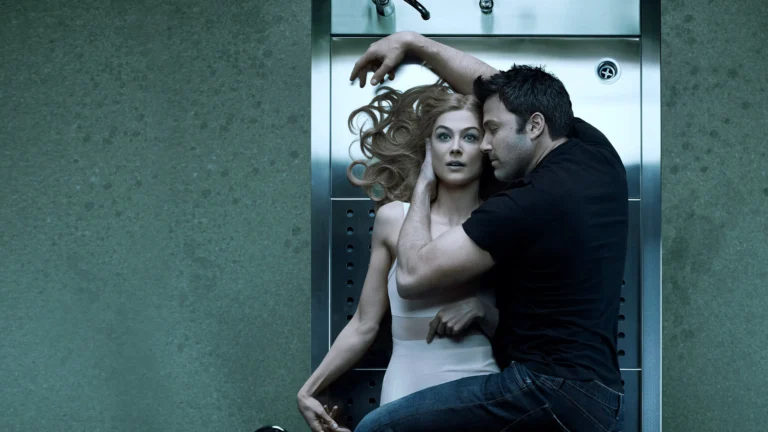

In an era where reality often feels stranger than fiction, certain thrillers have transcended their pages to become unsettling prophecies of our present moment. These aren’t just books that keep you up at night because of a twist ending. They’re narratives that lodge themselves in your consciousness, making you second-guess the smile of a coworker, the privacy settings on your phone, or the carefully curated image of a couple’s Instagram feed.
The most haunting stories aren’t about masked killers or supernatural threats. They’re about the everyday horrors hiding in plain sight: toxic relationships masquerading as romance, surveillance capitalism wrapped in the language of connection, and societal systems designed to control under the guise of protection. What makes these five thrillers so deeply disturbing isn’t their violence or shock value, but rather how closely their “fictional” worlds mirror the anxieties dominating our newsfeeds and group chats.
From Gillian Flynn’s scalpel-sharp dissection of marriage and media manipulation to Margaret Atwood’s chillingly prescient vision of reproductive control, these novels have become cultural touchstones precisely because they tap into something real and raw. They’re not escapism. They’re recognition. And in 2025, as we navigate an increasingly complex landscape of digital surveillance, political polarization, and eroding trust in institutions, these stories feel less like cautionary tales and more like documentary evidence of where we’ve already arrived.

The Unsettling Power of Mirror Narratives
What separates a forgettable thriller from one that haunts you for years? It’s not body count or plot complexity. The most psychologically disturbing thrillers function as mirrors, reflecting our deepest fears about society, relationships, and human nature back at us with uncomfortable clarity. These books work because they strip away the comforting distance between “fiction” and “could happen to me.”
The genius of realistic thrillers lies in their restraint. They don’t need serial killers or conspiracy theories when they can draw terror from recognizable scenarios: a marriage that looks perfect to outsiders but is rotting from within, a tech company that promises connection while commodifying your every click, a government that claims moral authority while stripping away fundamental rights. These scenarios aren’t plausible because authors have wild imaginations. They’re plausible because they’re extrapolations of systems and behaviors already in motion.
When we finish these books, we can’t simply close the cover and move on. They’ve rewired something in how we perceive the world. Suddenly, we’re analyzing our own relationships for signs of manipulation, questioning whether our smart devices are listening, wondering which rights might evaporate while we’re distracted by the next news cycle. This is literature at its most powerful: forcing us to confront uncomfortable truths we’d rather ignore.
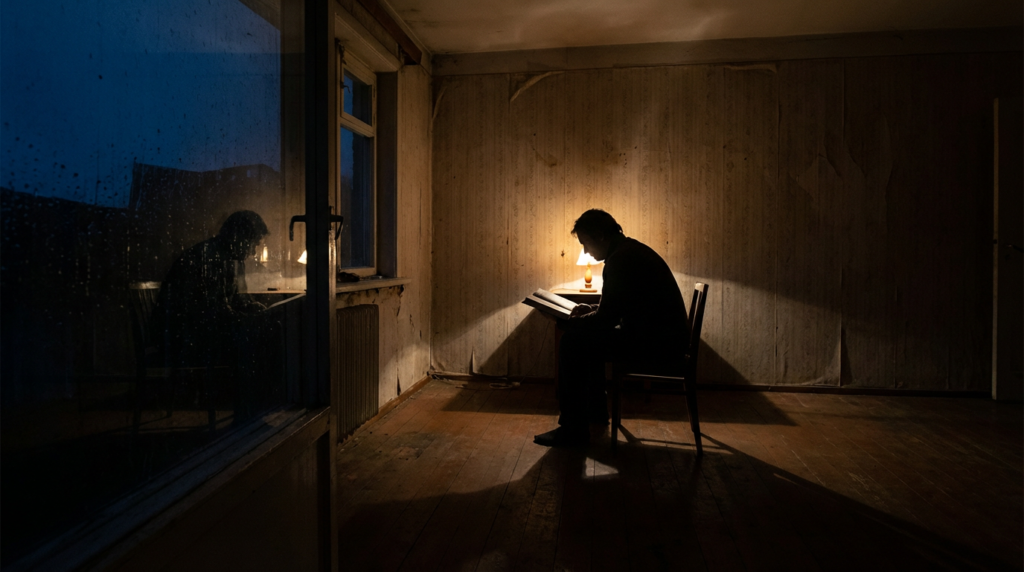
Gone Girl: When Love Becomes Psychological Warfare
Before Gillian Flynn’s 2012 masterpiece became a David Fincher film that dominated the cultural conversation, it was a domestic thriller that fundamentally changed how we talk about marriage in fiction. “Gone Girl” isn’t just about a wife who disappears and a husband who becomes the prime suspect. It’s a surgical examination of how we perform identity for others, how media narratives shape public perception regardless of truth, and how intimacy can be weaponized.
Nick and Amy Dunne’s relationship starts as a seemingly enviable romance between two clever, attractive New Yorkers. Flynn’s brilliance lies in how she gradually peels back layers to reveal the calculation, resentment, and strategic manipulation beneath the Instagram-worthy surface. Amy doesn’t just vanish; she orchestrates an elaborate frame-up that exploits every gendered expectation about victimhood, marriage, and male villainy. Nick, meanwhile, proves himself both sympathetic and deeply flawed, his casual betrayals and emotional cowardice making him an unreliable narrator we can’t quite trust but can’t entirely condemn.
The novel’s most disturbing insight isn’t about Amy’s sociopathy or Nick’s infidelity. It’s about how easily public opinion can be manufactured and manipulated. As the media feeding frenzy intensifies, truth becomes irrelevant. What matters is narrative control, image management, and which story the public finds most compelling. Flynn was writing about trial-by-media years before it became an inescapable feature of our social media landscape.
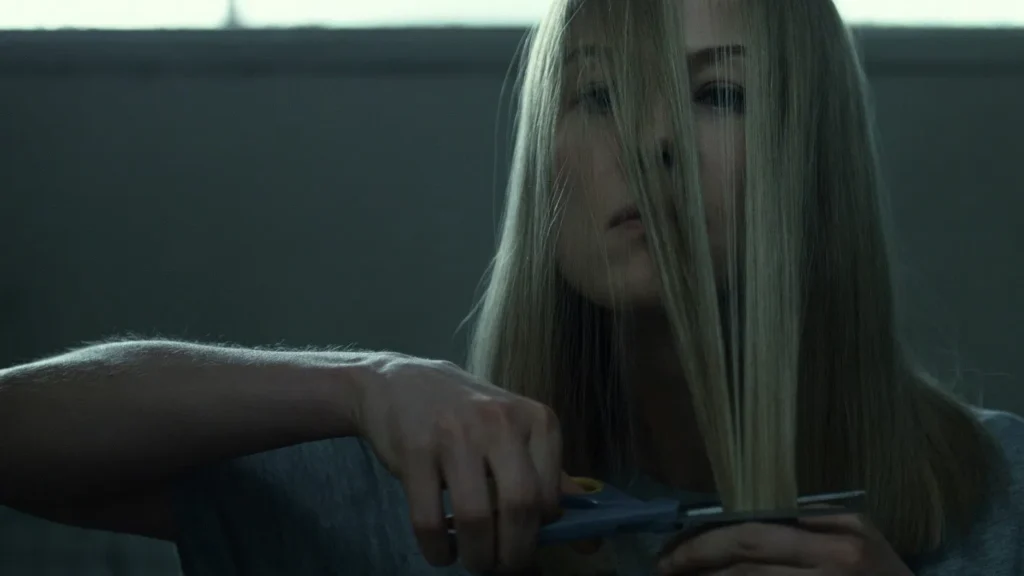
The “Cool Girl” monologue, in which Amy dissects the performance of female identity to please men, became an instant cultural phenomenon because it articulated something millions of women had felt but rarely seen expressed so brutally. The toxic relationship dynamics Flynn explores, gaslighting and emotional manipulation wrapped in romantic packaging, feel painfully relevant as conversations about relationship abuse have entered mainstream discourse.
What makes “Gone Girl” feel uncomfortably real in 2025 isn’t its plot mechanics. It’s how accurately it predicted our current media environment where perception management is everything, where one viral moment can destroy a reputation regardless of facts, and where the line between victim and villain can be strategically blurred. The Dunnes’ marriage might be an extreme case, but the psychological tactics they employ exist on a spectrum many people recognize from their own relationships.
The Girl on the Train: Gaslighting and Unreliable Memory
Paula Hawkins’ 2015 phenomenon tapped into growing cultural awareness about psychological manipulation in relationships, particularly how abusers use gaslighting to make their victims question reality itself. Rachel Watson, the novel’s troubled narrator, commutes past the same houses daily, inventing stories about the seemingly perfect couples she observes. When one of those women disappears, Rachel’s involvement in the investigation forces her to confront her own fractured memories and the systematic way her ex-husband destroyed her sense of reality.
The novel’s structure, told from multiple unreliable perspectives, mirrors how gaslighting functions. We’re never quite sure what’s real, what’s remembered correctly, what’s been distorted by trauma or manipulation. Rachel’s alcoholism provides a convenient cover for her ex-husband Tom’s abuse; he’s trained her to doubt her own perceptions, to accept his version of events, to believe she’s the problem. Hawkins captures the insidious nature of emotional abuse with devastating accuracy.
What resonates particularly strongly now is how the novel explores the facade of suburban perfection hiding dysfunction and violence. Every couple Rachel observes from the train appears happy, stable, enviable from the outside. The reality, predictably, is far darker. This gap between public image and private reality has only widened in the social media age, where everyone curates a highlight reel while struggling with challenges they’d never post about.

The book’s treatment of female alcoholism and mental health struggles also broke new ground in thriller fiction. Rachel isn’t a quirky amateur detective; she’s a deeply damaged person whose own behavior has caused real harm, even as she’s been victimized. Hawkins refuses to make her narrator entirely sympathetic, which makes her more human and the story more complex. The unreliable narrator device here isn’t just a plot trick but a exploration of how trauma, addiction, and abuse warp perception and memory.
In an era of increased awareness about emotional abuse tactics and the lasting impact of psychological manipulation, “The Girl on the Train” reads almost like a case study. The novel captures how victims of sustained gaslighting can lose touch with objective reality, how abusers isolate their targets and destroy their credibility, and how difficult it can be for outsiders to recognize what’s happening behind closed doors.
American Psycho: Corporate Culture’s Murderous Id
Bret Easton Ellis’ 1991 novel remains one of the most controversial and misunderstood works of satirical horror ever published. On the surface, it’s about Patrick Bateman, a Wall Street investment banker who may or may not be a serial killer. Dig deeper, and it’s a savage indictment of 1980s materialism, corporate conformity, and a society so superficial it can’t recognize a monster in its midst even when he’s confessing his crimes.
The novel’s graphic violence (significantly toned down for the 2000 film adaptation starring Christian Bale) is deliberately excessive, almost cartoonish. Ellis is less interested in horror for its own sake than in using Bateman’s atrocities as an extreme manifestation of the violence inherent in corporate capitalism. Bateman’s obsession with business cards, restaurant reservations, and designer labels isn’t separate from his murderous impulses; it’s the same pathology. In his world, people and products are equally disposable, equally valued only for their status markers.

What makes “American Psycho” feel disturbingly relevant today is how it predicted our current moment of corporate psychopathy and late-stage capitalism’s dehumanizing effects. Bateman’s colleagues are so consumed by their own narcissism and materialism that they can’t tell each other apart, constantly confusing names and identities. Everyone is replaceable, interchangeable, defined only by their consumption patterns and professional status.
The novel’s ambiguity about whether Bateman’s murders are real or fantasies mirrors how we process corporate malfeasance and systemic violence. When companies destroy lives through environmental pollution, pharmaceutical price-gouging, or financial fraud, the harm is abstracted away, making it easier to ignore. Ellis suggests that Bateman’s literal murders and the white-collar crimes of his peers exist on a continuum, both enabled by a system that values profit over human life.
The book’s extended sequences of Bateman describing his grooming routine, analyzing pop music, or detailing luxury items have a numbing, almost hypnotic quality. Ellis is forcing us to experience the banality and emptiness at the heart of consumerist culture. Bateman has no authentic self beneath his carefully constructed image. He’s purely surface, a walking collection of brand names and status symbols. That this emptiness manifests as violence is the point: a society built on superficiality and consumption produces monsters, whether they’re literally killing people or metaphorically destroying lives through corporate greed.
In 2025, as conversations about toxic workplace culture, corporate exploitation, and the mental health impacts of late capitalism dominate discourse, Ellis’ novel reads less like shocking provocation and more like prophetic social commentary. The warning signs were always there; we just chose not to look.
The Circle: Social Media Dystopia Realized
When Dave Eggers published “The Circle” in 2013, Facebook was still widely viewed as a positive force for connection, Twitter was the platform for democratic movements, and most people weren’t seriously worried about data privacy. A decade later, the novel’s vision of a tech monopoly that surveils, manipulates, and controls society while claiming to improve it feels less like speculative fiction and more like documentary reporting.
The story follows Mae Holland, who lands a dream job at The Circle, a powerful tech company that’s essentially a combination of Google, Facebook, and Apple. Initially thrilled by the corporate campus perks and sense of purpose, Mae gradually becomes enmeshed in The Circle’s ideology: that privacy is theft, secrets are lies, and total transparency will solve society’s problems. The company’s motto “All that happens must be known” starts as an idealistic principle and becomes totalitarian mandate.

Eggers’ most prescient insight was recognizing how surveillance capitalism would be sold not as oppression but as empowerment. The Circle doesn’t force people to surrender their privacy; it creates social and professional pressure to do so voluntarily. Going “transparent” by wearing a camera that broadcasts your life 24/7 isn’t mandatory; it’s just career suicide to refuse. The novel captures how tech companies manipulate users into compliance by framing data extraction as participation, surveillance as safety, and profit-driven algorithms as public service.
The book explores how technology enables not just observation but behavior modification. The Circle doesn’t just track what people do; it shapes what they want to do through gamification, social pressure, and algorithmic nudging. Mae’s transformation from skeptical newcomer to true believer illustrates how people can be conditioned to embrace their own monitoring and even feel grateful for it.
What’s most chilling about “The Circle” in hindsight is how conservative its predictions were. Eggers imagined a single dominant tech company; we got multiple behemoths, each controlling different aspects of digital life. He imagined voluntary transparency; we got mandatory smartphone tracking during a pandemic. He imagined social pressure to participate; we got economic systems that make digital engagement a practical necessity.
The novel also anticipated the weaponization of crowdsourcing and mob justice that’s become a defining feature of social media. When The Circle’s users decide to “find” someone (track them down using the platform’s omnipresent surveillance network), they frame it as community service. The tools of connection become tools of harassment. Good intentions pave the road to technological totalitarianism.
Mae’s character arc, from questioning newcomer to enthusiastic enforcer, illustrates how ideological capture happens gradually. Each small compromise, each rationalization, each acceptance of a new intrusion seems reasonable in isolation. By the time she’s advocating for making voting mandatory and public through The Circle’s platform, she genuinely believes she’s promoting democracy. Eggers understood that the road to dystopia is paved with convenience, connectivity, and the promise of perfect information.
The Handmaid’s Tale: Reproductive Rights Under Siege
Margaret Atwood’s 1985 novel has experienced multiple waves of relevance, but its resonance in 2025 is perhaps stronger than ever. “The Handmaid’s Tale” imagines the Republic of Gilead, a theocratic dictatorship that’s replaced the United States after a staged terrorist attack and coup. In this nightmare state, women have been stripped of all rights, reduced to reproductive and domestic functions based on a fundamentalist interpretation of biblical text.
The story follows Offred (literally “Of Fred,” indicating her status as property of her assigned Commander) as she navigates life as a Handmaid, one of the fertile women forced into ritualized rape to produce children for the ruling class. Atwood’s genius was in creating a horrifyingly plausible path to totalitarianism. Gilead didn’t emerge overnight; it developed through gradual restrictions, each justified by crisis, each normalized before the next erosion of rights.
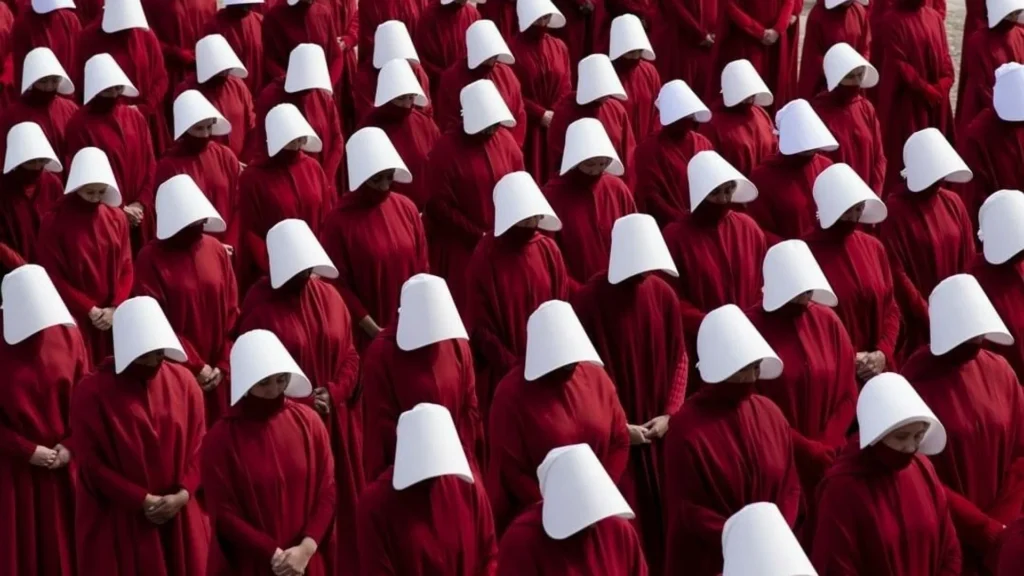
What makes the novel feel so uncomfortably real is Atwood’s rule: she included nothing that hadn’t happened somewhere in human history. The forced reproduction, the religious justification for oppression, the creation of a rigid caste system, the public executions, the secret police, all of it has historical precedent. Atwood wasn’t predicting the future; she was reminding us of the past and warning that it could happen again.
The book’s treatment of reproductive control as a tool of oppression has taken on new urgency as actual debates over bodily autonomy intensify. In Gilead, fertility has become a state resource to be controlled and exploited. Women’s bodies are literally property, their reproductive capacity the only thing that determines their value. Atwood explores how quickly rights we consider fundamental can be stripped away when the right combination of crisis, ideology, and authoritarianism align.
The novel also examines how women can be complicit in their own oppression and the oppression of other women. The Aunts who train and discipline Handmaids, the Wives who participate in the ritualized rapes, and the Marthas who maintain the household hierarchy all play roles in sustaining Gilead’s system. Atwood understood that oppressive regimes don’t just rely on brute force; they co-opt some of the oppressed to police others, creating divisions that prevent solidarity.
The book’s depiction of how totalitarianism emerges feels particularly relevant now. Gilead’s founders used a crisis (plummeting birth rates from environmental damage) to justify emergency measures. They blamed scapegoats (feminists, LGBTQ people, religious minorities). They controlled information and isolated people from each other. They exploited existing prejudices and religious beliefs. They moved gradually enough that resistance never quite coalesced until it was too late. This playbook for democratic backsliding is being deployed in various forms around the globe.
Atwood’s vision isn’t just about gender oppression. It’s about how quickly a society can collapse into authoritarianism when people stop paying attention, stop resisting small injustices, stop believing that “it can’t happen here.” Offred’s memories of her previous life, when she had a job and bank account and freedom of movement, are particularly haunting. She remembers not taking those rights seriously, assuming they were permanent. That complacency enabled their loss.
The novel’s popularity has surged whenever reproductive rights face threats, which tells us something important: people recognize the warning signs Atwood identified. The book serves as both mirror and prophecy, reflecting current anxieties while cautioning about possible futures. In an era of rising authoritarianism, religious nationalism, and attacks on bodily autonomy, “The Handmaid’s Tale” feels less like historical fiction and more like a field guide to resisting totalitarianism.

Why We Can’t Look Away From These Nightmares
There’s a paradox at the heart of unsettling thriller fiction: we’re drawn to stories that disturb us, that make us anxious, that keep us up at night questioning our safety and society. Why do we subject ourselves to narratives that offer no escape, no reassurance, no comfortable distance from real-world fears?
Part of the answer lies in the psychology of preparedness. Reading about plausible disasters, societal collapse, or personal betrayal allows us to mentally rehearse responses. It’s a form of stress inoculation, exposing ourselves to frightening scenarios in a controlled environment. When we finish “The Circle” and immediately check our privacy settings, or read “Gone Girl” and pay closer attention to relationship dynamics, we’re using fiction as a diagnostic tool for reality.
These thrillers also provide validation. They articulate anxieties we might feel but struggle to express. When Flynn dissects performative identity in relationships or Eggers exposes surveillance capitalism’s contradictions, they’re giving shape to inchoate concerns. There’s relief in seeing your private worries reflected in acclaimed literature, proof that you’re not paranoid or overreacting but rather perceiving actual problems.
The compulsive readability of these novels comes from their refusal to provide easy answers. They don’t resolve into clear heroes and villains or conclude with justice served. “American Psycho” ends ambiguously, leaving us uncertain what was real. “The Circle” closes with Mae fully converted to the ideology we spent the book watching her resist. “The Handmaid’s Tale” offers no liberation, just survival and small acts of resistance. This refusal of catharsis feels more honest than thriller formulas that restore order after chaos.

These books also serve as social commentary disguised as entertainment. They let us examine difficult questions about surveillance, bodily autonomy, relationship dynamics, and corporate power without the political baggage of explicit debate. Fiction creates space for complexity, for acknowledging that most real problems don’t have simple solutions, that good intentions can lead to terrible outcomes, that society’s monsters often look like everyone else.
The discomfort these thrillers provoke is itself valuable. They resist letting us get comfortable, insisting that we pay attention to troubling trends and uncomfortable truths. In an age of information overload and manufactured outrage, well-crafted fiction can cut through noise and force genuine reflection. These aren’t just scary stories; they’re wake-up calls disguised as entertainment.
Recognizing Reality Through Fiction’s Lens
The five thrillers explored here function as diagnostic tools, revealing societal fault lines and personal vulnerabilities we might prefer to ignore. They’ve achieved cultural staying power not through shock value but through uncomfortable accuracy, holding up mirrors that reflect aspects of reality we’d rather not acknowledge.
What unites these seemingly disparate novels is their refusal to provide false comfort. They don’t reassure us that systems work, that justice prevails, or that love conquers all. Instead, they document how easily relationships become toxic, how quickly rights can be stripped away, how surveillance can be marketed as safety, how ordinary people can become complicit in extraordinary evil. These aren’t pessimistic visions; they’re realistic assessments of human behavior and social systems under pressure.
The thrillers we find most unsettling are the ones that feel most true. Not factually accurate, but emotionally and psychologically authentic. When we recognize ourselves in Rachel’s fractured memories, Amy’s performative identity, or Mae’s gradual ideological capture, the fiction stops feeling fictional. These characters’ worlds aren’t exaggerated nightmares; they’re logical extensions of trends already in motion.
Reading these novels in 2025 is an act of cultural diagnosis. They help us understand how we arrived at this moment of polarization, surveillance, eroding trust, and institutional failure. They predicted trajectories we’re now living through, not because their authors had crystal balls but because they were paying attention to early warning signs most people dismissed or ignored.
The question these thrillers pose isn’t “could this happen?” but rather “how much of this is already happening?” The surveillance state of “The Circle” exists in various forms. The reproductive control of “The Handmaid’s Tale” is being actively debated and implemented. The media manipulation of “Gone Girl” is a daily occurrence on social media. The corporate psychopathy of “American Psycho” drives business decisions. The gaslighting of “The Girl on the Train” is a recognized pattern of abuse.
These novels remain urgently relevant because they’re not about hypothetical futures but present realities. They’re field guides to the world we’ve built, warning labels we should have heeded, and calls to action disguised as entertainment. The discomfort they provoke is a feature, not a bug. It’s the sensation of recognition, the shock of seeing clearly what we usually glimpse only peripherally.
In the end, these psychologically disturbing thrillers serve a crucial function: they keep us alert to dangers we might otherwise normalize, they articulate fears we might struggle to name, and they remind us that dystopia isn’t something that happens suddenly but rather a gradual process we can resist if we recognize it early enough. The fact that these books make us uncomfortable means they’re working. The real danger would be if they stopped feeling relevant, if we became so inured to their themes that they registered as pure fiction rather than uncomfortable truth.
The thrillers that haunt us longest are the ones that refuse to stay on the page, that bleed into our perception of reality, that make us question assumptions we thought were safe. That discomfort is the price of awareness, and in 2025, awareness might be the most valuable thing literature can offer.