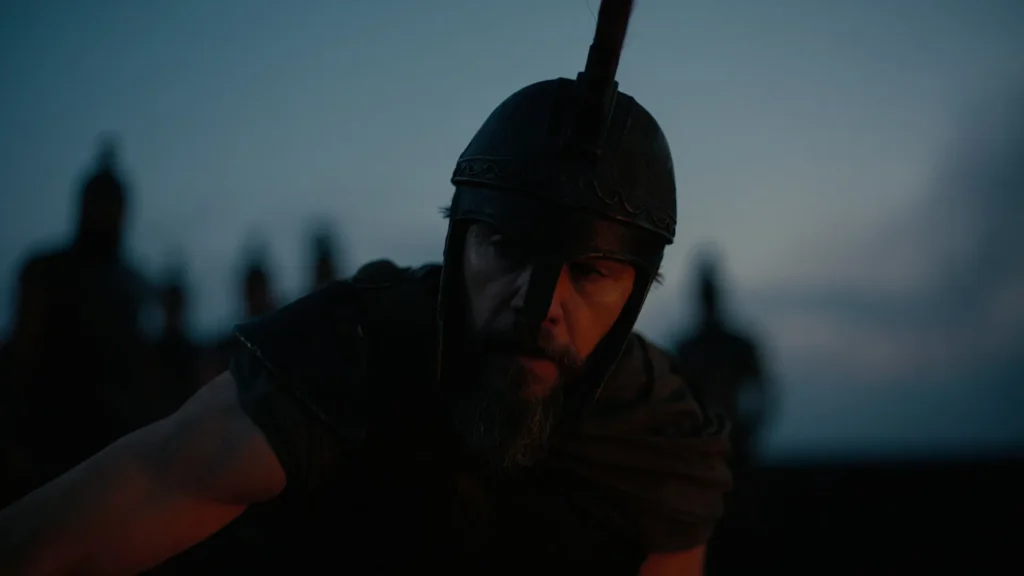

Christopher Nolan has built his career on pushing the boundaries of what cinema can achieve. From bending time in Inception to capturing the intimate horror of Dunkirk and the existential weight of Oppenheimer, the director has consistently proven that ambitious filmmaking and massive box office success aren’t mutually exclusive. Now, Nolan sets his sights on perhaps the most foundational story in Western literature: Homer’s The Odyssey.
This isn’t just another franchise starter or superhero origin story. The Odyssey represents something Hollywood rarely attempts anymore: a genuine mythic action epic shot with practical effects, real locations, and analog film technology. In an era dominated by green screens and digital wizardry, Nolan is taking the road less traveled. He’s hauling IMAX cameras onto actual ocean waters and challenging his cast to perform amid the unpredictable chaos of nature itself.

The stakes couldn’t be higher. With a $250 million budget, a cast that reads like a Hollywood A-list convention, and July 2026 release date that’s served as Nolan’s lucky charm for over a decade, expectations are stratospheric. But if anyone can transform Homer’s 2,800-year-old poem into a cinematic experience worthy of the IMAX format, it’s the filmmaker who convinced audiences to care deeply about the invention of the atomic bomb.
Here are eleven mind-blowing facts about Nolan’s The Odyssey that reveal just how revolutionary this production truly is.
1. It’s the First Feature Film Ever Shot Entirely on IMAX Film Cameras
Film history often pivots on technological breakthroughs, and The Odyssey just created one. This production marks the first time a commercial feature film has been shot completely on IMAX 70mm film cameras from start to finish. While Marvel’s Avengers: Infinity War was captured entirely on IMAX-certified digital cameras, Nolan’s approach takes the analog format into unprecedented territory.
The director essentially issued a challenge to IMAX CEO Rich Gelfond: solve the technical limitations that made full IMAX film productions impractical, and he’d shoot his entire mythic epic on their cameras. According to IMDb’s production notes, IMAX rose to the occasion. They didn’t just modify existing equipment. They revolutionized it.
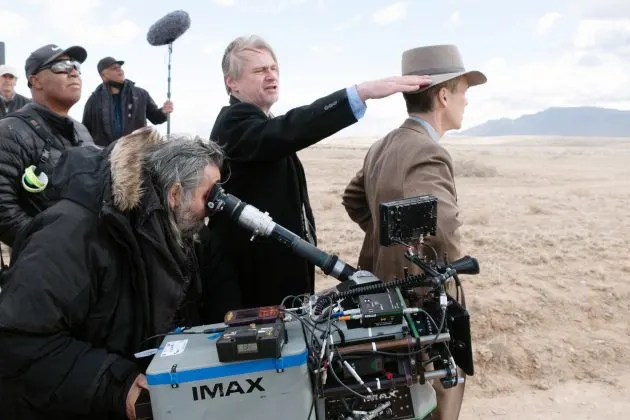
This commitment to analog filmmaking sets The Odyssey apart from virtually every other major blockbuster in production. At a time when digital capture has become the industry standard for its flexibility and cost-effectiveness, Nolan doubles down on celluloid. The decision reflects his long-standing belief that IMAX film’s resolution, color depth, and sheer visual presence remain unmatched by digital alternatives.
2. Nolan Burned Through Over 2 Million Feet of Film
Shooting on IMAX 65mm film isn’t just an aesthetic choice. It’s an expensive one. The production consumed more than 2 million feet (610 kilometers) of film stock during its 91-day shoot, which ran from February through August 2025. At approximately $1.50 per foot, the raw film alone cost around $3 million before processing and scanning.
To put that figure in perspective, 2 million feet translates to roughly 100 hours of footage. That’s an impressive shooting ratio considering IMAX film magazines hold only about three minutes of footage before requiring a reload. Every take demands careful consideration. Every setup matters. There’s no “we’ll fix it in post” safety net when you’re burning through film stock at this rate.
This constraint actually serves Nolan’s meticulous directing style. The filmmaker has always favored extensive preparation over endless takes. His sets run with military precision, with shot lists planned months in advance and rehearsals ensuring everyone knows exactly what’s needed before cameras roll. The film format reinforces this discipline.
3. It’s Nolan’s Most Expensive Film with a $250 Million Budget
Christopher Nolan has never been shy about ambitious productions, but The Odyssey pushes past all his previous budget ceilings. At an estimated $250 million, this mythic action epic surpasses even Oppenheimer‘s considerable price tag. The investment reflects Universal Pictures’ confidence in Nolan following the massive success of his biographical drama, which earned over $950 million worldwide and swept awards season.
Where does that quarter-billion dollars go? The production filmed across six countries and multiple continents, requiring extensive location logistics. The development of new IMAX camera technology specifically for this project carried significant research and development costs. Nolan’s insistence on practical effects over CGI meant building real ships, real sets, and coordinating real ocean shoots rather than relying on digital environments.
The cast alone likely consumed a substantial portion of the budget. When you’re assembling talent like Matt Damon, Charlize Theron, Anne Hathaway, and Zendaya, the salary negotiations become significant. Add in Nolan’s own considerable fee (he’s now one of the few directors who commands both backend participation and creative autonomy), and the financial stakes become clear.
4. Revolutionary New IMAX Camera Technology Was Developed for the Film
IMAX didn’t just loan Nolan their existing cameras. They invented four brand-new ones specifically for The Odyssey, featuring what they call a revolutionary “blimp” housing system. This innovation makes the cameras 30% quieter than previous IMAX film models, solving one of the format’s most persistent problems.
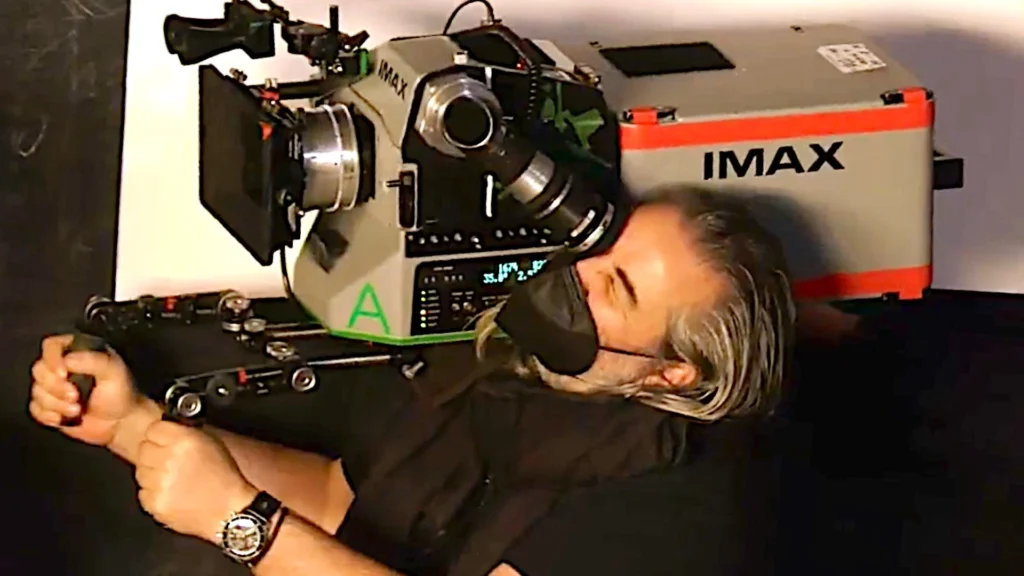
Traditional IMAX film cameras sound like jet engines. The mechanical noise of film running through the camera at high speeds made recording usable dialogue nearly impossible at close range. Directors shooting IMAX sequences typically had to use the format only for wide shots and action scenes, switching to quieter cameras for intimate moments. This forced visual compromises that frustrated filmmakers.
Cinematographer Hoyte van Hoytema demonstrated the breakthrough to Nolan in dramatic fashion. He filmed a child reciting David Bowie’s “Sound and Vision” lyrics in extreme close-up, capturing every whispered word with the massive IMAX camera just inches from the young performer’s face. As Nolan explained to Collider during a recent interview, “You can be shooting a foot from [an actor’s] face while they’re whispering and get usable sound.”
This changes everything for IMAX storytelling. Nolan can now shoot entire scenes, from sweeping battle sequences to quiet emotional moments, in the same format without compromising audio quality or visual consistency.
5. The Production Filmed Across Six Countries and Multiple Continents
Homer’s epic spans the Mediterranean world, and Nolan determined to capture that geographical scope authentically. The production traveled to Morocco, including the historic Aït Benhaddou village near Ouarzazate (familiar to viewers of Gladiator and Game of Thrones). The crew filmed in Greece itself, honoring the story’s origins, and on Sicily’s Favignana Island, where ancient history saturates every stone.
Scotland’s Moray Firth provided locations for northern sequences, while Iceland’s otherworldly landscapes stood in for mythological realms. The production even ventured into Western Sahara, seeking locations that could convincingly represent the ancient world before modern development transformed coastlines.

Most impressively, Nolan spent four months actually at sea. Not on a soundstage with a water tank and wave machines. On real ocean waters with real waves, wind, and weather. The director got his cast who play Odysseus’s crew out on actual vessels in authentic maritime conditions. “It’s pretty primal!” Nolan told journalists. “It’s vast and terrifying and wonderful and benevolent, as the conditions shift. We really wanted to capture how hard those journeys would have been for people.”
This commitment to practical locations paid off in scheduling efficiency. Despite the logistical complexity of moving a major production across multiple continents, The Odyssey wrapped nine days ahead of schedule. That’s nearly unheard of for a production of this scale and ambition.
6. Tom Holland Called It “The Best Script I’ve Ever Read”
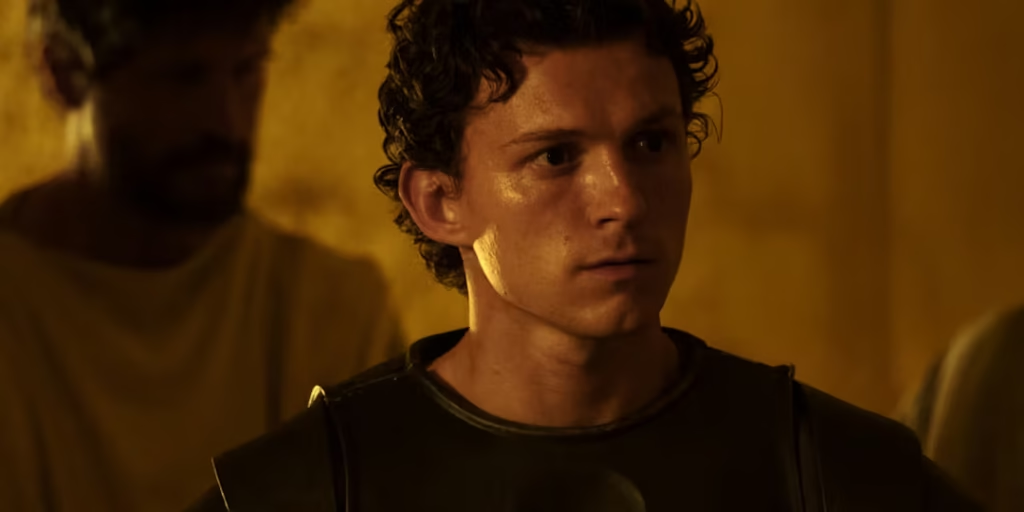
When Spider-Man himself gives your screenplay the highest praise of his career, people notice. Tom Holland, who plays Telemachus (Odysseus’s son searching for his long-lost father), didn’t hold back in his enthusiasm. He called The Odyssey screenplay “the best script I’ve ever read.” Coming from an actor who’s worked on multiple Marvel blockbusters, prestige dramas, and everything in between, that’s significant.
Holland elaborated on his experience during press interviews for his other projects, describing working with Christopher Nolan as “the job of a lifetime” and “the best experience I’ve had on a film set.” He praised Nolan’s collaborative approach, noting that while the director knows precisely what he wants, he creates an environment where actors can pitch ideas and build their characters organically.
This collaborative spirit represents a evolution in Nolan’s directing style. Earlier in his career, the filmmaker’s reputation centered on his precise vision and technical mastery. While those qualities remain, his recent work shows increased openness to actor input. Cillian Murphy spoke similarly about the Oppenheimer experience, describing how Nolan encouraged exploration within carefully structured parameters.
For Holland, the role represents a dramatic departure from Peter Parker. Telemachus requires gravitas, emotional depth, and physical intensity far removed from the Marvel Cinematic Universe’s quippy superhero. The character drives much of The Odyssey‘s emotional core as a son desperate to know the father he barely remembers.
7. The Cast Is One of the Most Star-Studded Ensembles of the Decade
Nolan assembled an embarrassment of riches for this production. Matt Damon leads as Odysseus, bringing his everyman charisma and proven action credentials to the legendary warrior-king. Anne Hathaway plays Penelope, Odysseus’s faithful wife who must hold their kingdom together during his twenty-year absence. The role marks Hathaway’s return to Nolan’s world after Interstellar and The Dark Knight Rises.
Zendaya takes on Athena, the goddess who guides Odysseus throughout his journey. This marks a significant departure from her Dune work with Denis Villeneuve, allowing her to explore a character with genuine divine power rather than a prophesied chosen one. Robert Pattinson appears as Antinous, the lead suitor pursuing Penelope and threatening Telemachus.
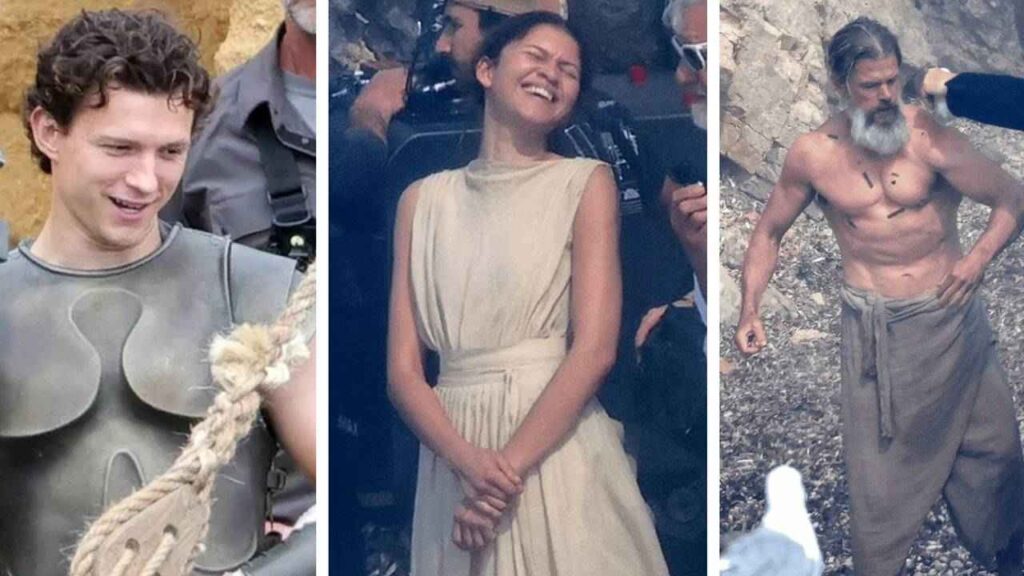
Charlize Theron plays Circe, the enchantress who transforms men into swine and becomes one of Odysseus’s most memorable obstacles. Jon Bernthal tackles Menelaus, while Benny Safdie takes on Agamemnon. John Leguizamo appears as Eumaeus, Odysseus’s loyal swineherd. Lupita Nyong’o, Mia Goth, and Elliot Page round out the ensemble in roles that remain undisclosed.
This marks one of the largest casts Nolan has ever directed. The ensemble extends far beyond the marquee names, with dozens of talented performers filling supporting roles. According to Variety, the scale rivals Peter Jackson’s Lord of the Rings trilogy in terms of cast coordination and ensemble management.
8. Nolan Has Been Dreaming About This Film for Decades
This isn’t an opportunistic IP grab. The Odyssey represents a decades-long passion project for Christopher Nolan. The director grew up watching Ray Harryhausen’s mythological films like Jason and the Argonauts and Clash of the Titans, marveling at their imagination while wishing for a more grounded, realistic approach to ancient epics.
Nolan observed that despite Hollywood’s endless franchise mining, nobody had attempted Homer’s foundational saga with the resources and scale it deserved. “I’d never seen that done with the sort of weight and credibility that an A-budget and a big Hollywood, IMAX production could do,” the director explained in interviews. He sees the adaptation as filling a gap in cinematic culture.

The timing finally aligned after Oppenheimer‘s success. That film proved Nolan could take complex, dialogue-heavy material and transform it into a global phenomenon. It demonstrated audiences’ appetite for serious, adult-oriented cinema shot with technical excellence. Studios became more willing to greenlight ambitious projects with appropriate budgets.
Universal Pictures secured the package quickly. After their Oppenheimer partnership proved spectacularly profitable (the film cost roughly $100 million and earned nearly $1 billion worldwide), the studio committed to Nolan’s vision. They agreed to the IMAX film format, the extensive location shooting, and the nine-figure budget without demanding franchise potential or intellectual property extensions.
9. The Film Was Shot Almost Entirely at Sea on Real Ocean Waves
In an industry increasingly reliant on LED walls and virtual production, Nolan went the opposite direction. The majority of The Odyssey was captured on actual ocean waters with real waves, wind, and weather conditions. No water tanks. No soundstage trickery. Just cast, crew, and cameras facing nature’s unpredictability.
Nolan spent four months at sea coordinating this massive undertaking. The production built real vessels that could withstand ocean conditions while accommodating film equipment and crew. Actors who play Odysseus’s crew trained extensively for the physical demands of performing on constantly moving surfaces while wearing heavy period costumes.
“It’s vast and terrifying and wonderful and benevolent, as the conditions shift,” Nolan said about the ocean filming. “We really wanted to capture how hard those journeys would have been for people.” This authenticity extends throughout the production philosophy. Rather than creating comfortable approximations of ancient maritime life, the filmmaker immersed his team in something approaching the actual experience.
The approach carries risks. Weather delays, equipment challenges, and safety concerns all multiply when filming on open water. But the visual rewards potentially justify those complications. According to early reports from The Hollywood Reporter, the ocean footage showcases IMAX’s capabilities in ways previous films haven’t approached. The combination of 70mm film’s resolution and the ocean’s natural grandeur creates images unlike anything else in recent cinema.
10. The Trailer Broke Records with 121.4 Million Views in 24 Hours
When the full trailer dropped in December 2025, the internet exploded. The preview accumulated 121.4 million global views within just 24 hours across TikTok, YouTube, Facebook, Instagram, and X (formerly Twitter). That made it the eighth most-viewed trailer of 2025, surpassing Wicked: For Good and more than doubling the first Oppenheimer trailer’s views during the same period.
The massive response demonstrates the cultural anticipation surrounding Nolan’s return to cinema. Oppenheimer transformed the director from a respected filmmaker into a genuine cultural phenomenon. His name now carries marketing weight comparable to major franchises. Audiences trust that a Nolan film will deliver a theatrical experience worth the ticket price.
The trailer itself showcases Nolan’s visual ambition. Epic battle sequences, intimate character moments, and stunning natural vistas combine with composer Ludwig Göransson’s presumably thunderous score. Early reactions praised the practical effects work and the sense of scale achieved through real locations rather than digital fabrication.
Social media conversation focused particularly on the casting choices. Zendaya’s brief appearance as Athena sparked extensive discussion about how Nolan would portray Greek gods. Fans debated whether the divine characters would possess obvious supernatural powers or whether Nolan might ground them in a more ambiguous, realistic framework.
11. It Opens on Nolan’s Lucky Mid-July Release Date
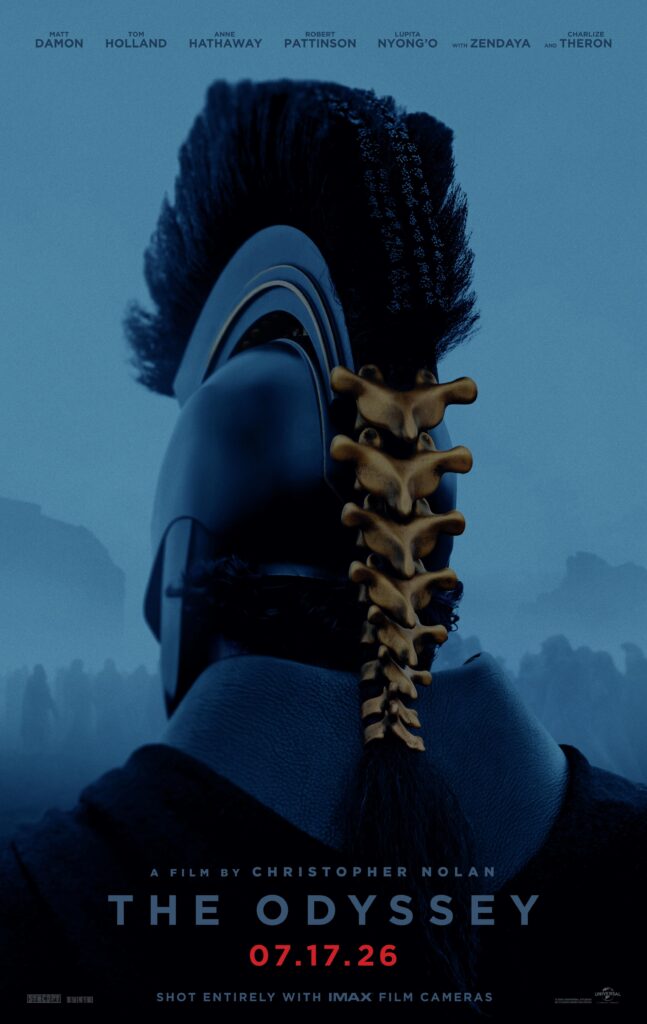
The Odyssey premieres July 17, 2026, continuing Nolan’s tradition of mid-July releases. This date has proven remarkably fortunate for the filmmaker. The Dark Knight opened in July 2008, becoming a cultural phenomenon and the first superhero film to earn serious awards consideration. The Dark Knight Rises followed in July 2012, concluding the trilogy with similar success.
Inception arrived in July 2010, proving audiences would embrace original science fiction during blockbuster season. Dunkirk opened in July 2017, demonstrating that serious war dramas could compete with franchise tentpoles. Most recently, Oppenheimer launched in July 2023, defying all expectations to become one of the year’s biggest hits despite being a three-hour biographical drama about theoretical physics.
The July frame offers several advantages. Summer audiences seeking event cinema pack theaters for movies that justify the theatrical experience. Counter-programming against typical blockbuster fare creates distinction in a crowded marketplace. The longer days provide more screening opportunities in markets where daylight affects attendance patterns.
Universal Pictures undoubtedly hopes The Odyssey continues this streak. The studio positioned the film as the centerpiece of their summer 2026 slate. With IMAX screens locked months in advance and premium format theaters prioritizing the release, distribution support matches the production’s ambition.
Odysseus Returns to the Big Screen Where He Belongs
Christopher Nolan’s The Odyssey represents something Hollywood rarely attempts anymore: a genuine cinematic gamble. Not a sequel. Not a reboot. Not a franchise starter with merchandising potential and streaming spinoff prospects. Just a filmmaker with a vision, a studio willing to back that vision with substantial resources, and a story that’s survived nearly three millennia because it speaks to something fundamental in human experience.
The convergence of cutting-edge IMAX technology and old-school analog filmmaking creates fascinating contradictions. Nolan pushes forward by reaching backward, using film stock and practical effects to achieve images impossible with digital tools. He challenges his cast and crew to perform in real conditions rather than comfortable studio environments. The result should feel both contemporary and timeless, modern yet classical.
Whether The Odyssey achieves Nolan’s decades-long dream of bringing Homer’s epic to life with appropriate weight and credibility remains to be seen. But the ambition alone deserves recognition. In an industry increasingly risk-averse, increasingly reliant on familiar properties, increasingly comfortable with digital approximations of reality, Nolan charts his own course. Much like Odysseus himself, the director navigates between known dangers to reach for something extraordinary.
July 17, 2026 can’t arrive fast enough.