
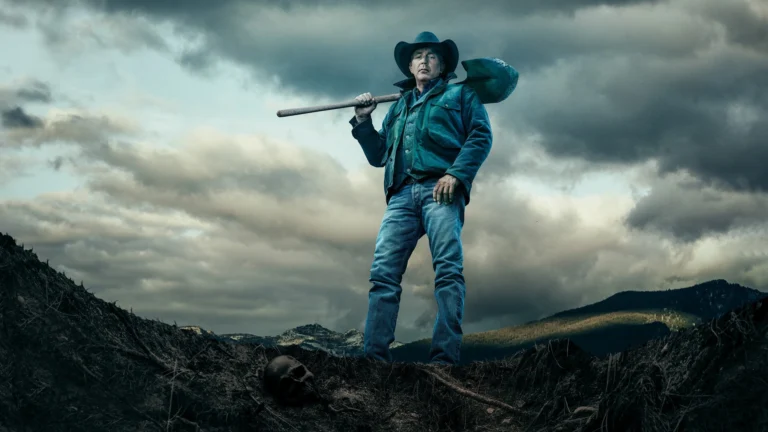

The Yellowstone phenomenon changed how audiences think about modern Westerns. For five seasons, Taylor Sheridan’s sprawling family saga proved that stories about ranch life, generational conflict, and territorial power struggles could dominate streaming charts and water cooler conversations. But with the series concluding its run with the Dutton family, fans are searching for their next obsession that captures that same raw intensity and thematic depth.
The truth is, Yellowstone was never simply a show about cowboys and cattle. At its core, it explored land as the ultimate currency, family as both sanctuary and battlefield, and the brutal reality that the American West, whether historical or contemporary, is built on violence, compromise, and legacy. These themes run deeper than any single series, and Prime Video quietly houses some of the strongest Western and neo-Western alternatives currently available for streaming.
What makes a worthy Yellowstone follow-up? It’s not about replicating Kevin Costner’s gravelly voice or finding another ranch-set drama with pretty horses. The series that truly capture Yellowstone’s essence understand the genre’s fundamental questions: Who controls the land? What price does power demand? How do family sins echo through generations? These four Prime Video series tackle those questions head-on, each offering a distinct perspective while honoring the Western tradition that made Yellowstone resonate.
From historical epics spanning multiple generations to surreal neo-Westerns bending reality itself, these recommendations represent the strongest alternatives for viewers ready to explore beyond the Dutton ranch. Some lean into period authenticity, others embrace genre experimentation, but all of them grasp what made Yellowstone appointment television. Here are four Western series on Prime Video that feel like natural successors to the Dutton saga, though availability may vary by region and subscription tier.
-
1 The Son: A Dynastic Western Built on Oil, Blood, and Inheritance

AMC
If Yellowstone fascinated you as a multigenerational family empire drama, The Son might be the closest spiritual cousin on this list. Based on Philipp Meyer's acclaimed novel, this AMC series follows Eli McCullough, portrayed with steely determination by Pierce Brosnan, across multiple timelines that span from his traumatic youth to his ruthless reign as a Texas oil baron.
The narrative structure proves ambitious, weaving together three distinct time periods to illustrate how violence echoes forward through generations, shaping descendants who never chose the wars they inherited. Young Eli's captivity with Comanches in the 1840s, his rise to power in the early 20th century, and his great-grandson Pete's struggles in 1988 create a tapestry showing how familial trauma becomes destiny.
What makes The Son resonate as a Yellowstone alternative runs deeper than surface similarities. According to critical analysis from The Hollywood Reporter, both series understand that land represents economic dominance rather than mere symbolic territory. Power transfers through bloodlines, not clean succession. Morality becomes a luxury the powerful rarely afford themselves.
This is essentially Yellowstone if cattle were replaced with oil derricks and history itself became the primary antagonist. The McCullough family's empire building mirrors the Duttons' territorial struggles, but The Son adds historical scope that contextualizes how American expansion required specific kinds of brutality. Brosnan delivers one of his finest performances, channeling ruthless pragmatism without losing the character's wounded humanity.
The series ran for two seasons on AMC before cancellation, but those 20 episodes offer a complete, if abbreviated, exploration of American dynasty building. Where Yellowstone focuses on preserving legacy, The Son interrogates whether some legacies deserve preservation at all.
-
2 Outer Range: Neo-Western Meets Cosmic Mystery

Amazon Studios
At first glance, Outer Range appears to represent a genre pivot from traditional Western storytelling. Strip away the science fiction elements, however, and what remains feels deeply familiar to anyone who followed the Dutton family's struggles. Josh Brolin anchors the series as Royal Abbott, a Wyoming rancher fighting to maintain control of his land while rival families circle like opportunistic vultures waiting for weakness.
The twist that distinguishes Outer Range from standard ranch dramas? A massive, unexplainable void sits at the edge of Abbott's property, one that bends time, memory, and consequence in ways that transform a family drama into something genuinely unsettling. Created by Brian Watkins, the series uses this supernatural element not as gimmick but as metaphor for the unknowable forces that shape family legacies.
Despite its supernatural angle, Outer Range understands the same fundamentals that powered Yellowstone's success. Land equals identity in these stories. Neighbors exist as enemies in waiting, their friendliness masking inevitable conflict. Family secrets prove more dangerous than any outside threat. The series particularly excels at portraying how rural communities function as their own ecosystems with unwritten rules and long memories.
Brolin, reuniting with producer Plan B Entertainment after No Country for Old Men, brings gravitas to Royal's increasingly desperate attempts to protect both his property and his family from forces beyond comprehension. According to interviews with Entertainment Weekly, Brolin approached the role as a traditional Western character thrown into circumstances that challenge everything he believes about cause and effect.
The series ran for two seasons before Amazon canceled it in 2024, leaving some narrative threads unresolved. What exists still delivers a tense, moody neo-Western experience that feels both intimate and cosmically unsettling. For Yellowstone fans who appreciated the show's willingness to embrace melodrama and high stakes, Outer Range offers similar intensity with added existential dread.
-
3 The English: Prestige Western as Elegant Tragedy

Amazon Studios
The English is decidedly not comfort viewing, but neither were Yellowstone's most powerful moments. This Hugo Blick-created limited series, starring Emily Blunt and Chaske Spencer, represents prestige Western storytelling at its most formally rigorous and emotionally devastating. Set in 1890 America, the six-episode arc follows an aristocratic Englishwoman seeking revenge and a Pawnee scout navigating a landscape that wants him dead.
The series strips Western mythology down to its skeleton, focusing unflinchingly on colonial violence, grief's transformative power, and the moral cost of survival in hostile territory. Every death carries weight rather than serving as mere plot device. Every choice scars someone permanently, rippling forward in ways characters cannot predict. Cinematographer Piers McGrail, whose work earned widespread praise, captures the American frontier as both breathtakingly beautiful and profoundly indifferent to human suffering.
Why should Yellowstone fans pay attention to this darker, more contemplative series? Both shows treat violence with appropriate weight rather than empty spectacle. According to reviews in The Guardian, The English examines how power always demands payment in blood and trauma. The land remembers everything, holding grudges that outlast individual lifetimes.
Blunt delivers career-best work as Lady Cornelia Locke, channeling grief into focused determination without losing the character's fundamental decency. Spencer matches her intensity as Eli Whipp, a former cavalry scout whose military service bought him citizenship but not safety or respect. Their unlikely partnership forms the emotional core as both characters navigate a West where institutional justice is fiction and personal codes determine survival.
This represents the kind of Western that reminds viewers why the genre still matters artistically and why it can still inflict genuine emotional damage. Where Yellowstone uses the ranch as battleground for family conflict, The English uses the entire frontier as canvas for exploring how civilizations are built on specific bodies and specific betrayals. It's shorter and more contained than Yellowstone's sprawling narrative, but it cuts deeper.
-
4 That Dirty Black Bag: Spaghetti Western Brutality, Serialized

AMC
If you loved Yellowstone most when it leaned into raw confrontations and moral standoffs stripped of sentimentality, That Dirty Black Bag delivers those elements with zero restraint. This Italian-American co-production channels Sergio Leone's spaghetti Western tradition into serialized television, creating something that feels both classically familiar and refreshingly unapologetic about genre excess.
The premise proves simple and savage in equal measure. A bounty hunter named Red Bill, played by Douglas Booth, collects the heads of wanted criminals in the titular bag. His path collides with Sheriff McCoy, portrayed by Dominic Cooper, who presents as incorruptible but hides a thoroughly rotten past. What unfolds across eight episodes is hyper-stylized Western storytelling soaked in cynicism, violence, and Leone-inspired atmosphere.
Why does this fit alongside Yellowstone despite radically different tones? Both series understand that law and order are comforting illusions rather than achievable realities. Masculinity gets constantly interrogated and deconstructed. Justice operates through personal codes rather than institutional frameworks. The series, created by Mauro Aragoni and Silvia Ebreul, embraces moral ambiguity as fundamental principle rather than occasional plot device.
That Dirty Black Bag is shorter and harsher than Yellowstone's family saga, trading generational conflict for immediate violence and existential Western philosophy. The production design and cinematography pay explicit homage to the genre's Italian origins, featuring extreme close-ups, stylized violence, and a Ennio Morricone-influenced score. It's deliberately exaggerated rather than naturalistic, but it scratches the same itch for fans who appreciate the Western genre's darker instincts.
The series acknowledges its pulp roots while taking character development seriously. Both Red Bill and McCoy function as archetypes, the righteous killer and corrupt lawman, but the writing grants them enough dimension to transcend pure stock characters. For Yellowstone viewers who enjoyed Beth Dutton's vicious confrontations or John Dutton's ruthless pragmatism, this offers similar pleasures without ranch family dynamics.
Finding Your Next Western Obsession
These four series represent distinct approaches to Western storytelling, each offering something different while honoring the traditions that made Yellowstone compulsive viewing. For the closest match to Yellowstone’s family empire DNA and multigenerational scope, The Son provides the most direct parallel. Those seeking modern ranch drama with genre-bending twists should start with Outer Range and its reality-warping mysteries. Viewers craving high-end, emotionally devastating prestige television will find The English rewards patient attention. And fans who appreciate stylized, brutal Western pulp filtered through European sensibilities should dive into That Dirty Black Bag.

Each series grasps the fundamental truth that the Western genre isn’t really about hats, horses, or frontier nostalgia. It’s about who gets to stay and who gets pushed out. It’s about how much blood the land demands in return for prosperity. It’s about whether family represents salvation or curse. These questions powered Yellowstone’s cultural impact, and these four Prime Video alternatives explore similar territory with their own distinctive voices and visions.
The streaming landscape constantly shifts, with titles moving between services and regional availability varying significantly. If you let me know which country you’re streaming from, I can help narrow these recommendations to titles most likely included with Prime at no extra cost rather than requiring additional rentals or channel subscriptions. But regardless of accessibility logistics, these four series represent the strongest Western and neo-Western alternatives currently available for fans ready to venture beyond the Dutton ranch and discover what else the genre has to offer.