
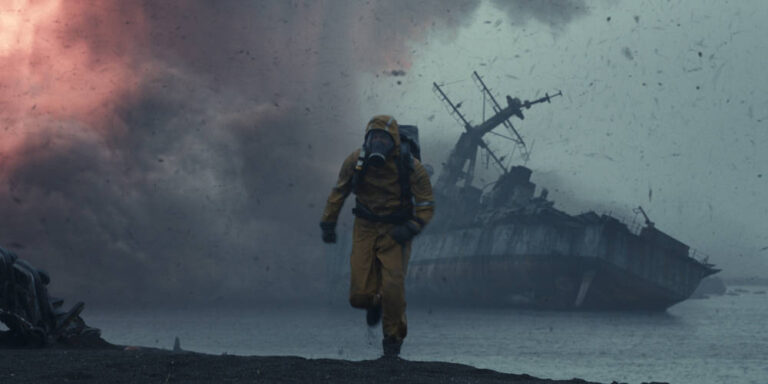

The apocalypse has arrived, and it's not what you expected. When Greenland 2: Migration hit theaters, audiences weren't treated to another CGI-heavy spectacle of collapsing cities and fireballs raining from the sky. Instead, director Ric Roman Waugh delivered something far more unsettling: a grounded, emotionally devastating look at what happens when ordinary people are forced to make impossible choices in the face of extinction.
Following the Garrity family as they navigate a fractured world in the aftermath of a planet-killing comet, the sequel doubles down on what made the original Greenland such a refreshing entry in the disaster genre. There are no superhuman feats, no last-minute saves by square-jawed heroes. Just Gerard Butler's John Garrity, his estranged wife Allison (Morena Baccarin), and their young son Nathan trying to stay alive and stay together when civilization crumbles faster than anyone can process. It's disaster cinema filtered through the lens of family drama, where the most dangerous threat isn't the comet itself but the moral erosion that follows societal collapse.
For viewers who found themselves emotionally wrecked by Migration's relentless tension and intimate stakes, the craving for more stories in this vein is understandable. The post-apocalyptic genre has always worked best not when it shows us the world ending, but when it reveals who we become after everything falls apart. These eight films (and one essential limited series) form a carefully curated journey through survival cinema that prioritizes psychological weight over pyrotechnics, moral complexity over easy victories, and the enduring question: what does it cost to stay human when the rules of humanity no longer apply?
What distinguishes the films gathered here is their commitment to emotional truth over blockbuster convention. They understand that the most compelling survival narratives aren't about watching the world end but about watching people change after it already has. These stories favor families (chosen and biological) over lone heroes, tension built from impossible moral choices over action sequences, and the brutal honesty that survival isn't heroic but exhausting, morally compromising, and driven by love that refuses to surrender even when surrender would be easier.
-
8 Light of My Life (2019): Protection Becomes Prison
Black Bear Pictures
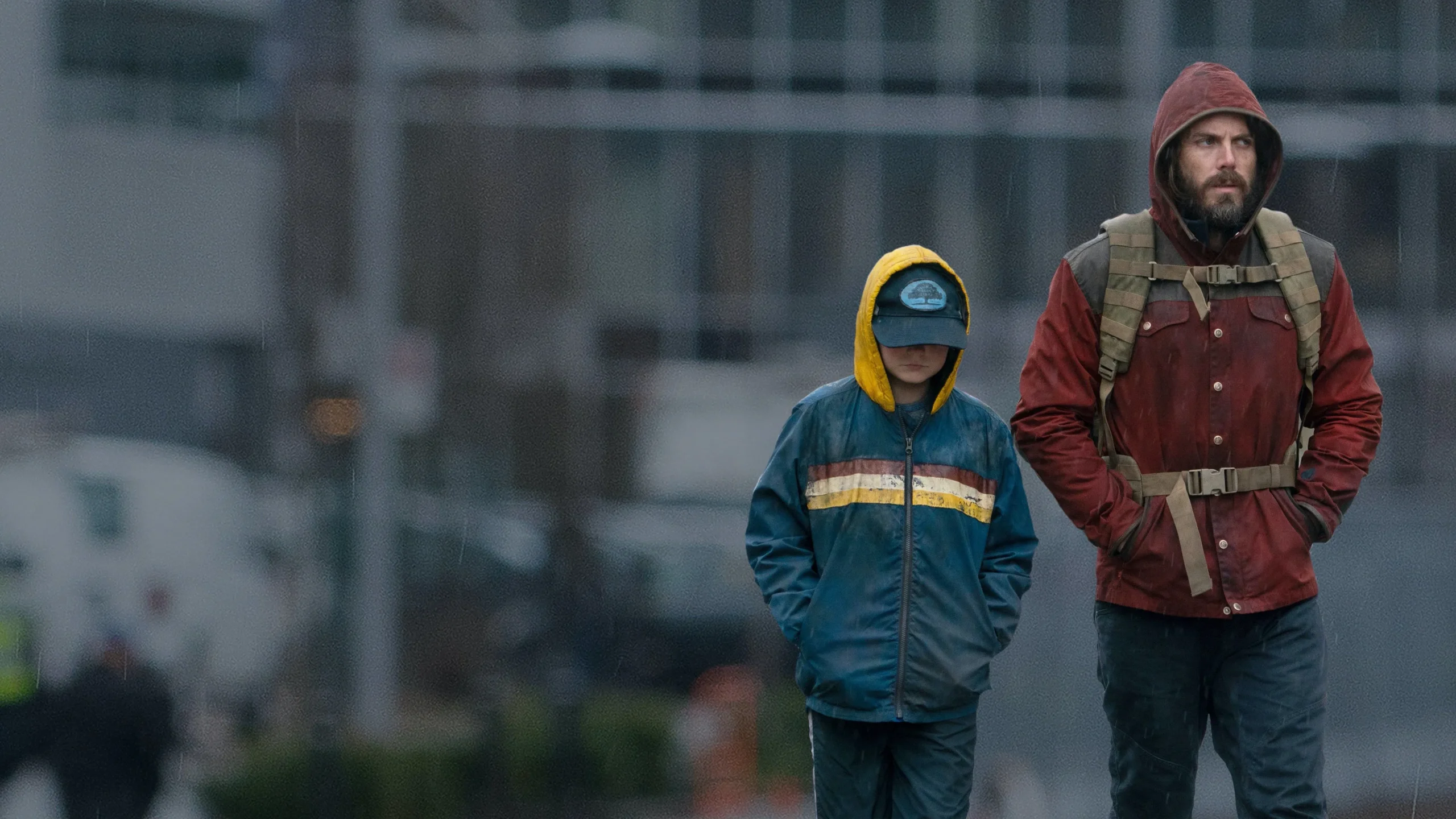
The Story: A father protects his daughter by disguising her as a boy in a world where plague has killed most women
Casey Affleck's directorial effort flew under the radar, but it deserves recognition as one of the most emotionally nuanced entries in the genre. Set in a world where a plague has killed most women, Affleck plays a father whose survival strategy is as psychologically complex as it is necessary: he disguises his daughter as a boy to keep her safe. The threat isn't alien or environmental—it's human desperation in a world where half the population represents scarce resource.
The film moves with deliberate, meditative pacing that some critics found too slow, but Affleck, who also wrote the screenplay, uses that space to examine uncomfortable questions. Does protecting someone by hiding their identity help them or hurt them? When do survival instincts become paranoia? How far can parental protection go before it becomes imprisonment? Anna Pniowsky delivers a remarkable performance as the daughter, capturing both the innocence she clings to and the growing awareness that her existence puts her father in constant danger.
What connects it to Greenland 2: Both films explore parental responsibility as the primary driver of every decision. There are no grand missions or world-saving plots in Light of My Life. There's only a father who must protect his child while teaching her to eventually survive without him. The moral complexity deepens when they encounter other survivors. Can they trust anyone? The film asks questions about isolation versus connection that Greenland 2 raises but doesn't fully explore.
Affleck's direction emphasizes natural light and long takes, creating almost documentary intimacy. Cinematographer Adam Arkapaw, who shot True Detective's first season, captures both beauty and menace in the wilderness. Where Greenland 2: Migration suggests that keeping families together is the ultimate goal, Light of My Life honestly examines what happens when protection strategies fundamentally change the person you're protecting.
-
7 The Survivalist (2015): When Hope Runs Out
The Fyzz Facility Film One
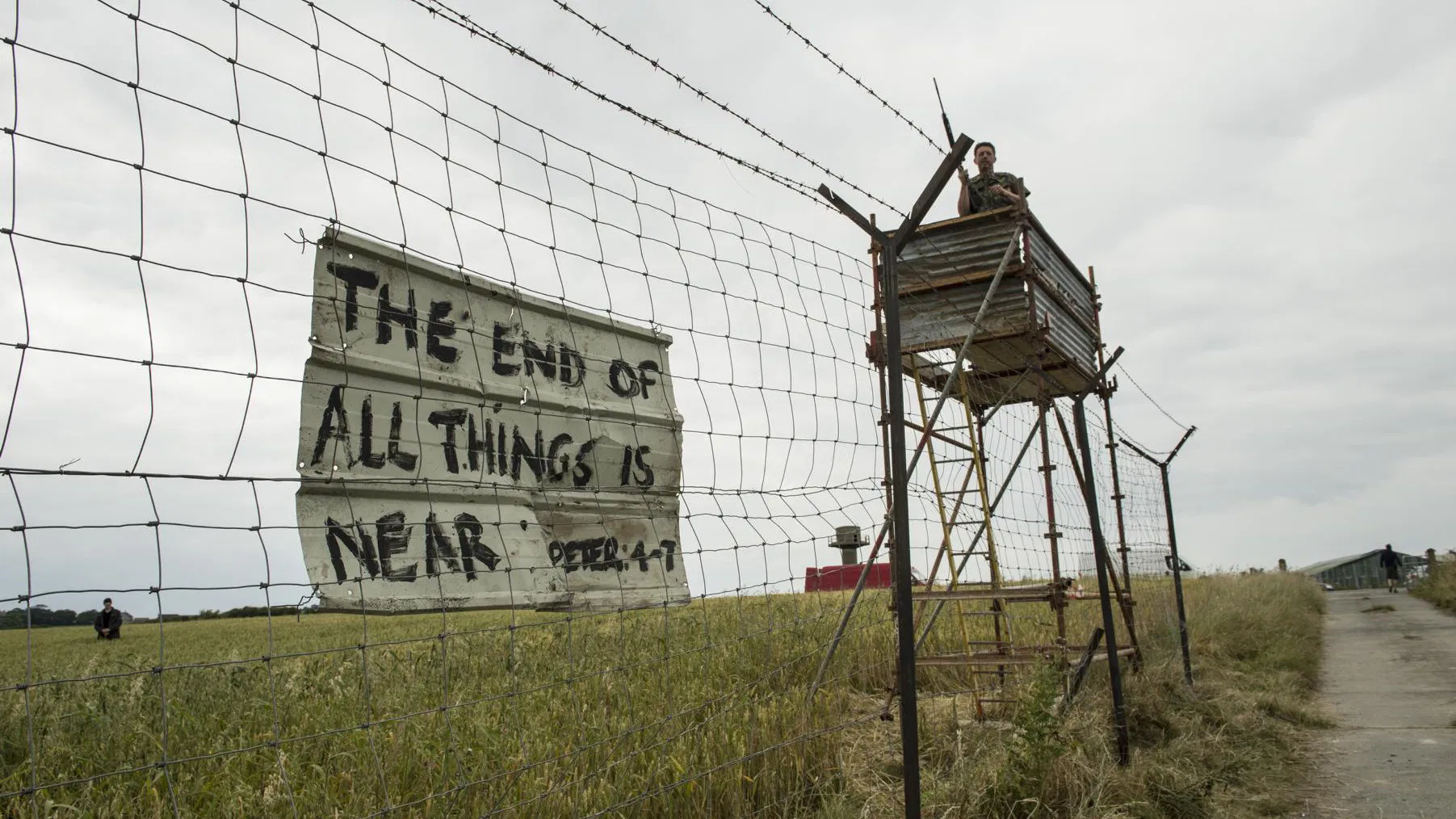
The Story: A lone man maintaining brutal existence in the woods faces moral reckoning when strangers arrive
Stephen Fingleton's debut feature is perhaps the bleakest entry on this list, and that's precisely why it matters. Set in an unnamed future where resource depletion has returned humanity to subsistence farming, the film follows a lone man (Martin McCann) who has carved out a brutal existence through defensive paranoia and ruthless self-interest. His carefully maintained garden and elaborate security measures keep him alive until a mother and daughter arrive seeking shelter.
What follows is a masterclass in tension and moral erosion that operates almost entirely without dialogue. The survivalist trades food for sex. The women calculate whether submission is preferable to starvation. There are no heroes here, only people making soul-crushing calculations about survival versus dignity. Fingleton strips away any romanticism about post-apocalyptic survival, showing it as grinding, dehumanizing, and morally corrosive.
The Greenland 2 connection: This represents the nightmare version of what the Garrity family might face if their journey continues long enough. Migration hints at this darkness, showing refugees turned away and desperate people committing violence for resources, but The Survivalist fully inhabits that space. It's uncomfortable, often disturbing, but honest about what survival might actually look like when all systems have failed and hope has been ground to dust.
The film's compound, with its tripwires and hidden weapons, tells the story of someone who has survived by trusting no one. When trust is finally extended, it becomes the most dangerous gamble of all. The minimalist approach extends to the production itself—filmed on a micro-budget in Northern Ireland, the movie proves that post-apocalyptic cinema doesn't require expensive effects, just commitment to showing humanity stripped to its most basic, and sometimes ugliest, instincts.
-
6 It Comes at Night (2017): Paranoia as the Real Apocalypse
Animal Kingdom, A24
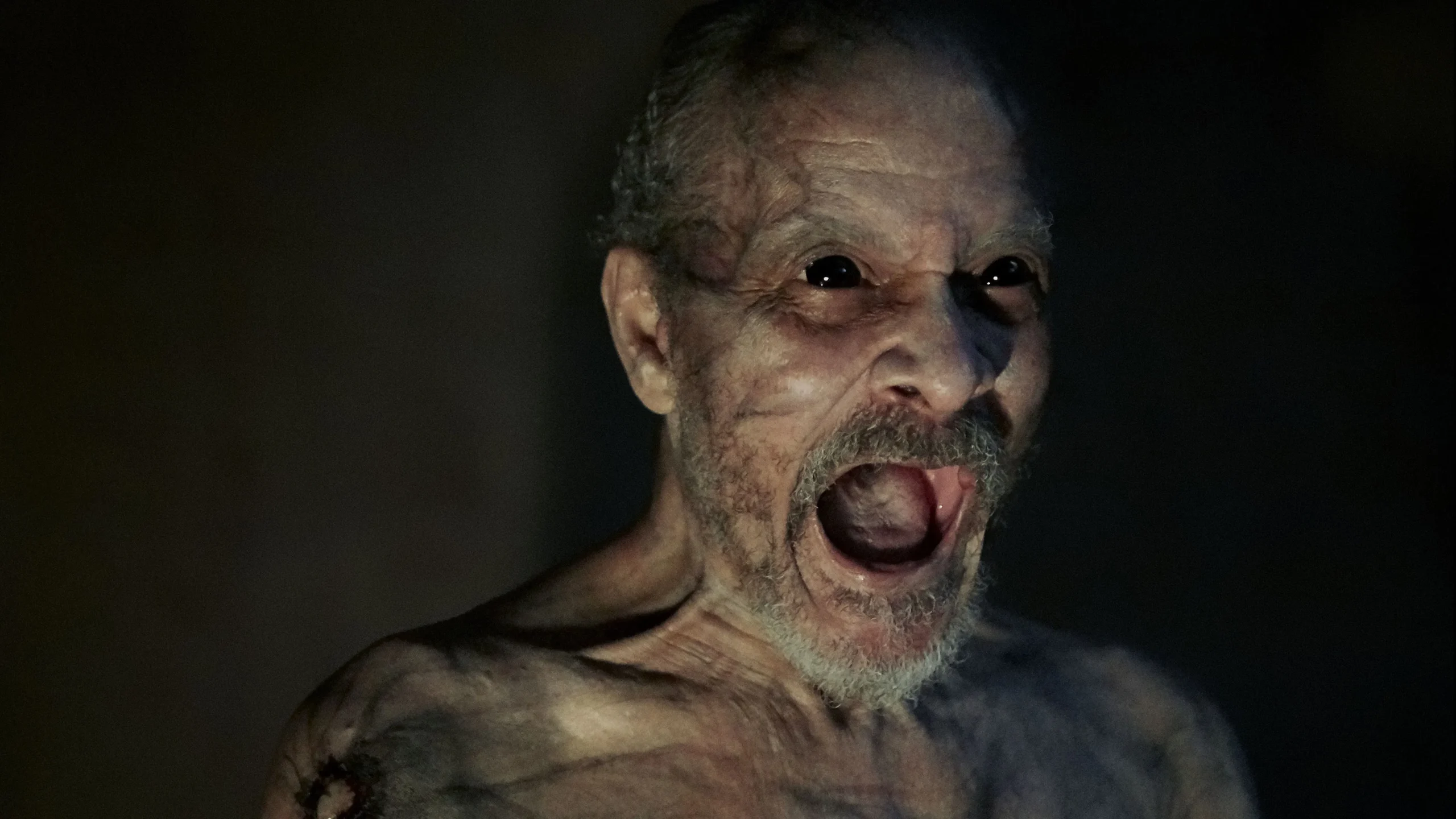
The Story: Two families in a boarded-up house discover fear is more dangerous than any external threat
Trey Edward Shults' A24 psychological thriller was marketed as horror but functions more as a pressure-cooker examination of how fear destroys from within. In a boarded-up house in the woods, a family led by Joel Edgerton and Carmen Ejogo maintains strict protocols to protect against an unspecified contagion. When another family (Christopher Abbott, Riley Keough) arrives seeking help, the question becomes: which is more dangerous, the disease outside or the paranoia inside?
Shults, whose previous film Krisha examined family dysfunction with claustrophobic intensity, applies that same approach to survival horror. The film's title is deliberately ambiguous. What comes at night? The infected? Intruders? Or simply the fears we cannot suppress in darkness? The house, lit primarily by lanterns creating pools of shadow, becomes a character itself—its long hallways and locked doors representing both safety and prison.
The performances anchor the escalating dread with uncomfortable realism. Edgerton plays Paul as a man whose protective instincts have calcified into rigid authoritarianism. Every decision is about control, about maintaining the rules that keep them safe. When Abbott's family disrupts that control, Paul's paranoia becomes as deadly as any external threat. The tragedy is that everyone believes they're doing the right thing, making morally sound choices to protect their families. They're all correct, and they're all creating disaster.
Why it matters after Migration: The Greenland connection lies in recognizing that the real apocalypse isn't the event but what it does to human psychology. When systems collapse and information becomes unreliable, we fill the void with fear. Paul isn't a villain—he's every parent in Greenland 2 who turned away refugees or made brutal calculations about limited resources. Shults forces viewers to acknowledge that under enough pressure, we might all become Paul, convinced we're protecting our families while actually destroying them.
-
5 Leave the World Behind (2023): The Unknowable Catastrophe
Netflix
The Story: Two families trapped together as mysterious technological failures suggest civilization's collapse
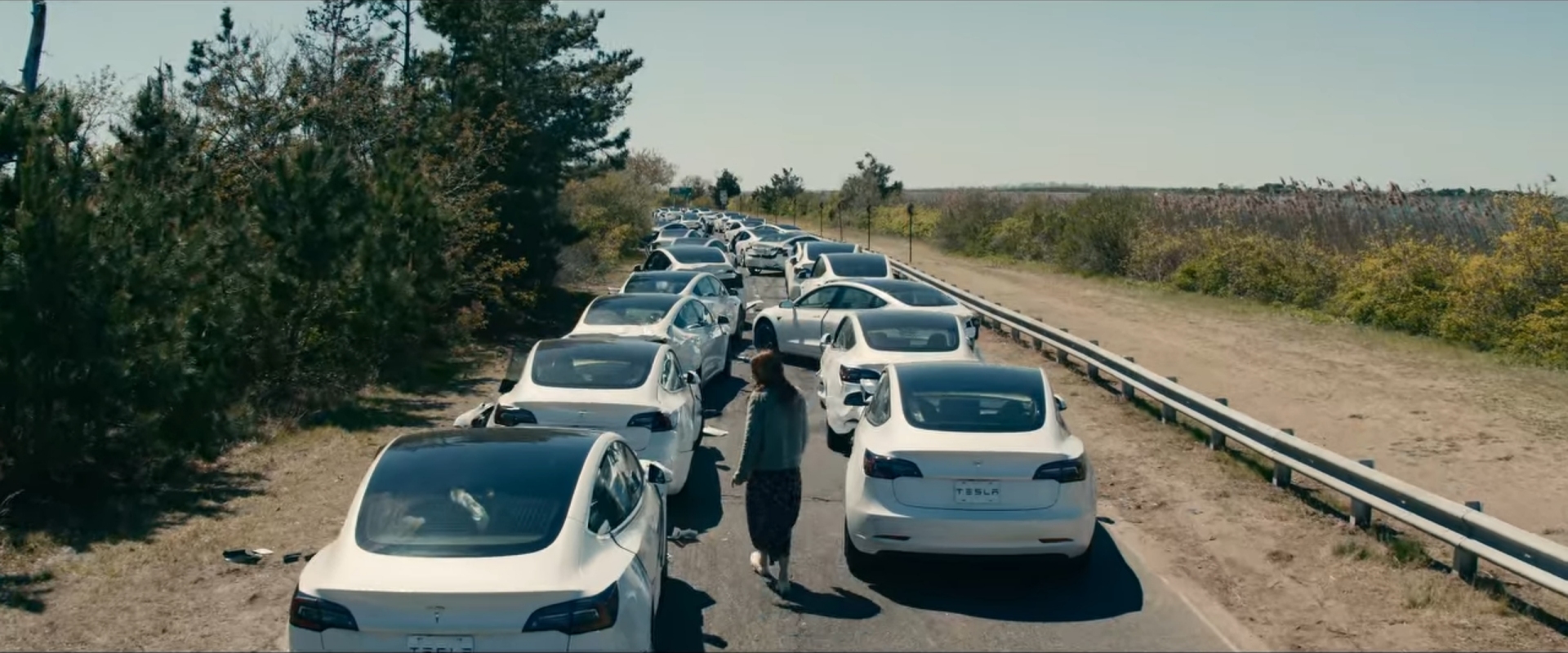
Sam Esmail's Netflix thriller operates on a radically different frequency than traditional disaster films. Based on Rumaan Alam's acclaimed novel, it traps two families in a Long Island vacation home as mysterious technological failures and strange occurrences suggest civilization is collapsing. But here's the genius move: the apocalypse remains frustratingly, brilliantly vague. No one explains what's happening because no one knows.
Julia Roberts and Ethan Hawke play Amanda and Clay, whose family vacation is interrupted when the house's owners, played by Mahershala Ali and Myha'la, arrive claiming a blackout in the city forced them to return. What follows is a slow-burn psychological examination of how quickly trust erodes when information disappears. The real terror isn't the cause of the collapse but the absence of reliable knowledge about it.
This mirrors the early stages of Greenland 2: Migration, where characters scramble to understand fragmentary reports and contradictory government messages. Esmail, who created Mr. Robot, understands that in our hyper-connected age, losing access to information feels as catastrophic as losing shelter or food. His direction emphasizes creeping dread over sudden shocks. A self-driving Tesla crashes into a neighboring house. Hundreds of flamingos appear on the beach. A ship runs aground. Each incident is unexplained, and the not-knowing becomes suffocating.
The performances elevate the material beyond standard disaster fare. Roberts, often cast as warm and relatable, plays Amanda as prickly and suspicious, her liberal values tested when survival feels threatened. Ali brings measured dignity to G.H., a successful businessman navigating racial distrust even as the world ends. Their dynamic exposes how quickly societal fractures reopen under pressure—a theme Greenland 2 touches on but doesn't fully explore.
The takeaway: For viewers who found Greenland 2's information blackouts most terrifying, Leave the World Behind extends that anxiety into a feature-length meditation on how we cope when all our systems of understanding simultaneously fail. It suggests that knowing how the world ends might be less frightening than never knowing at all.
-
4 A Quiet Place (2018): Silence as Survival Currency
Paramount Pictures
The Story: A family maintains absolute silence to hide from creatures that hunt by sound
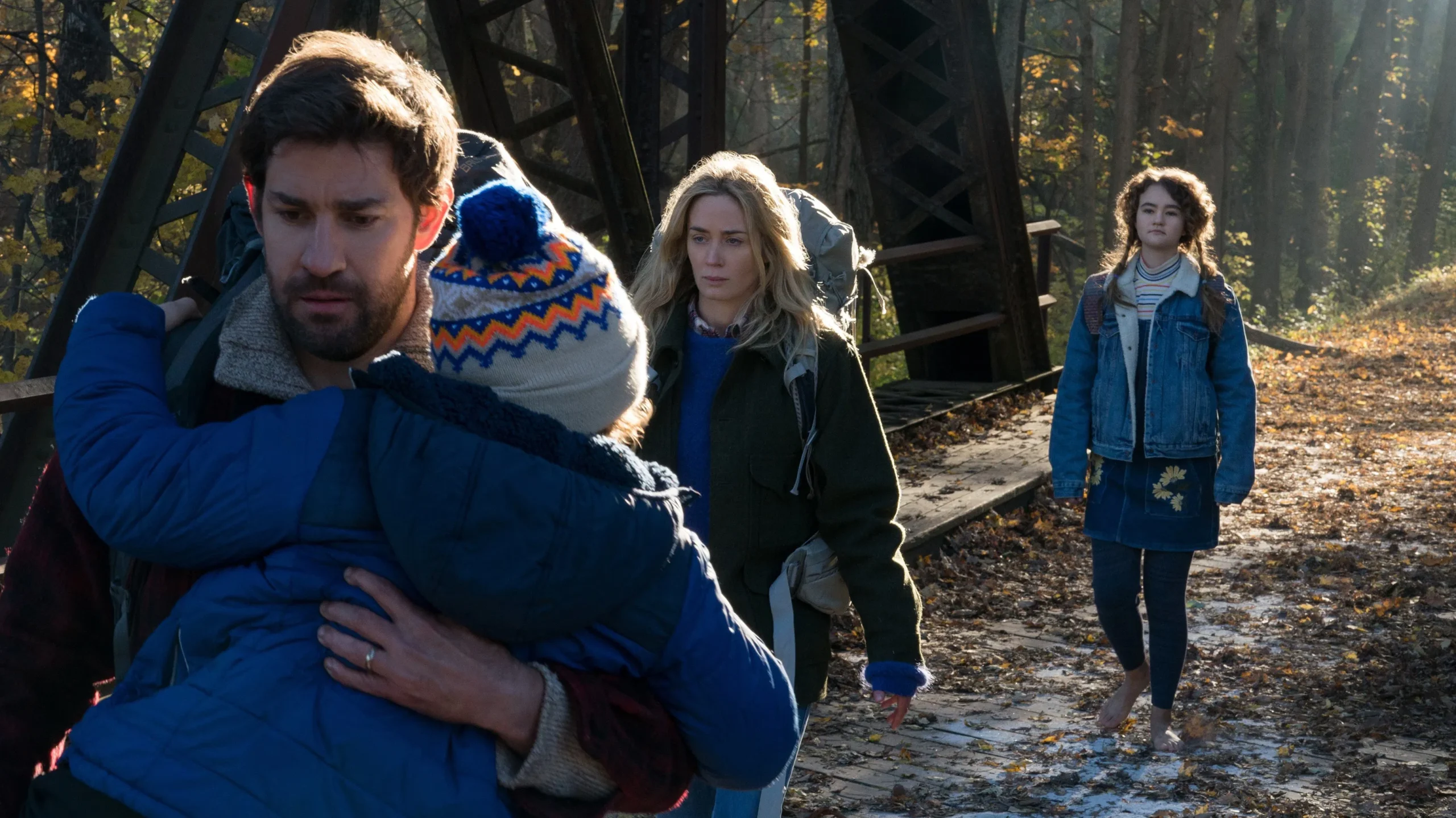
John Krasinski transformed from sitcom star to serious filmmaker with this breakout horror hit that redefines the post-apocalyptic survival movie through the lens of extreme parenting. The premise is deceptively simple: alien creatures with hypersensitive hearing have decimated humanity, and silence is now the only defense. But Krasinski's genius lies in recognizing that for parents, every day already feels like tiptoeing around potential catastrophe.
The Abbott family, led by Krasinski and real-life wife Emily Blunt, has survived by transforming their farm into a soundproof fortress, communicating through sign language and walking on sand paths. Every creak of a floorboard becomes potentially fatal. When Blunt's character goes into labor, the sequence that follows is among the most tension-filled in modern cinema, purely because it understands that for parents, protecting children isn't optional—it's biological imperative overriding even self-preservation.
The Greenland parallel: Both films grasp that children exponentially raise emotional stakes in survival scenarios. They're not just vulnerabilities to protect but reasons to keep fighting when logic suggests surrender. The dinner table scene in A Quiet Place, where the family eats in complete silence yet radiates warmth and connection, mirrors the Garrity family's determination to maintain normalcy amid catastrophe. These aren't action heroes. They're ordinary people weaponizing love against impossible odds.
Krasinski's direction strips away exposition, trusting the audience to understand the rules through context. This restraint, praised by Variety as "a nerve-shredding exercise in pure cinematic craft," creates a viewing experience where every sound in the theater becomes part of the tension. The film grossed over $340 million worldwide against a $17 million budget, proving audiences hunger for smart, emotionally grounded genre filmmaking that respects their intelligence.
-
3 Children of Men (2006): Infertility as Ultimate Extinction
Universal Pictures
The Story: In a world where humanity can no longer reproduce, one man must protect a miraculously pregnant woman
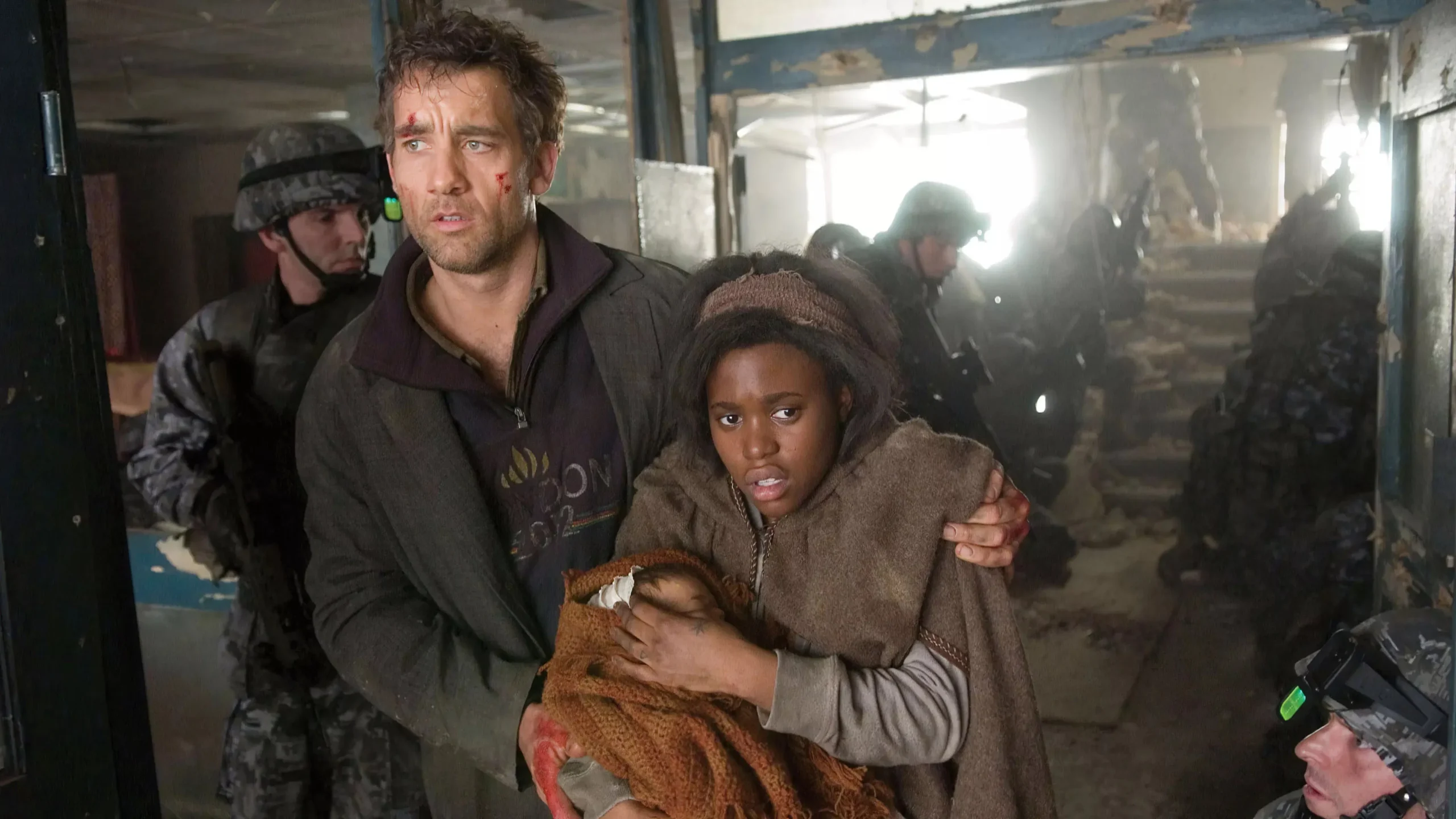
Alfonso Cuarón's masterpiece imagines perhaps the most existentially terrifying apocalypse: not destruction, but infertility. Humanity has been unable to conceive for 18 years, and society is collapsing not from external threat but from the slow realization that we are the last generation. Clive Owen's Theo is a bureaucrat who has emotionally checked out, numbed by futility, until he's pulled into protecting a miraculously pregnant refugee named Kee (Clare-Hope Ashitey).
What separates Children of Men from standard dystopian fare is Cuarón's decision to shoot it as raw documentary rather than polished science fiction. Cinematographer Emmanuel Lubezki's legendary long takes—including a 12-minute single shot following Theo through a warzone—create visceral immediacy that makes the collapse feel documentary-real. The background details tell stories the foreground never explains: cages of illegal immigrants, armed checkpoints, propaganda posters for the "Human Project." This is a world that didn't explode overnight but eroded gradually until suddenly only chaos remained.
The thematic overlap with Greenland 2: Migration is profound. Both films examine mass displacement, the breakdown of borders and civilized norms, and the idea that hope must be physically carried to safety even when all evidence suggests futility. When Theo escorts Kee through war-torn Britain, his journey mirrors the Garrity family's desperate migration. The miracle isn't the destination. It's that anyone still believes destination matters.
Cuarón, who would later win Oscars for Gravity and Roma, called Children of Men his most personal film, telling The Guardian it reflected his fears about political xenophobia and environmental collapse. Nearly two decades later, those fears feel less like science fiction and more like documentary preview. The film's greatest achievement is transforming philosophical despair about humanity's future into kinetic, emotionally devastating cinema that never loses sight of individual human stories.
-
2 The Road (2009): Love in a Dead World
Lionsgate
The Story: A father and son traverse a scorched America where survival is the only victory left
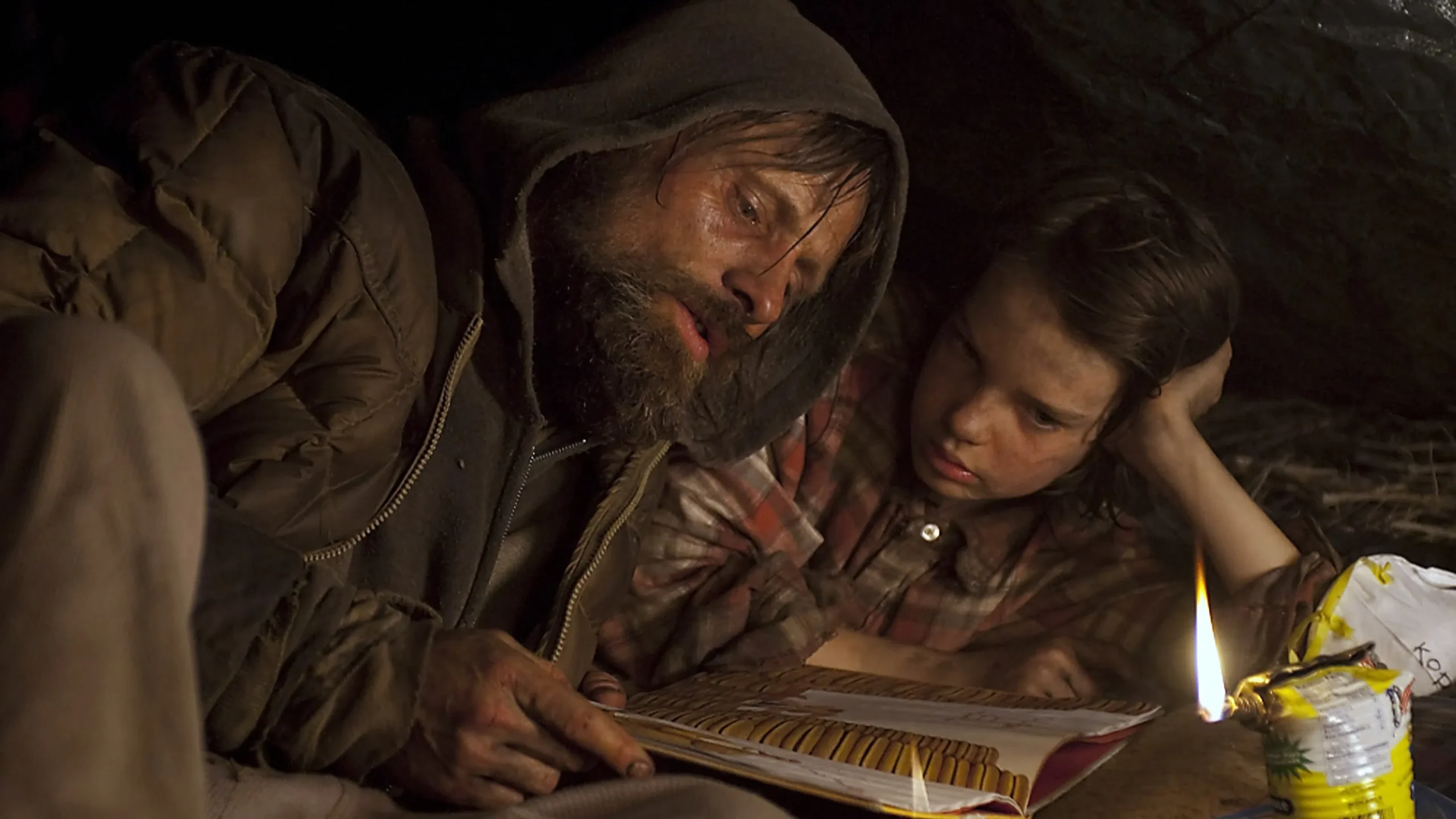
John Hillcoat's adaptation of Cormac McCarthy's Pulitzer Prize-winning novel remains one of the most uncompromising survival films ever made. Viggo Mortensen and young Kodi Smit-McPhee traverse a scorched, ashen America where civilization hasn't just collapsed—it has been cremated. There's no explanation for what happened, no flashbacks to happier times, no hope of rebuilding. The apocalypse is simply the unchangeable reality these characters inhabit.
What makes The Road essential viewing after Greenland 2 is its commitment to love as the only meaningful currency left. Mortensen's father isn't trying to save the world or find a cure or reach some promised land of safety. He's trying to get his son to the coast, to keep him fed, to protect his innocence in a world where cannibalism has become commonplace. Every choice is a calculation of immediate survival versus long-term humanity. Should they help the old man they encounter? Should they take food from an abandoned house? Should they keep walking when exhaustion becomes physical agony?
The film's gray, desaturated cinematography by Javier Aguirresarobe creates a world that feels already dead, where even color itself has been extinguished along with hope. Yet Hillcoat finds moments of devastating beauty in the bond between father and son. Their relationship becomes the last flicker of warmth in a frozen world. McCarthy's haunting dialogue appears throughout: "You have to carry the fire." "What fire?" "The fire inside you."
Critics initially found The Road too bleak for mainstream audiences, but Roger Ebert defended it as "powerful and uncompromising," recognizing that its refusal to offer false comfort was precisely its strength. It's a film that asks whether preserving innocence is possible when the world itself has become monstrous, and whether survival without humanity is survival at all.
Why it surpasses Greenland 2: Like the Garrity family's journey, survival here isn't heroic—it's exhausting, morally compromising, and driven entirely by parental love that refuses to surrender even when surrender would be easier. But where Migration suggests that survival might lead somewhere better, The Road honestly admits that survival itself might be all that's left, and forces viewers to decide whether that's enough.
-
1 Station Eleven (2021): Mini Serie - Survival Is Insufficient
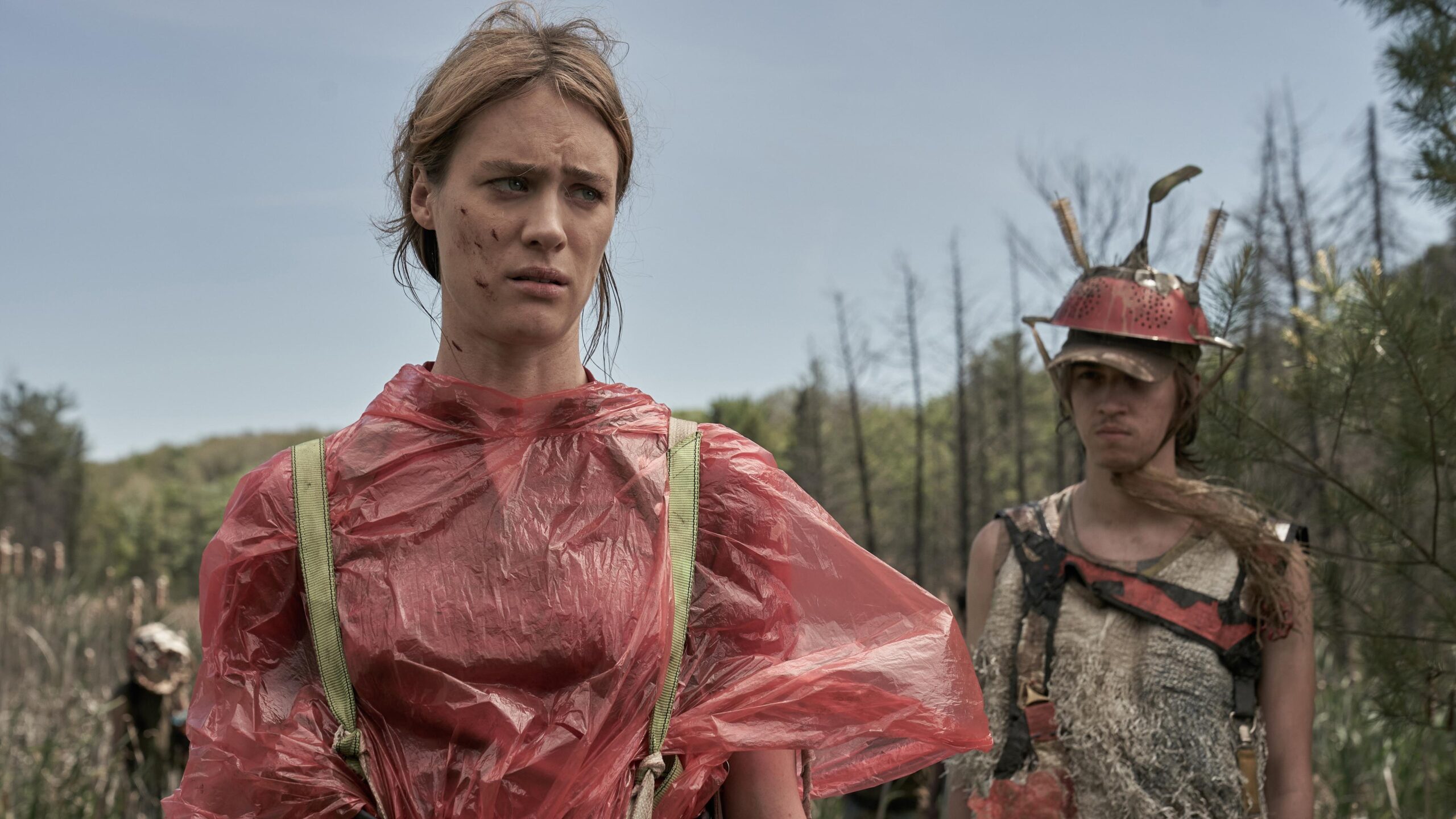
Discovery Global Dystopian Drama
The Story: Twenty years after pandemic apocalypse, survivors ask what makes life worth living beyond mere existence
Patrick Somerville's HBO Max adaptation of Emily St. John Mandel's beloved novel is technically a limited series rather than a film, but its 10 episodes form such a cohesive, essential statement on post-apocalyptic survival that it belongs at the top of any serious examination of the genre. Twenty years after the Georgian Flu wipes out 99% of humanity, the show follows multiple timelines, showing both the immediate collapse and the world that slowly, painfully emerges after.
What distinguishes Station Eleven from every other entry on this list—including Greenland 2—is its radical optimism and philosophical depth. While most post-apocalyptic stories ask how we survive, this asks what makes survival worthwhile. The answer: art, memory, connection, and the stories we tell ourselves about who we were and who we might become. The Traveling Symphony, a group of actors and musicians performing Shakespeare to scattered settlements, operates under the motto "Survival is insufficient"—a line borrowed from Star Trek that becomes the series' thematic foundation.
The casting achieves something rare: every performance feels lived-in and authentic. Mackenzie Davis brings fierce vulnerability to adult Kirsten, a woman who survived childhood apocalypse by clinging to a comic book called "Station Eleven" and fragments of memory from the night the world ended. Himesh Patel's Jeevan transforms from bumbling paparazzo to reluctant protector to something like a father figure, showing how crisis reveals character we didn't know we possessed. But the revelation is Matilda Lawler as young Kirsten, whose performance in the early collapse episodes captures the surreal dissonance of being a child when the world ends around you.
Director Hiro Murai, known for his work on Atlanta and Childish Gambino's "This Is America" video, brings a visual poetry that elevates the material beyond typical genre fare. The episode "Hurricane" follows Jeevan and young Kirsten sheltering in an apartment as civilization collapses outside, unfolding with almost real-time intimacy that transforms apocalypse into something quiet and domestic. Another episode, "Dr. Chaudhary," follows a symphony performance using theatrical staging that reminds us why humans create art even when creation seems pointless.
The ultimate difference from Greenland 2: Station Eleven functions as the spiritual counterbalance to Migration's urgency. Where Greenland 2 focuses on immediate survival—food, shelter, safety—Station Eleven asks what comes after those needs are met: How do we build meaning? What culture do we preserve? Do we recreate the world we lost or imagine something new? The series suggests that surviving physically isn't enough. We must also survive as humans, which means carrying forward beauty, story, memory, and connection even when logic suggests focusing solely on basic necessities.
The show wrestles with questions that disaster films rarely have time to explore: What do we owe to the past? What do we owe to the future? Is remembering the old world helpful or harmful? One character builds a Museum of Civilization filled with credit cards, driver's licenses, and other artifacts. Another argues for letting the old world die completely. The series holds both perspectives with empathy, understanding that survival is as much psychological and cultural as it is physical.
Why These Stories Form the Perfect Continuation
The eight films and one series gathered here aren’t random selections or casual recommendations. They form a coherent exploration of what survival cinema can achieve when it prioritizes psychological truth over spectacle, moral complexity over easy victories, and the enduring question of what it means to stay human when the rules of humanity no longer apply.
Together with Greenland 2: Migration, they create a roadmap through different aspects of post-apocalyptic existence:
The Immediate Shock (A Quiet Place, Leave the World Behind) examines those first moments when the world changes and old rules become instantly obsolete. These films capture the disorientation and terror of not knowing what’s happening or what to do.
The Long Grinding Aftermath (The Road, The Survivalist) shows what happens when survival extends beyond weeks into months, years, decades. Hope erodes. Morality becomes negotiable. The question shifts from “Will we survive?” to “What are we becoming?”
The Moral Erosion (It Comes at Night, Light of My Life) explores how protective instincts can become destructive, how fear poisons decision-making, and how the choices we make to survive can destroy what we’re trying to preserve.
The Distant Future (Station Eleven, Children of Men) imagines societies that emerge after collapse, asking what we preserve, what we rebuild, and whether the world that comes after can be better than what came before.
What unites these narratives is restraint. They understand that watching cities explode is less compelling than watching a parent choose between feeding their child or a stranger. They recognize that the most devastating losses aren’t infrastructure but trust, dignity, and the belief that tomorrow might be better than today. They favor moral ambiguity over easy victories, showing characters who make the best choices available even when all choices are terrible.
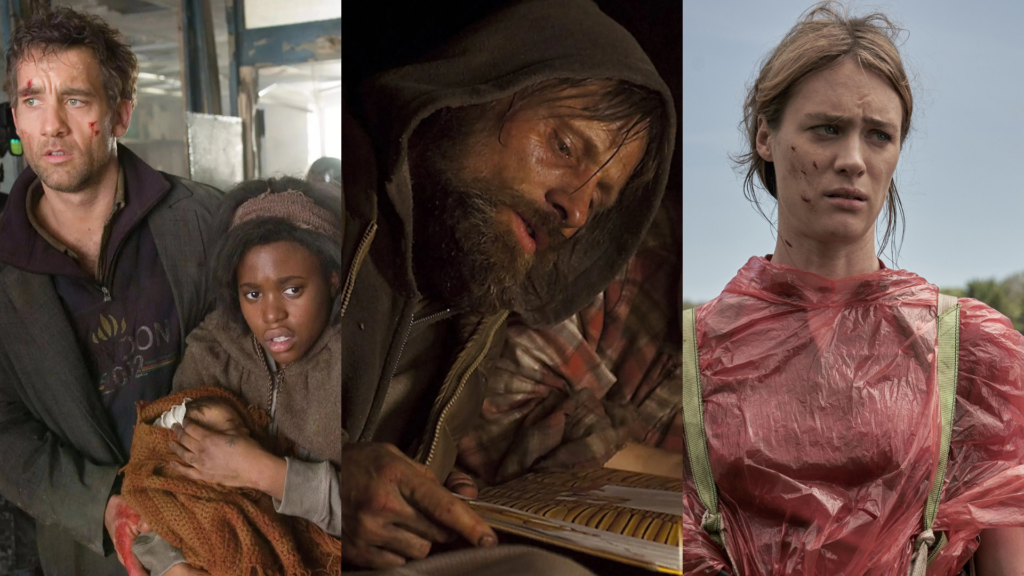
These aren’t films about lone wolves surviving through superior skill or action heroes saving civilization. They’re about families—chosen and biological—trying to maintain connection when every survival instinct screams isolation. The Garrity family’s determination to stay together despite impossible odds echoes through every entry on this list. Whether it’s Mortensen’s father in The Road protecting his son’s innocence, Krasinski’s Abbott family maintaining warmth in silence, or the Traveling Symphony’s refusal to abandon each other, these stories insist that we survive together or we don’t survive as anything recognizably human.
In a genre often obsessed with destruction, these films remember what cinema does best: showing us not what the world looks like when it ends, but who we become when everything we relied on is stripped away. They’re uncomfortable, often devastating, and absolutely essential for anyone who found themselves emotionally invested in the Garrity family’s journey through Migration.
If Greenland 2: Migration left you wanting more stories that treat apocalypse as emotional crucible rather than action backdrop, this curated collection offers the perfect continuation. These are the films that understand survival isn’t about winning. It’s about enduring, adapting, and somehow holding onto humanity when humanity itself seems like a luxury we can no longer afford. They prove that the most powerful disaster stories aren’t about the disaster at all—they’re about what we’re willing to sacrifice, who we’re willing to become, and what parts of ourselves we refuse to surrender no matter how much the world demands it.