

The art of movie magic often hides in plain sight. Audiences watch explosions, stunts, and elaborate set pieces without questioning how filmmakers pulled them off. But sometimes, the most brilliant tricks are the simplest ones.
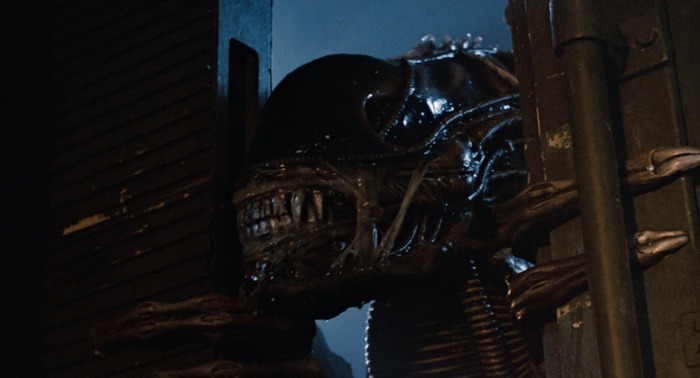
Take one of the most memorable moments from James Cameron’s Aliens (1986). Corporal Hicks, played by Michael Biehn, drops a shotgun into a Xenomorph’s gaping jaws and delivers the unforgettable line: “Eat this!” The sequence feels raw, spontaneous, and brutally effective. What most fans don’t realize is that this iconic beat was filmed completely backwards.
That’s right. One of Aliens’ most electrifying action moments was shot in reverse and flipped in post-production. The revelation offers a fascinating glimpse into practical filmmaking ingenuity during an era when CGI was still in its infancy.
The Scene That Defined Practical Action Filmmaking
The moment occurs during one of Aliens‘ most chaotic sequences. The Colonial Marines are scrambling to board their armored personnel carrier after a devastating encounter with the Xenomorphs. An Alien lunges toward the APC’s closing ramp, and Hicks reacts instinctively. He reaches down, grabs a shotgun from the floor, and drives it straight into the creature’s mouth before pulling the trigger.
According to behind-the-scenes accounts from the production, the sequence presented a significant technical challenge. Michael Biehn needed to execute a complex movement in a confined space while making it look effortless and aggressive.
When Physics Meets Filmmaking
The problem was simple but frustrating. Picking up a shotgun from the floor and forcefully driving it upward into a target is physically awkward, especially when working with heavy props in a cramped set. Early rehearsals produced movements that looked clumsy rather than heroic.
Rather than compromise the scene’s impact, the production team employed a technique as old as cinema itself: reverse photography. The solution was elegantly simple. Film the action backwards, then flip the footage in editing.
Here’s how it actually worked on set. The Xenomorph prop was positioned in Hicks’ shotgun, then pulled away rather than thrust into. Biehn performed the movement in reverse, lowering the weapon toward the floor instead of driving it upward. In post-production, the footage was reversed, transforming the downward pull into an aggressive upward thrust.
Sound designers added the shotgun blast and Biehn’s iconic “Eat this!” line during post-production, perfectly synchronized with the reversed action. The result is movie magic at its finest.
The Psychology of Cinematic Deception
What makes this technique so effective is how our brains process action sequences. When filmmakers combine practical effects, sound design, and skillful editing, audiences fill in the gaps automatically.
The sound design sells the violence immediately. That shotgun blast, layered with atmospheric distortion, cues our perception of devastating impact. James Cameron cuts away from the action almost immediately, never allowing viewers time to study the mechanics. The scene’s shadowy lighting, filled with smoke and atmospheric haze, conceals any potential visual inconsistencies.
This is the essence of cinematic sleight of hand. The chaos, urgency, and terror of the scene override any analytical impulse.
 20th Century Fox
Practical Effects in the Age of Digital Everything
Modern blockbusters routinely employ CGI, motion capture, and digital compositing to achieve impossible shots. Yet Aliens remains a touchstone for practical filmmaking excellence, regularly cited by directors and effects artists as a masterclass in tactile, physical moviemaking.
The reverse-shot technique harks back to an era when filmmakers relied on in-camera tricks, performance craft, and editing ingenuity to sell extraordinary moments. There’s no digital cleanup, no invisible wire removal, no CG replacement. Just clever problem-solving that respects both the craft and the audience’s suspension of disbelief.
When you watch Aliens, you’re seeing real actors in real environments interacting with physical creature effects. The weight, texture, and presence of everything on screen registers on a visceral level. That tangible quality contributes significantly to why the film’s scares still work decades later.
The Legacy of Clever Limitations
The backward shotgun moment represents something larger than a single technical trick. It embodies Aliens’ entire creative philosophy: resourceful, visceral, and resistant to easy categorization. From its practical creature effects to its grounded military science fiction aesthetic, the film carved out a unique space in genre cinema.
James Cameron has always excelled at turning production limitations into creative opportunities. The reverse-shot technique highlights an important truth about filmmaking: perfection isn’t always the goal. Sometimes the best cinematic moments emerge not from flawless execution but from clever adaptation.
Why It Still Matters
Nearly 40 years after its release, Aliens continues influencing action filmmaking, video games, and popular culture. The next time you watch Hicks deliver that shotgun to a Xenomorph’s mouth, you’ll know the secret. But knowing the trick doesn’t diminish the magic. If anything, it deepens your appreciation for the artistry involved.
That backward shot remains forward-thinking decades later. It reminds us that limitations can spark innovation, that practical ingenuity has timeless value, and that sometimes the simplest solutions create the most memorable moments. In an era of unlimited digital possibilities, there’s something refreshing about a filmmaker who simply said, “Let’s shoot it backwards and flip it in post.”
Pure cinema. Pure genius.
[zombify_post]