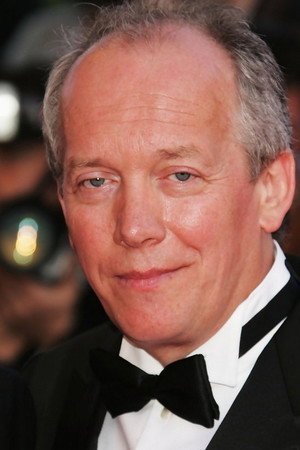
Luc Dardenne
Brothers Jean-Pierre Dardenne (born 21 April 1951) and Luc Dardenne (born 10 March 1954), collectively referred to as the Dardenne brothers, are a Belgian filmmaking duo. They write, produce, and direct their films together.
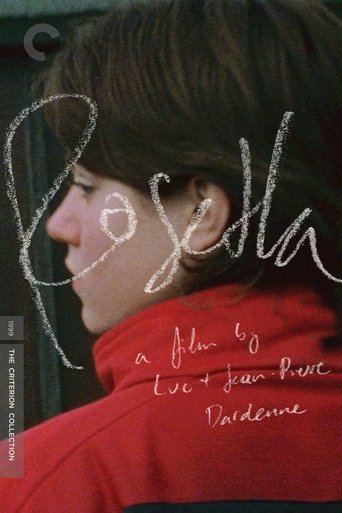
The Dardennes began making narrative and documentary films in the late 1970s. They came to international attention in the mid-1990s with La Promesse (The Promise). They won their first major international film prize when Rosetta won the Palme d’Or at the 1999 Cannes Film Festival. Their work tends to reflect left-wing themes and points-of-view.
In 2002, Olivier Gourmet won Best Actor at Cannes for the Dardennes’ Le Fils (The Son). In 2005, they won the Palme d’Or a second time for their film L’Enfant (The Child), putting them in an elite club, at the time, of only seven. Their film, Le Silence de Lorna (Lorna’s Silence), won Best Screenplay at the 2008 Cannes Film Festival and was released in Europe in the fall. Their film The Kid with a Bike won the Grand Prix at the 2011 Cannes Film Festival, received one Golden Globe nomination and eight Magritte Award nominations. Jean-Pierre was the jury president for the Cinéfoundation and Short Films sections of the 2012 Cannes Film Festival. In 2015, their film Deux jours, une nuit (Two Days, One Night) received nine Magritte Award nominations (winning three) and one Academy Award nomination for Best Actress for Marion Cotillard. Their 2019 feature Young Ahmed won them the Best Director Award at the 2019 Cannes Film Festival. Their 2022 film Tori and Lokita won the 75th Anniversary Prize at the 2022 Cannes Film Festival.
Creators of intensely naturalistic films about working class life in Belgium, brothers Luc and Jean-Pierre Dardenne have created a notable body of work since 1996. With La Promesse (The Promise) (1996), Rosetta (1999), Le Fils (The Son) (2002), and L’Enfant (The Child) (2005), the Dardennes’ films show young people at the fringes of society – immigrants, the unemployed, the inhabitants of shelters. Both Rosetta and L’Enfant were awarded the Palme d’Or at the Cannes Film Festival, the only two Belgian films ever to earn the honor.
The Dardennes were born and raised in Seraing in Liege, in Wallonia, the French-speaking region of Belgium. Jean-Pierre (born in 1951) studied drama while Luc (born three years later) studied philosophy. In 1975 they established Derives, the production company that produced the roughly sixty documentary films they made before branching into feature films. These films covered such topics as Polish immigration, World War II resistance, a general strike in 1960. Their first two feature films, however, are rarely seen today: Falsch (1987) adapted from René Kalisky, featuring Bruno Cremer and Je pense a vous (1992). The Dardennes had their first international success with La Promesse (The Promise) in 1996. …
Source: Article “Dardenne brothers” from Wikipedia in English, licensed under CC-BY-SA 3.0.
Luc Dardenne Movies
Discover the best movies directed by Luc Dardenne. Explore the complete filmography, including critically acclaimed masterpieces, box office hits, and top-rated Luc Dardenne films ranked by score.