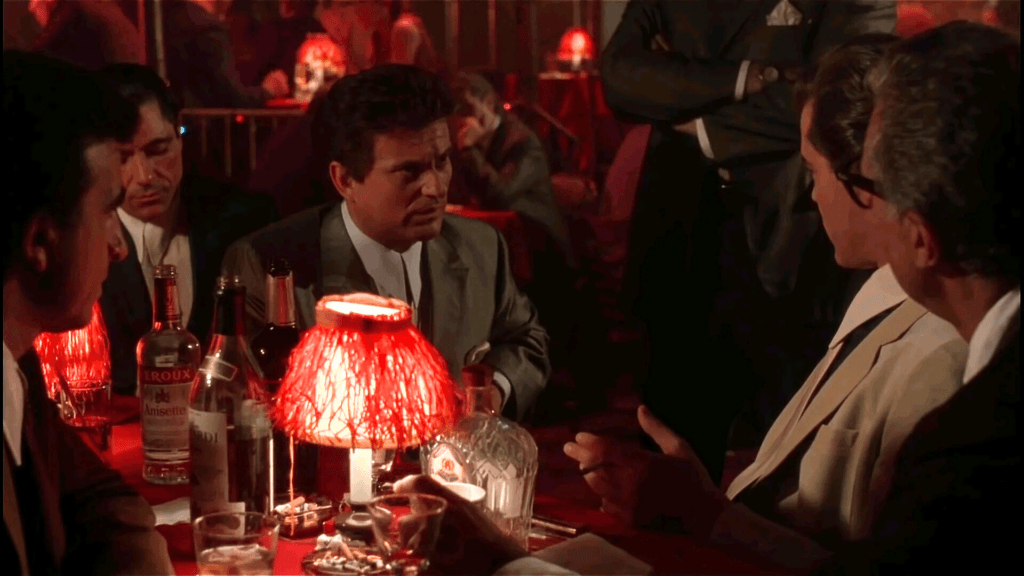


When Goodfellas hit theaters on September 19, 1990, audiences knew they were watching something revolutionary. Martin Scorsese’s mob masterpiece moved with raw velocity, dialogue tumbling over itself, violence arriving without warning. But no moment captures the film’s authenticity quite like Tommy DeVito’s sudden shift from charm to menace after a single compliment.
“Funny how?”
It’s one of the most quoted exchanges in American cinema. Over the years, a legend has crystallized: the scene was pulled from Joe Pesci’s real life, improvised on set, and kept secret from other actors to capture genuine fear. Like most Hollywood myths, the truth is more interesting than the story suggests.
The Real Incident That Inspired the Scene
The foundation is absolutely real. Before becoming one of cinema’s most intimidating presences, Joe Pesci worked blue-collar jobs in New Jersey, including as a waiter. In multiple interviews, Pesci has recounted an encounter with a connected guy he was serving. Trying to be friendly, Pesci told the man he was “funny.” The response was immediate and chilling.

The tension that followed, the quiet recalibration of the room, the sense that something terrible might happen stayed with Pesci for years. When cast as Tommy DeVito, he told the story to Martin Scorsese, who immediately recognized its power and insisted on using it.
How Scorsese Actually Constructed It
What happened next is where myth and reality diverge.
Scorsese’s method on Goodfellas is well-documented. Working with co-writer Nicholas Pileggi, he encouraged actors to improvise during rehearsals and draw from personal experience. These sessions were recorded, transcribed, and refined into shooting scripts.
The “Funny how?” exchange emerged through exactly that process. Pesci didn’t invent it spontaneously during filming. He recreated the emotional architecture of his real experience during rehearsals, shaping the rhythm, pauses, and verbal misdirection. Scorsese then structured it cinematically, deciding when to hold shots and how long the tension would breathe.
By the time cameras rolled, the scene wasn’t a spontaneous accident. It was a controlled explosion.
Debunking the “Secret Scene” Myth
A popular version claims Scorsese intentionally left the scene out of the shooting script, telling only Pesci and Ray Liotta what would happen so other actors would be genuinely frightened. It’s a great story. It’s almost certainly not true.
Actors in the scene have indicated they knew the general shape of what was happening. Scorsese has repeatedly described his process as planned improvisation: freedom within structure, not chaos. Union productions require blocking and camera choreography. Scenes evolve, but they’re rarely sprung as total surprises.
 Warner Bros.
What’s true is subtler and more impressive. Pesci had an uncanny ability to make fellow actors feel unsafe even when they knew they were acting. His control of silence, eye contact, and sudden tonal shifts created authentic discomfort. According to Liotta in interviews on Inside the Actors Studio, being in scenes with Pesci genuinely rattled him, even after multiple takes.
You’re not watching people who don’t know what’s happening. You’re watching people who know exactly what’s happening and are terrified anyway.
Why It Still Feels Dangerously Real
The brilliance isn’t just that it feels improvised. It captures a fundamental truth about power in violent subcultures.
Tommy doesn’t raise his voice or make explicit threats. He simply reframes the room so everyone understands the rules have changed and he controls them. Scorsese shoots without music, letting tension live in pauses. The camera subtly isolates characters, cutting off escape routes. When Tommy finally laughs and reveals it was “just a joke,” the relief is real but temporary.
That lesson lingers long after the laughter fades, coloring everything Tommy does until his shocking execution. Every smile becomes a potential threat.
The Final Verdict
Confirmed: The scene is rooted in a real incident from Pesci’s life as a New Jersey waiter.
Confirmed: Pesci shared the story with Scorsese, who immediately wanted it in the film.
Confirmed: The dialogue was shaped through rehearsal and improvisation.
Almost certainly false: That the scene was completely hidden from other actors.
The exaggerated version persists because it feels right. It mirrors the scene itself, where reality and performance blur so completely you stop caring which is which. According to Rotten Tomatoes, Goodfellas holds a 95% critics rating, with many citing this scene as evidence of the film’s authentic feel.
The Truth Behind the Magic
More than three decades later, the “Funny how?” scene still lands like a threat whispered directly into your ear. Not because it was accidental, but because it was crafted by artists who understood that the scariest violence is often the kind that never announces itself.

The real magic is that Pesci lived through something terrifying, remembered it with absolute clarity, and worked with Scorsese to transform that memory into two minutes of pure cinematic menace. That’s not luck. That’s mastery.
And maybe that’s the most Goodfellas thing of all: a film about criminals who present themselves as one thing while being something else, surrounded by legends that make the truth more entertaining than it already was.