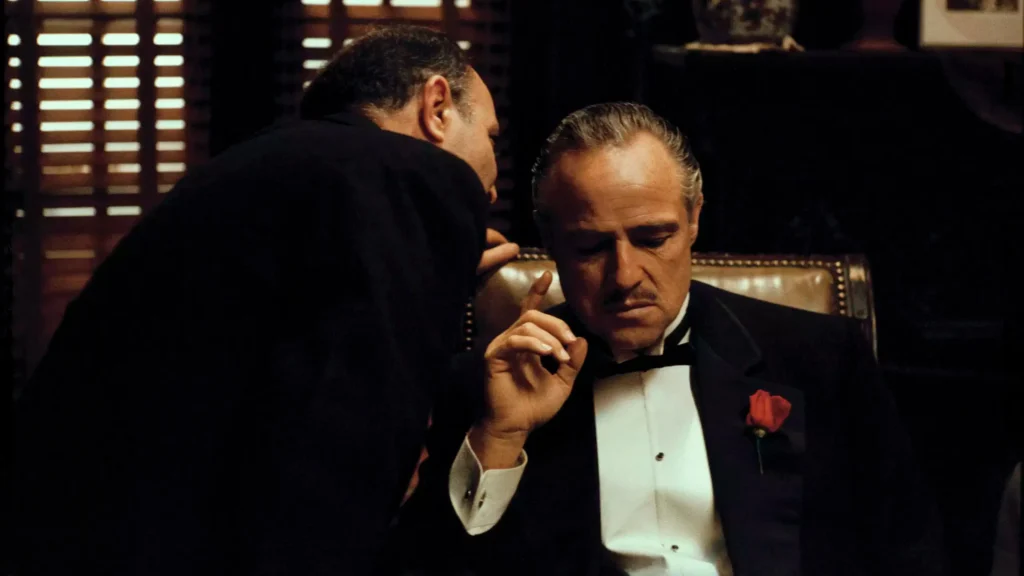

Hollywood has given us countless memorable lines, but fame has a curious way of distorting meaning. The most iconic movie quotes often become detached from their original context, morphing into cultural shorthand that completely contradicts what the filmmakers intended. It’s a fascinating paradox: the more a line gets repeated, shared, and memed across social media, the further it drifts from its source material. These quotes take on lives of their own, becoming something entirely different from what appeared on screen.
These aren’t just simple misquotes or Mandela Effect phenomena. We’re talking about fundamental misunderstandings of character motivation, narrative arc, and directorial intent. When a line escapes its cinematic home and enters the broader cultural lexicon, it undergoes a transformation that would make any film preservationist cringe. What started as a moment of menace becomes motivational. A cry of desperation gets repackaged as empowerment. Irony gets stripped away entirely, leaving only the shell of what made the moment powerful in the first place. The transformation happens gradually, almost imperceptibly, as the quote passes through countless retellings.
The phenomenon reveals something essential about how we consume media in the streaming age. We encounter these quotes through memes, GIFs, and TikTok soundbites long before we see the actual films. Context collapses. Nuance evaporates. What remains is the cultural echo, often bearing little resemblance to the original scene’s emotional weight or thematic purpose. Social media algorithms favor brevity and impact over accuracy and depth, accelerating this process of distortion.
From gangster epics to psychological thrillers, from science fiction mind-benders to romantic classics, these misunderstood movie quotes didn’t endure merely because they sounded cool or catchy. They persisted because they were loaded with menace, despair, irony, or emotional complexity that made them unforgettable. Here are ten legendary lines that pop culture keeps getting spectacularly wrong, along with what they actually mean in their original context.
[zombify_post]
Why These Misunderstandings Matter for Cinema and Culture
Great movies don’t offer simple slogans, easy takeaways, or comfortable platitudes to live by. They offer contradictions, complexity, and nuance that resist reduction into digestible sound bites. When quotes escape their narrative context and become memes, they lose the very tension, irony, and depth that made them powerful in the first place. The transformation strips away layers of meaning that took talented filmmakers years to craft and perfect.
Revisiting what these lines actually mean isn’t about pedantic nitpicking, film snobbery, or ruining people’s enjoyment of popular culture. It’s about rediscovering what cinema does best when operating at its highest level: challenging audiences rather than comforting them, complicating our assumptions rather than confirming them, forcing us to think rather than simply consume. The filmmakers who crafted these moments intended provocation, debate, and deeper reflection, not validation of our existing beliefs or easy answers to complex questions.
The distance between a quote’s popular interpretation and its actual meaning reveals something important about how we consume media in the digital age. We encounter fragments divorced from whole narratives and complete stories. We share moments without understanding their build-up, context, or consequences in the plot. The most famous line in a movie often becomes famous for exactly the wrong reason, transformed into its opposite through repetition and decontextualization across social platforms. Algorithms favor brevity and emotional impact over accuracy and nuance.
Perhaps that’s the ultimate irony worth considering: these misunderstood movie lines endure precisely because they’re elastic enough to mean whatever we need them to mean in any given moment. But returning to the source material, watching these scenes in their full context, and understanding the filmmakers’ intentions reminds us why great cinema matters and deserves careful attention. It refuses to be simple or comfortable. It demands that we wrestle with complexity, sit with discomfort, and question our first interpretations instead of accepting surface readings. That’s not a bug in how movies work or a flaw in the system. That’s the entire point of cinema as an art form.