Television has transformed from simple entertainment into the most prestigious storytelling medium of our era. We’re living in an age where A-list directors craft eight-hour cinematic novels, where water cooler conversations revolve around shocking mid-season twists, and where a single episode generates more cultural discourse than most theatrical releases. Peak television has redefined what the medium can achieve.
These aren’t just great runs of television. They’re cultural phenomena that kept us up until 3 AM binge-watching, that sparked thousands of Reddit theory threads, that made us call in sick the day after a finale aired. From the prestige drama revolution that HBO ignited to the streaming wars that Netflix weaponized, these chapters represent the absolute finest in modern entertainment. What separates a good season from a legendary one? It’s where every element aligns perfectly: the writing sharpens, performances deepen, directing elevates, and story arcs feel both inevitable and surprising. These are the greatest TV seasons where you can’t skip a single episode, where every frame matters, and where finales leave you emotionally devastated in the best possible way.
Â
-
1 Breaking Bad: Season 5

Sony Pictures Television Watch Now
Vince Gilligan's masterpiece didn't just stick the landing. It executed a flawless dismount that most showrunners only dream about. Breaking Bad Season 5 transformed Walter White's moral descent into Shakespearean tragedy, delivering what many critics consider the greatest final season in television history. The split-season structure gave audiences time to process the devastation before the final eight episodes delivered their merciless conclusion. This wasn't just a finale; it was a reckoning.
"Ozymandias" stands as the pinnacle not just of this season, but of dramatic television itself. Rian Johnson's direction, combined with Moira Walley-Beckett's brutal screenplay, created 47 minutes of sustained emotional annihilation. The desert confrontation, Hank's execution, Walt's phone call to Skyler: each moment lands with devastating force. According to IMDb, the episode holds a staggering 10/10 rating from over 160,000 users, making it the highest-rated TV episode ever recorded on the platform. "Felina" provided the cathartic, tragic resolution Walter White deserved, complete with that haunting final shot.
-
2 The Sopranos: Season 2

HBO Watch Now
If the first season introduced the world to the antihero, The Sopranos Season 2 perfected the formula and expanded the canvas. David Chase's psychological mob drama deepened its exploration of American masculinity, therapy as both salvation and performance, and the impossible contradiction of being a "good" bad guy. This season transformed what could have been a gimmicky premise into the gold standard for prestige television, establishing narrative complexity that would influence every drama that followed.
Richie Aprile, played with terrifying volatility by David Proval, arrived as the perfect destabilizing force. Fresh from prison and seething with resentment, Richie represented old-school mob values colliding with Tony's more progressive management style. His unpredictability made every scene crackle with tension. The Big Pussy betrayal arc provided the season's emotional core. Watching Tony grapple with the knowledge that his best friend had turned informant created television that felt uncomfortably real. The New York Times called it "the moment The Sopranos became the most important show on television."
-
3 Mad Men: Season 4

Lionsgate Watch Now
Mad Men Season 4 represents the series at its most emotionally raw and thematically rich. Set in 1964-1965, this season chronicled the formation of Sterling Cooper Draper Pryce and the professional reinvention that came with it, but more importantly, it explored the personal dissolution happening beneath the surface. Don Draper hit rock bottom, and Jon Hamm's performance captured every ugly moment of that descent with unflinching honesty. The season opener immediately established this wouldn't be business as usual.
Then came "The Suitcase," the episode that changed everything. Directed by Jennifer Getzinger and written by Matthew Weiner, this bottle episode trapped Don and Peggy in the office overnight, forcing them to confront their complicated relationship. Without flashy set pieces or dramatic revelations, the episode creates sustained emotional intensity through nothing but two characters talking, drinking, and slowly revealing their vulnerabilities. Their bond, that profound platonic love between mentor and protégé, became the show's emotional anchor. It's a master class in dialogue-driven drama that proves great television doesn't need explosions or twists.
-
4 Game of Thrones: Season 4

HBO Watch Now
Before Game of Thrones became synonymous with controversial endings, Season 4 represented the show at its absolute creative peak. This was the last season where George R.R. Martin's source material and the showrunners' vision existed in perfect harmony, creating a balance between shocking plot twists and meaningful character development the series would never quite recapture. The Purple Wedding delivered Joffrey's cathartic death in episode two, a bold choice that defied conventional wisdom about when to deploy your biggest moments.
The season's true genius lay in what followed. Tyrion's trial became a showcase for Peter Dinklage's Emmy-winning performance, particularly his explosive courtroom speech that laid bare Westerosi power structures. The Mountain versus the Viper duel traumatized audiences in the best way possible. Oberyn Martell's quest for vengeance ended in skull-crushing horror that perfectly encapsulated the show's willingness to punish both characters and viewers for hoping things might work out. According to HBO, Season 4 averaged 19 million viewers per episode and won the series its first Emmy for Outstanding Drama Series.
-
5 True Detective: Season 1

HBO Watch Now
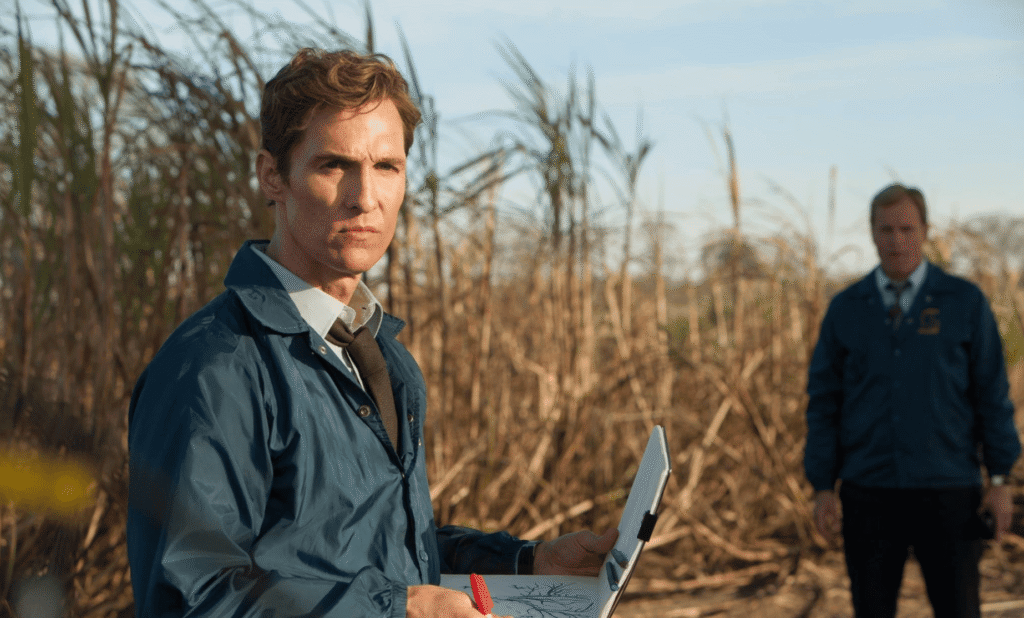
Nic Pizzolatto's southern gothic nightmare didn't just launch an anthology series. It fundamentally altered what television could be. True Detective Season 1 proved you could recruit A-list movie stars, give them dense philosophical dialogue, and create appointment viewing that rivaled any theatrical release. The eight-episode arc felt like an eight-hour auteur film, with director Cary Joji Fukunaga crafting a cohesive visual language television had rarely seen. This was cinematic television at its finest.
Matthew McConaughey and Woody Harrelson's chemistry transformed what could have been a standard murder mystery into a meditation on time, memory, and masculinity. Rust Cohle's nihilistic monologues became meme-worthy philosophy, while Marty Hart's everyman frustration grounded the metaphysical weight. That legendary six-minute tracking shot in episode four wasn't just technical showmanship. It immersed viewers in the chaos of a housing project raid with visceral immediacy that changed how action sequences could function on television. The shot became a calling card for prestige TV ambition and influenced countless shows that followed.
-
6 Stranger Things: Season 1

Netflix
The Duffer Brothers weaponized 1980s nostalgia to create something that felt both familiar and entirely fresh. Stranger Things Season 1 could have been a shallow homage to Spielberg, King, and Carpenter, but instead used those influences as a foundation for genuinely original storytelling. The eight-episode first season moved with the precision of a Swiss watch, introducing the Upside Down mythology while never losing sight of the human relationships at its core. This was nostalgic genre storytelling executed to perfection.
Millie Bobby Brown's breakout performance as Eleven gave the show its emotional anchor. Her wordless expressions communicated volumes, and the slow reveal of her powers created genuine suspense. The ensemble chemistry among the young cast felt authentic in a way that child actor performances rarely achieve. The disappearance of Will Byers structured the season like a classic mystery, but the genre-blending approach incorporated horror, science fiction, coming-of-age drama, and government conspiracy elements. Netflix reported that Stranger Things became their most-watched series within weeks of release, proving nostalgic genre storytelling could dominate the streaming era.
-
7 The Walking Dead: Season 1

AMC Studios Watch Now
Under Frank Darabont's visionary direction, the first six episodes of The Walking Dead felt less like a TV show and more like a cinematic event. This wasn't the zombie gore-fest the series would eventually become. Season 1 prioritized atmosphere, character development, and the psychological horror of civilization's collapse over action set pieces. The result was the most emotionally resonant and artistically ambitious run in the show's entire history. Darabont's command of visual storytelling created genuine dread without relying on jump scares.
The pilot episode remains one of the finest hours in television history. Rick Grimes waking up in an abandoned hospital, wandering through devastated Atlanta streets, and finally seeing the apocalypse's scope unfolded with patient, deliberate pacing. The empty highway sequence, shot in Atlanta's actual downtown, captured post-apocalyptic isolation with haunting effectiveness. The compressed six-episode order forced tight storytelling where every scene mattered. AMC reported that the Season 1 finale drew 6 million viewers, making it the most-watched basic cable drama in history at the time.
-
8 Twin Peaks: Season 1

CBS Watch Now
David Lynch and Mark Frost didn't just create a TV show. They created a cultural phenomenon that proved network television could be genuinely weird, artistically ambitious, and commercially successful all at once. Twin Peaks Season 1 asked the deceptively simple question "Who killed Laura Palmer?" and used it as a doorway into a surreal nightmare landscape where coffee, cherry pie, and dancing dwarves coexisted with murder, abuse, and existential dread. This was experimental television that somehow worked for mainstream audiences.
The show's influence cannot be overstated. Every prestige drama with supernatural elements, every murder mystery with quirky small-town characters, every series that dares to be intentionally strange owes a debt to Twin Peaks. Kyle MacLachlan's performance as Dale Cooper created one of television's most beloved characters. His childlike enthusiasm for Douglas firs and "damn fine coffee" contrasted brilliantly with his FBI professionalism and openness to paranormal investigation. Lynch's direction created a visual language where beauty and horror existed in the same frame, where a ceiling fan could generate more dread than any monster. Twin Peaks changed what television could be.
-
9 Dexter: Season 4

Showtime Studios Watch Now
After three seasons of finding its footing, Dexter delivered its masterpiece with Season 4. John Lithgow's portrayal of Arthur Mitchell, the Trinity Killer, provided the perfect antagonist for Michael C. Hall's serial killer with a code. Trinity wasn't just dangerous. He was a dark mirror reflecting what Dexter could become, a monster hiding behind suburban normalcy for decades. The season's structure brilliantly paralleled Dexter's attempts at domestic life with his hunt for Trinity, creating a cat-and-mouse thriller that elevated the entire series.
As Dexter tried balancing fatherhood, marriage, and murder, Trinity's family secrets slowly revealed the horror beneath his carefully maintained facade. Lithgow's performance oscillated between kindly patriarch and explosive violence with terrifying ease, earning him a well-deserved Emmy. The finale's gut-punch remains one of the boldest creative decisions in cable television history. Rita's death in the bathtub, baby Harrison sitting in her blood, mirrored Dexter's own origin trauma with devastating symmetry. The show never quite recovered from this narrative boldness, but that's what makes Season 4 so special: it was willing to fundamentally change everything.
-
10 The Crown: Season 4

Netflix
The Crown always excelled at royal drama, but Season 4 elevated the series into essential viewing. The introduction of Princess Diana and Margaret Thatcher created a three-way power dynamic that crackled with tension. Emma Corrin's vulnerable, luminous Diana contrasted sharply with Gillian Anderson's steely Thatcher, while Olivia Colman's Queen Elizabeth navigated between them with increasing desperation. This was royal drama as high-stakes psychological warfare, examining how duty destroys personal happiness.
The season explored Diana and Charles's courtship and disastrous marriage with sympathetic complexity. Rather than simply painting Charles as a villain, the show examined how royal duty and personal desire collided to create misery for everyone involved. The Balmoral episodes showcased Diana's isolation within the royal family with almost horror-movie intensity. Meanwhile, Thatcher's political battles and strained relationship with the Queen provided historical weight. According to The Guardian, Season 4 became Netflix's most-watched series in 2020, proving royal drama could dominate cultural conversations even in modern times.
-
11 Peaky Blinders: Season 2

Tiger Aspect Productions Watch Now
The expansion was inevitable. After Season 1 established the Shelby family's Birmingham empire, Peaky Blinders Season 2 sent Tommy Shelby to London, introduced Alfie Solomons, and elevated the show's stylistic flair to operatic heights. The London expansion brought the Shelbys into conflict with larger criminal organizations, forcing Tommy to operate on a bigger, more dangerous stage. This was gangster drama that understood style and substance could coexist perfectly, creating something visually stunning and narratively compelling.
Tom Hardy's scene-stealing performance as Alfie Solomons injected unpredictable energy into every frame he inhabited. The push-pull relationship between Tommy and Alfie, part alliance and part chess match, created the show's most compelling dynamic. Their scenes together crackled with wit, menace, and grudging respect. Creator Steven Knight's writing sharpened, the period detail became more lavish, and the visual style grew bolder. The use of contemporary music in period settings felt perfectly calibrated. The season finale's wedding sequence, orchestrated chaos set to traditional Italian opera, epitomized the show's ability to blend high art with pulp entertainment.
-
12 Fargo: Season 2

MGM Television Entertainment Watch Now
Noah Hawley's Coen Brothers homage became something more ambitious with Fargo Season 2. The 1970s prequel expanded the scope from Season 1's intimate crime story to a sprawling turf war between the Gerhardt crime family and the Kansas City mafia. The result was the anthology series firing on all cylinders, balancing dark comedy with shocking violence and Midwestern absurdism with genuine tragedy. This was anthology television that proved each season could stand alone while deepening the show's mythology.
The ensemble cast delivered universally excellent work. Kirsten Dunst's Peggy Blumquist and Jesse Plemons's Ed Blumquist anchored the season as ordinary people caught in extraordinary circumstances. Patrick Wilson's Lou Solverson provided moral clarity in an increasingly chaotic world. The UFO, that gloriously absurd narrative element, represented everything bold about Hawley's approach. He trusted audiences would accept tonal shifts from darkly comic to brutally violent to surreally weird. The season built to a bloody climax at the Sioux Falls motor inn, the legendary crime scene referenced in Season 1, providing satisfying closure while deepening the show's mythology.
-
13 House of Cards: Season 2

Netflix
House of Cards Season 2 opened with one of the most shocking moments in streaming history. Pushing Zoe Barnes in front of a subway train in the second episode announced that nobody was safe, not even characters who seemed essential to the series. Kevin Spacey's Frank Underwood completed his ruthless ascent to the Vice Presidency through manipulation, murder, and political genius that made for compulsively watchable television. This was political drama that didn't flinch from showing power's brutal reality.
The season explored the mechanics of power with cynical precision. Frank's relationship with Claire, played with icy brilliance by Robin Wright, evolved into a partnership built on mutual ambition rather than love. Their marriage functioned as a political alliance, and watching them operate in sync was darkly mesmerizing. Beau Willimon's writing accelerated the pace from Season 1's chess game to Season 2's full sprint. The fourth-wall-breaking asides became even more pointed and darkly humorous. The season finale's inauguration, with Frank staring directly at the camera as he achieved power, felt both triumphant and deeply unsettling. Before the show's legacy became complicated, Season 2 represented prestige streaming at its most ambitious.
-
14 The Leftovers: Season 2

HBO
Few shows have executed such a radical reinvention as The Leftovers Season 2. After a critically acclaimed but divisive first season, Damon Lindelof and Tom Perrotta moved the setting to Miracle, Texas, a town where nobody departed during the Sudden Departure. This shift transformed the show from a grief meditation into a profound exploration of faith, community, and the stories we tell ourselves to cope with inexplicable trauma. This was television as philosophical inquiry, asking questions without needing to provide answers.
The season premiere functioned as a quasi-pilot, introducing the Murphy family and establishing Miracle as both haven and pressure cooker. Kevin Garvey's psychological unraveling deepened, with Justin Theroux delivering career-best work as a man losing his grip on reality. But the season's heart belonged to the finale, "I Live Here Now." Nora's speech at the conference, Meg's devastating attack on Miracle, and that final family gathering at the bridge created an emotional crescendo television rarely achieves. The show trusted viewers to sit with ambiguity, to find meaning without needing explanations. Max Richter's haunting score elevated every scene into something approaching religious experience.
-
15 Boardwalk Empire: Season 3

HBO Watch Now
Boardwalk Empire finally found its narrative sweet spot in Season 3. The war between Nucky Thompson and the volatile Gyp Rosetti provided the visceral conflict that earlier seasons sometimes lacked. Bobby Cannavale's Gyp was chaos incarnate, a gangster whose hair-trigger temper and unpredictable violence made every scene dangerous. His siege of Atlantic City forced Nucky into an alliance with his former enemies, creating the kind of high-stakes desperation the show had been building toward since its premiere.
The season explored the cost of Nucky's criminal empire with unflinching honesty. His relationship with Billie Kent ended in tragedy, a reminder that nobody in Nucky's orbit remained safe. Steve Buscemi's performance captured a man realizing his choices had consequences he couldn't control. Meanwhile, subplots involving Richard Harrow's quest for redemption and Gillian's descent into grief-driven madness added emotional depth to the gangster violence. Terence Winter's writing sharpened, the period detail remained impeccable, and the finale's bloodbath at Babette's delivered the catharsis that the season's tension demanded. The show never quite surpassed Season 3's combination of character work and crime drama intensity.
The Verdict on Peak Television
These seventeen seasons represent more than just excellent television. They’re cultural artifacts that captured specific moments in entertainment history. They’re the shows that sparked Monday morning office conversations, that generated thousands of think pieces, that made streaming services into entertainment juggernauts, and that proved television could compete with cinema for artistic ambition. What unites them isn’t genre or network or release strategy. It’s that ineffable quality where every creative decision aligned perfectly, where writing, directing, acting, editing, music, and production design all served a unified vision.
These seasons didn’t just entertain us. They challenged us, devastated us, and ultimately reminded us why storytelling matters. The landscape of television continues to evolve. Streaming platforms commission ever more ambitious projects. Movie stars migrate to limited series. Budgets balloon to blockbuster levels. But the fundamental truth remains unchanged: great television requires great storytelling, and these seventeen seasons delivered that in spades. Whether you’re revisiting old favorites or discovering them for the first time, these seasons represent essential viewing for anyone who cares about the medium. They’re proof that even in an age of endless content, true excellence still manages to break through the noise.