


Netflix made a documentary “The Crash” about a teenager convicted of murdering 2 people by driving into a brick wall at 100 mph. Then they left out the evidence that got her convicted.
That’s the story.
Table of contents
- What “The Crash” is actually about
- What happened that night
- The GPS evidence Netflix skipped
- The seatbelt nobody talks about
- The hospital recording
- What the black box showed
- Why Netflix left it out
- The jury trial she didn’t take
- Her parents, on camera, doing exactly what you’d expect
- Where to find better coverage of this case
- Her prison discipline record
- The questions that still don’t have clean answers
- What viewers actually think
- The sentence, explained
- The bottom line
What “The Crash” is actually about
In July 2022, Mackenzie Shirilla drove her car into a concrete wall in Strongsville, Ohio, killing her boyfriend Dominic Russo and his friend Davion Flanagan. She survived.
She was 17. She was convicted of aggravated murder. She got 15 years to life.
Netflix made a documentary about it. Mackenzie and her parents agreed to appear. And somehow, the GPS evidence that prosecutors called central to her conviction never made it into the film.
What happened that night
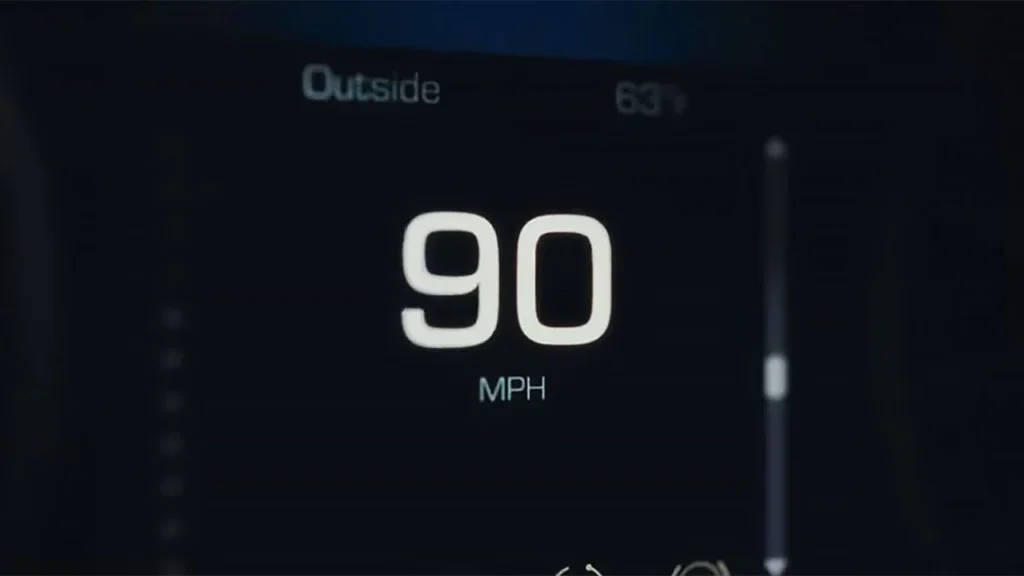
Surveillance footage from 2 separate businesses captured the sequence. Mackenzie drove into an industrial area near Alameda Drive in Strongsville around the middle of the night. She took an earlier turn carefully, using her signal, normal speed. Then she floored it. 100 mph, straight into a brick wall, no braking, no swerving, nothing.
Dominic and Davion died at the scene. Mackenzie was found with her head under the steering wheel.
She said she remembered nothing.
The road itself is worth understanding. It’s an industrial parkway with no logical destination for a teenager at that hour. A few locals note kids occasionally drive back there to smoke, but there’s no shortcut to anywhere most people would actually be going. Prosecutors made that point clearly.
The GPS evidence Netflix skipped
This is the one that has true crime followers genuinely angry.
Mackenzie’s phone GPS showed she’d driven the same route to that same brick wall 7 to 8 times in the 3 days before the crash. The address that kept appearing in trial discussions: 11798 Alameda Drive, Strongsville, OH 44149.
Prosecutors argued she was scouting it. And there were no prior pings at that location before those 3 days, which rules out the “she just knew the area” defense pretty cleanly.
“It was documented in her phone’s GPS. She ran the exact path 8 times three days earlier. It’s what got her convicted.” — Reddit commenter who followed the trial
Netflix didn’t show any of it.
The seatbelt nobody talks about
Mackenzie was the only person in the car wearing a seatbelt.
Her friends testified she almost never wore one. The one night she buckled up was the night she drove into a wall at 100 mph with 2 other people in the car.
The vehicle damage told its own story. The car essentially split on impact. One side destroyed. Mackenzie’s side comparatively intact.
The hospital recording
Shortly after the crash, still at the hospital, Mackenzie was recorded speaking in what sounded like gibberish to her mother, apparently to avoid being understood by investigators nearby.
She was reportedly saying: “Can’t we just tell them I had, like, a seizure or something?”
This recording appears in Hulu’s “Killer Cases” episode on the case. It’s not in the Netflix documentary.
At this point, Mackenzie hadn’t landed on POTS (Postural Orthostatic Tachycardia Syndrome) as her explanation yet. She was already trying to build a false story. From the hospital bed, hours after killing 2 people.
What the black box showed
The car’s event data recorder showed the gear shifted from drive to neutral and then back to drive in the seconds before impact.
A person having a medical episode, a seizure, or any involuntary physical event doesn’t shift gears in a deliberate sequence. The prosecution used this alongside the surveillance footage, which already showed Mackenzie in full control of the car up until the moment she accelerated into the wall.
Why Netflix left it out
The most plausible explanation: they needed Mackenzie and her family to say yes.
Getting the convicted murderer and her parents on camera is the entire value proposition of the documentary. If Netflix had included the GPS scouting runs, the hospital recording, and the black box gear shift, the Shirilla family would probably have walked. So those things didn’t make the cut.
The second reason is simpler: ambiguity performs better. A documentary where the answer is obvious before the credits roll doesn’t generate discussion. Manufactured uncertainty does.
A third theory floating around online is that Netflix genuinely doesn’t do evidentiary rigour the way Dateline or Investigation Discovery does. Their true crime output leans on interviews and emotional texture, not forensic detail.
Probably all 3 are true to some degree.
The jury trial she didn’t take
Mackenzie’s defense chose a bench trial. One judge, no jury.
The reasoning was almost certainly that Mackenzie is deeply unlikeable on camera and in person, and a jury of 12 people might vote against her based on vibes alone. A judge, the thinking went, would be more disciplined about evidence.
It didn’t work. The judge found her guilty on every count.
The counter-argument people keep making online: with a jury, you only need 1 person to hold out for reasonable doubt. And the Netflix documentary, without the GPS evidence or the hospital recording, actually does leave some room for doubt. She might have had a shot.
She didn’t take it.
Her parents, on camera, doing exactly what you’d expect
If you wanted a case study in how someone becomes Mackenzie Shirilla, her parents deliver it in real time.
Her mother argued with the judge during sentencing. Her father, a graphic design and arts teacher at a Catholic pre-K through 8th grade school, went on administrative leave after the documentary aired. Apparently appearing on Netflix to defend your daughter’s murder conviction has professional consequences (who knew).
The general read from viewers: these are people who wanted to be on television more than they understood what they were walking into. Comments describing them as “bonkers,” “atrocious,” and lacking basic self-awareness are the majority opinion.
The POTS defense, pushed hard by Mackenzie’s family, became a recurring joke in online discussions. Prison appears to have resolved the condition entirely, with no reported episodes in a controlled environment.
Where to find better coverage of this case
“Mean Girl Murders” on Investigation Discovery is where most people who followed the trial recommend starting. It covers the GPS evidence, the prior threats Mackenzie made to Dominic, and the prosecution’s actual argument in a way Netflix doesn’t.
“Killer Cases” on Hulu has the hospital recording.
On YouTube, the Investigation Discovery episode is available with the GPS evidence discussion starting around the 14:40 timestamp. The video titled “Parents Discover Their Daughter Is A Mass Killer” was also widely circulated before the Netflix documentary came out.
Her prison discipline record
Public record. Multiple YouTube creators have compiled it.
The infractions include physical fights, threats, bullying younger inmates, complaints about food and showers, not following rules, and carrying pencils as contraband (pencils are apparently a weapon in a juvenile facility). Her phone calls from prison have also been posted online and described by listeners as consistent with someone who has zero remorse and a lot of opinions about her living situation.
She goes up for parole at around age 32 or 33. The discipline file is going to be a problem for that.
The questions that still don’t have clean answers
Was it murder-suicide or a targeted attack?
The seatbelt strongly suggests Mackenzie planned to survive. But she’d also told Dominic she’d rather die than lose him, and the texts included lines like “watch your car, watch your friends, watch your life.” Maybe she thought she’d walk away. Maybe she didn’t care either way.
Why was Davion there?
He wasn’t part of any dispute. He was just in the car. If she planned this, she either didn’t think about him or decided it didn’t matter. Both options are bad.
Does she actually remember nothing?
I think this is genuinely uncertain. Retrograde amnesia after a traumatic crash is medically real. And weirdly, if she wanted to construct a sympathetic story, “I don’t remember” is a strange choice. Claiming she fell asleep or had a POTS episode would have been more useful. One commenter made the observation that she probably remembers planning it but genuinely doesn’t remember the crash itself. That’s its own kind of psychological nightmare.
The timestamp gap
Viewers noticed a discrepancy between 2 surveillance cameras: one shows roughly 55 seconds between the calm turn and impact, another suggests 4 to 5 minutes. The cameras weren’t synced. Nobody in the documentary addressed this.
What viewers actually think
The Reddit thread on r/NetflixDocumentaries is a few hundred comments deep and the consensus is pretty clear.
Almost everyone thinks she did it on purpose. The people expressing any doubt are in a small minority, and even most of them aren’t really arguing accident so much as debating whether it was premeditated or a split-second rage decision.
The GPS evidence being absent from the documentary is the single biggest complaint. Multiple commenters said they watched the Netflix version and thought vehicular manslaughter seemed like the right charge. Then they found out about the scouting runs and changed their view entirely.
The parents are universally mocked. The POTS defense is universally mocked. The judge’s conduct at sentencing raised some eyebrows (a red solo cup on the bench, arguing with character witnesses), but most viewers didn’t think it affected the outcome.
The sentence, explained
Judge Nancy Margaret Russo (no relation to Dominic) sentenced Mackenzie to 15 years to life after finding her guilty of aggravated murder.
The judge’s reasoning:
- Full acceleration with no braking or attempt to swerve
- Prior explicit threats to Dominic about crashing the car
- Evidence she’d been to the location before the crash
- The black box gear shift data
- Controlled, normal driving on the turn immediately before she floored it
The judge told Mackenzie there was “a very good chance you’ll spend the rest of your life in jail.” That’s not a legal finding. It’s a read on Mackenzie’s character and the likelihood of parole given her conduct.
The judge probably isn’t wrong.
The bottom line
Dominic Russo and Davion Flanagan are dead. Mackenzie Shirilla drove into a concrete wall at 100 mph, she was the only one wearing a seatbelt, she’d driven the route 7 or 8 times in the preceding 3 days, and she tried to invent a cover story from her hospital bed.
A judge convicted her of aggravated murder. She’s serving 15 to life.
Netflix made a documentary that left out most of that.
Watch “Mean Girl Murders” on ID if you want the actual case. Watch “The Crash” if you want to watch Mackenzie’s parents go on television and somehow make things worse for her.
| Detail | Information |
|---|---|
| Defendant | Mackenzie Shirilla |
| Victims | Dominic Russo, Davion Flanagan |
| Date of crash | July 31, 2022 |
| Location | Strongsville, Ohio |
| Speed at impact | ~100 mph |
| Verdict | Guilty, aggravated murder |
| Sentence | 15 years to life |
| Trial type | Bench trial |
| Netflix documentary | “The Crash” (2025/2026) |
| Better alternatives | “Mean Girl Murders” (ID), “Killer Cases” (Hulu) |
Based on public court records, documentary content, and community discussion. Not legal advice.