
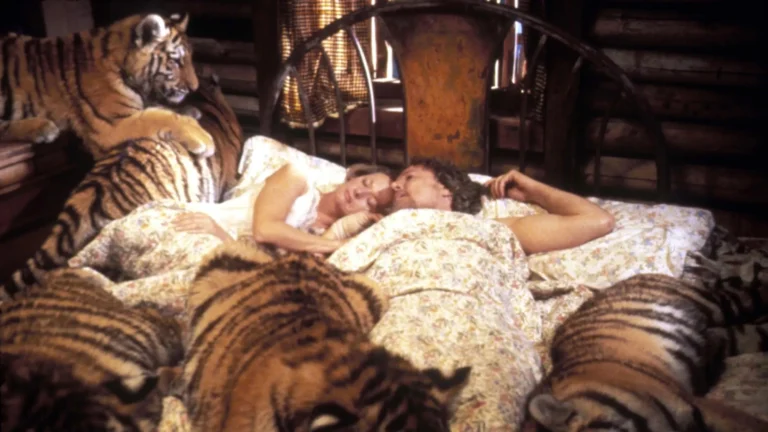

Forget every high-octane stunt you have seen Tom Cruise perform in the Mission: Impossible franchise because they are child’s play compared to this madness. In the late 1970s, Hollywood producer Noel Marshall and his wife, Hitchcock muse Tippi Hedren, conceived an idea that defied all logic, safety regulations, and sanity. Their goal was to film a drama about the preservation of big cats, but they believed that to capture the true essence of these majestic beasts, they could not use trained animals. Their solution was radical co-existence, a philosophy that required the cast to live among predators without protection. This reckless decision would eventually birth Roar, widely recognized today as the most dangerous movie ever made, turning a passion project into a literal war zone.
The couple purchased a ranch in Acton, California, and proceeded to populate it with over 150 ungezähmte (untamed) lions, tigers, leopards, jaguars, and elephants. There were no cages, no whips, and absolutely no professional animal trainers to control the chaos on set. For eleven agonizing years, the cast, which included a young Melanie Griffith and her brothers, lived and slept alongside these apex predators. What was intended to be a beautiful testament to nature quickly spiraled into a bloody battle for survival that decimated the crew. The film industry often uses hyperbole to sell tickets, but in the case of Roar, the danger was entirely real. Every roar, swipe, and bite captured on 35mm film was unscripted, leading to a production period that stretched over a decade due to constant hospitalizations.
The Carnage: When The Cameras Captured Real Blood
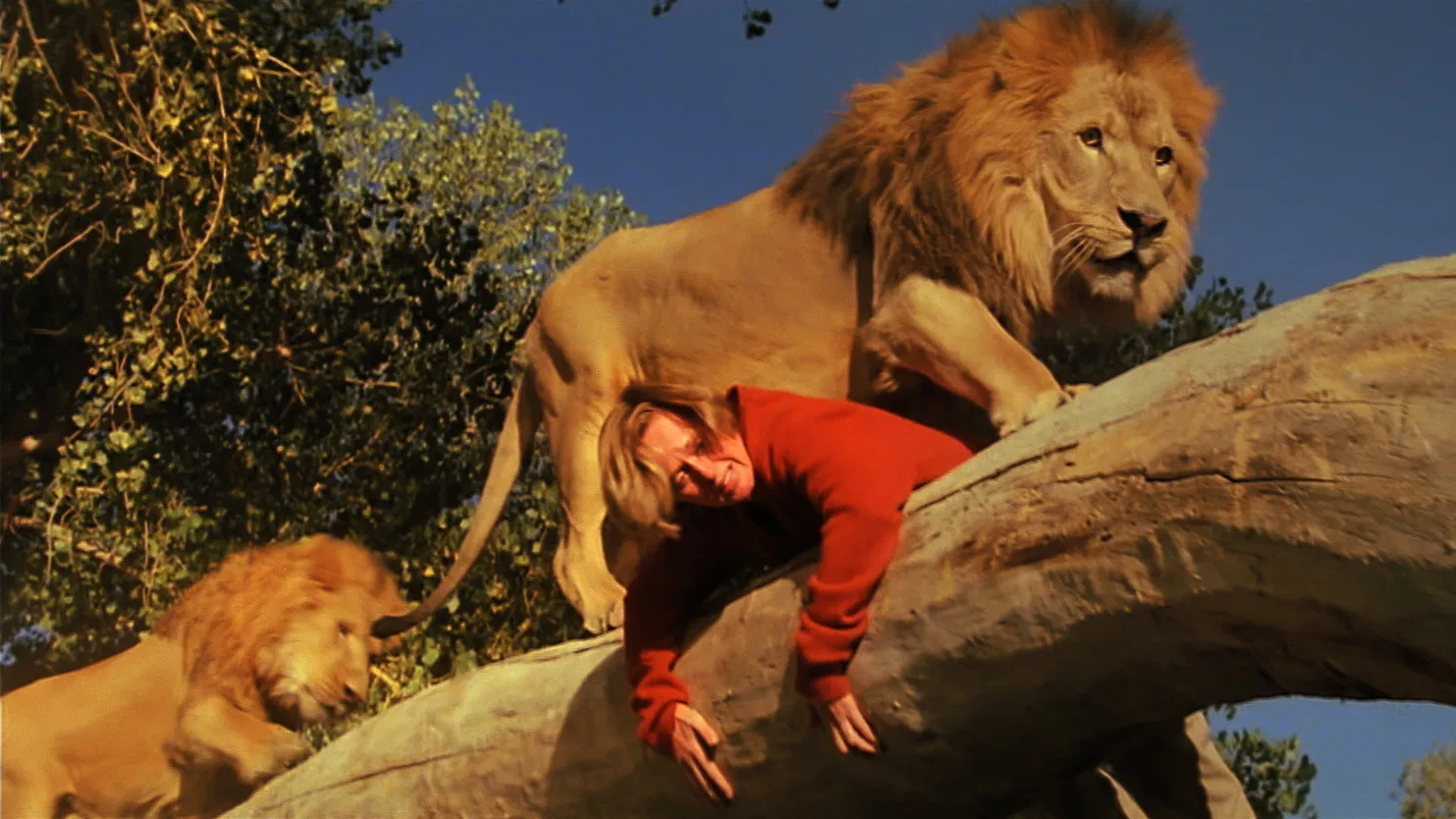
The production of Roar is less of a filmmaking story and more of a documented horror event where the lines between acting and surviving blurred completely. The injury list is so extensive it reads like a piece of dark fiction rather than a production report. The most infamous incident involved cinematographer Jan de Bont, the future director of blockbusters like Speed and Twister. During a particularly tense sequence, a lion attacked him, literally scalping him alive on set. De Bont required over 220 stitches to reattach his scalp to his skull, yet in a display of absolute insanity, he returned to the set to finish the film after recovering. This level of dedication highlights the sheer delirium that plagued the production, where severe physical trauma became just another Tuesday on the call sheet.
The carnage did not spare the director’s family either, as Tippi Hedren’s daughter, Melanie Griffith, suffered a career-threatening injury that nearly left her blind. During the filming of a scene that feels far too real to watch comfortably, a lion mauled her face, resulting in extensive wounds that required reconstructive plastic surgery to repair. If you watch the film today, the terror in her eyes is not a performance; it is the genuine reaction of a teenager realizing she might be eaten alive. Meanwhile, Tippi Hedren was tossed by an elephant, fracturing her leg, and later bitten in the neck by a lion, with teeth scraping her jugular. As reported by Variety and other outlets retrospectively, the set was a revolving door of ambulances, with the cast suffering from gangrene, sepsis, and bone fractures on a weekly basis.
 Drafthouse Films
The Legacy: A Financial Disaster and a Cult Classic
The mastermind behind this chaotic experiment, Noel Marshall, suffered perhaps the most, both physically and financially, in his quest to complete his magnum opus. Marshall was bitten so many times during the shoot that he developed gangrene, yet he refused to stop filming, often directing scenes while bleeding from fresh wounds. The film captures these moments, and viewers must understand that the blood soaking through his shirt is not a special effect from the prop department. The production was plagued by biblical disasters, including floods and fires that destroyed the set and allowed lions to escape, forcing local law enforcement to intervene. By the time the film wrapped, the budget had ballooned to a staggering $17 million, essentially bankrupting Marshall and destroying his marriage to Hedren.
Despite the blood, sweat, and millions of dollars poured into the project, Roar was a colossal box office bomb upon its release, clawing back only $2 million. Audiences were confused by the tone, which vacillated between a Disney-style animal adventure and a terrifying snuff film. However, the movie has since found a second life as a cult classic, marketed with the most honest tagline in cinema history which states “No animals were harmed in the making of this movie. 70 cast and crew members were.” It stands today as a testament to hubris and the sheer unpredictability of nature. As noted by film historians, it is a project that could never be made today, serving as a permanent, scar-riddled monument to the most dangerous film set ever assembled.
Why You Need to Witness the Madness
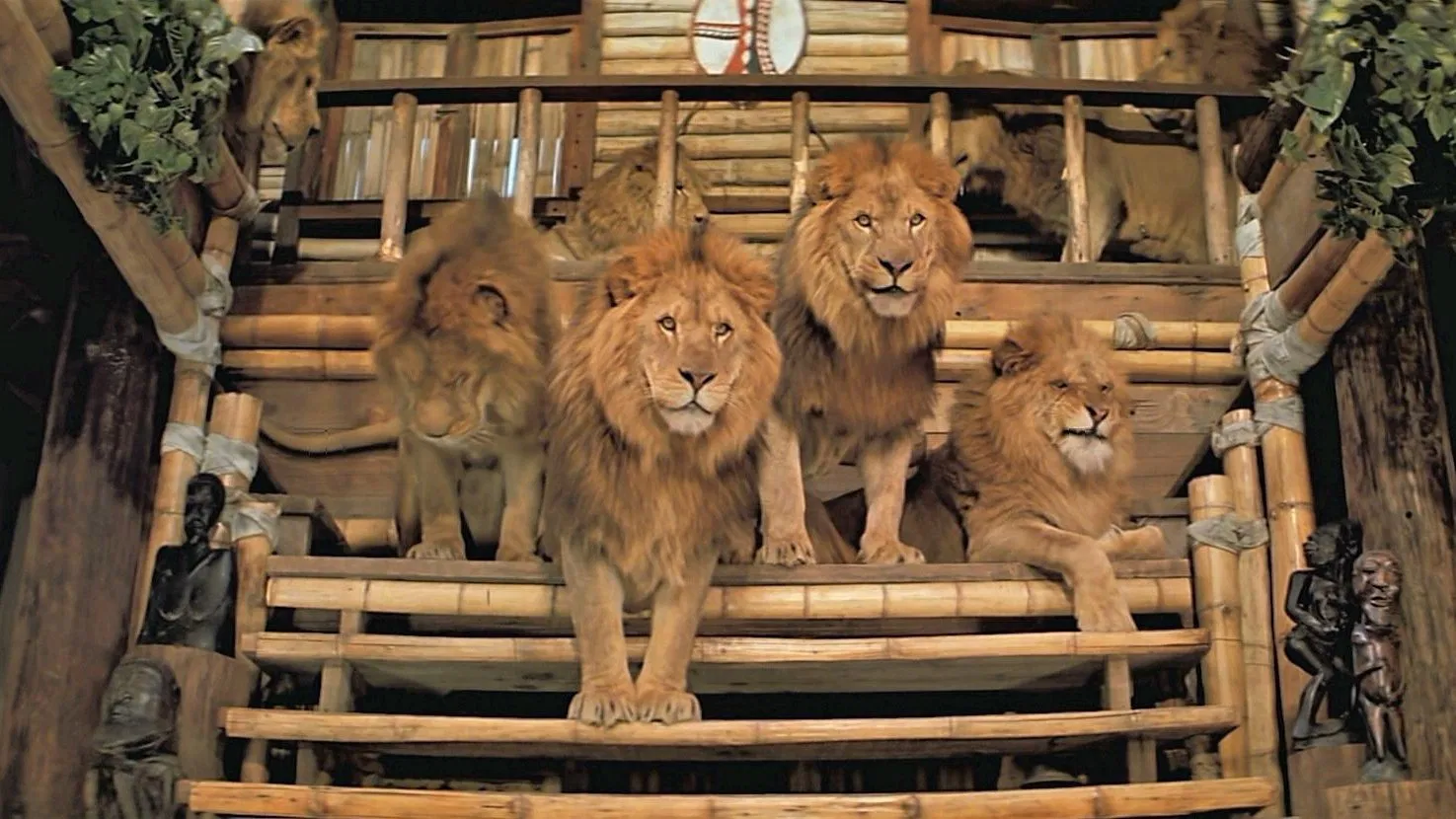
Watching Roar today is a surreal experience that evokes a mixture of awe, horror, and disbelief that such a project was ever greenlit by rational adults. It is the ultimate piece of “anxiety cinema,” where the fourth wall is shattered by the knowledge that the danger on screen is legitimate. Every time a tiger lunges or a pile of lions tackles the director, the audience holds its breath, knowing that the outcome was not determined by a script coordinator. It serves as a fascinating, albeit terrifying, time capsule of 1970s Hollywood excess, where the safety of human beings took a backseat to the artistic vision of capturing “authentic” interactions with wild beasts.
Ultimately, Roar remains the undisputed champion of dangerous filmmaking, a title it will likely hold forever given modern safety standards and CGI advancements. It is a film that demands to be seen, not necessarily for its plot or character development, but for the sheer spectacle of human survival against insurmountable odds. Whether you view it as a brave experiment in animal conservation or a reckless endangerment of human life, it is an undeniable piece of cinematic history. If you have the stomach for it, track down a copy, but be warned that what you are watching is not a simulation; it is seventy people bleeding for your entertainment.
 Drafthouse Films