
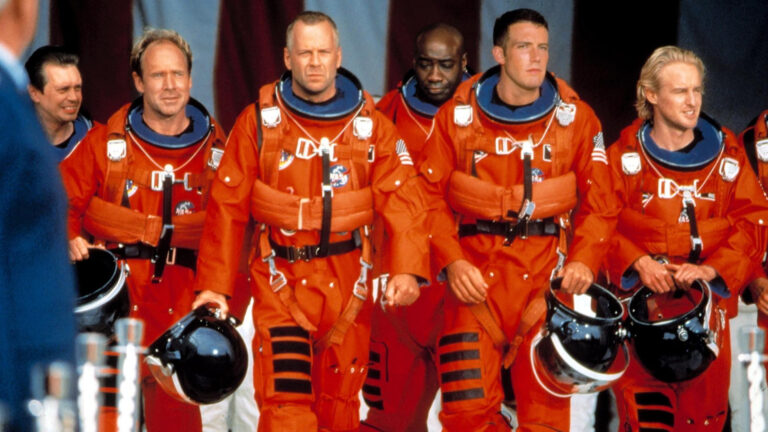

Picture this: a room full of NASA’s brightest minds, notebooks in hand, watching Bruce Willis drill into an asteroid while Aerosmith blasts in the background. Their mission? Count every single scientific impossibility in Michael Bay’s 1998 blockbuster. According to internet legend, this is actually happening in NASA training sessions, where new managers are challenged to spot the film’s alleged 168 errors. It sounds too perfect to be true, right? The most scientifically ridiculous space movie ever made, repurposed as a teaching tool for the world’s premier space agency.
What we know for certain is this: Armageddon remains one of cinema’s most spectacular trainwrecks of scientific accuracy, a film so committed to explosive spectacle over physics that it’s become the gold standard for “movies scientists love to hate.” Whether NASA officially uses it in training or not, the legend itself reveals something fascinating about how Hollywood’s grandest space fantasies intersect with real-world aerospace engineering. And honestly? The truth might be even more interesting than the myth.
 Buena Vista
THE LEGEND THAT WON’T DIE
The claim has been repeated so many times it feels like established fact: NASA supposedly screens Armageddon for management trainees, challenging them to identify every scientific and procedural error. Some versions claim the magic number is 168 distinct impossibilities. The story first gained traction in a September 2007 column in New Scientist, which mentioned NASA showing the film during internal training sessions. But here’s where it gets murky: the column offered no attribution, no quotes from NASA officials, and no documentation of an official policy.
Since then, the anecdote has been recycled across countless websites, each iteration adding its own embellishments. Some claim it’s mandatory viewing for new managers. Others say it’s just for fun during orientation. A few suggest it’s part of crisis management training, illustrating what happens when you ignore expert advice. The problem? NASA isn’t officially confirming any of this. There’s no official training manual, no public policy document, and no press release proving that Armageddon has any role in the agency’s management development programs.
WHY ARMAGEDDON DESERVES ITS REPUTATION
Regardless of NASA’s actual training practices, there’s no disputing the core truth: Armageddon is a scientific disaster of epic proportions. The film’s relationship with physics, astronomy, and basic logic is casual at best. Let’s start with the premise: an asteroid “the size of Texas” is discovered 18 days before impact. In reality, astronomers track near-Earth objects years or decades in advance. According to NASA’s Planetary Defense Coordination Office, we’ve cataloged over 90% of near-Earth asteroids larger than one kilometer.
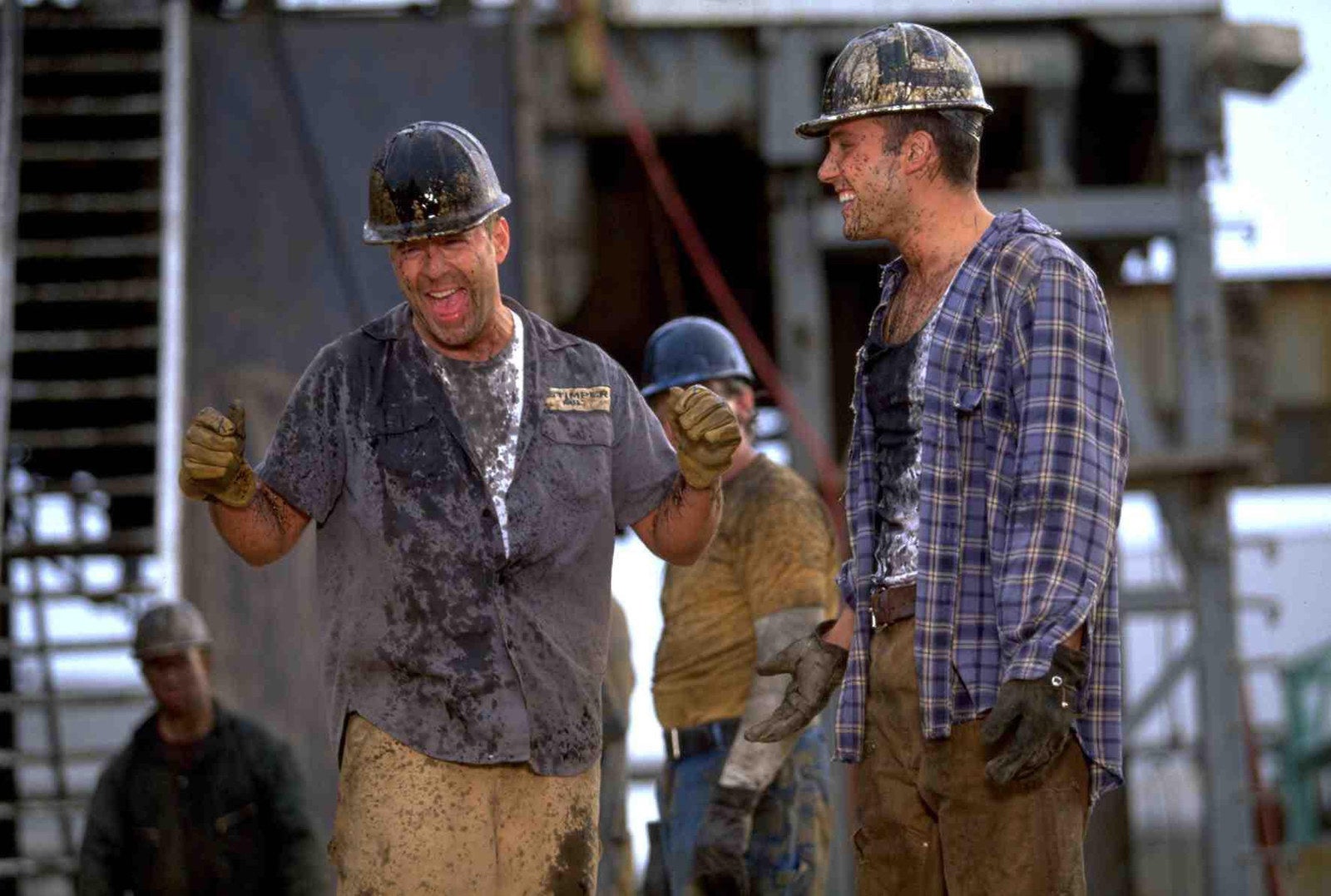
Then there’s the solution: drill a hole 800 feet deep, drop a nuclear bomb inside, and split the asteroid in half. Setting aside the drilling challenges in microgravity, nuclear weapons don’t work like that in space. There’s no air to carry the shockwave. The film also treats space travel like an afternoon road trip. Characters remove their helmets on the asteroid surface (which has no atmosphere). Ben Affleck himself famously asked director Michael Bay why it would be easier to train oil drillers to become astronauts rather than train astronauts to drill. Bay’s reported response: “Shut up.”
 Buena Vista
THE EDUCATIONAL VALUE OF BAD SCIENCE
Here’s the thing: Armageddon’s scientific crimes actually make it valuable for education, whether NASA uses it officially or not. Science educators have long recognized that bad science in popular media creates teaching opportunities. Students engage more when you’re dissecting a movie they’ve actually seen rather than reading dry textbooks. Physics professors show clips from action movies to illustrate momentum and energy conservation. And astronomy instructors absolutely love showing Armageddon, precisely because it gets so much wrong.
Dr. Phil Plait, an astronomer who literally wrote the book on bad movie science, has spent years gleefully cataloging Armageddon’s failures. The film appears on virtually every “most scientifically inaccurate movies” list ever compiled, usually competing with The Core for the top spot. But that infamy serves a purpose. These movies stay in the cultural conversation specifically because scientists won’t stop talking about them. Each error becomes a jumping-off point for discussion: “Why wouldn’t this work? What would actually happen? What does the movie misunderstand about orbital mechanics?”
HOLLYWOOD SCIENCE: A COMPLICATED RELATIONSHIP
The Armageddon training story, true or not, highlights a larger tension between Hollywood and the scientific community. Some films work closely with technical advisors to get details right. Christopher Nolan’s Interstellar consulted with physicist Kip Thorne, resulting in the most accurate depiction of a black hole ever put on screen. The Martian worked with NASA to ensure Watney’s survival strategies were plausible. Apollo 13 is celebrated for its meticulous attention to historical accuracy. Then there’s the Michael Bay approach: science is merely a suggestion, and spectacle is king.
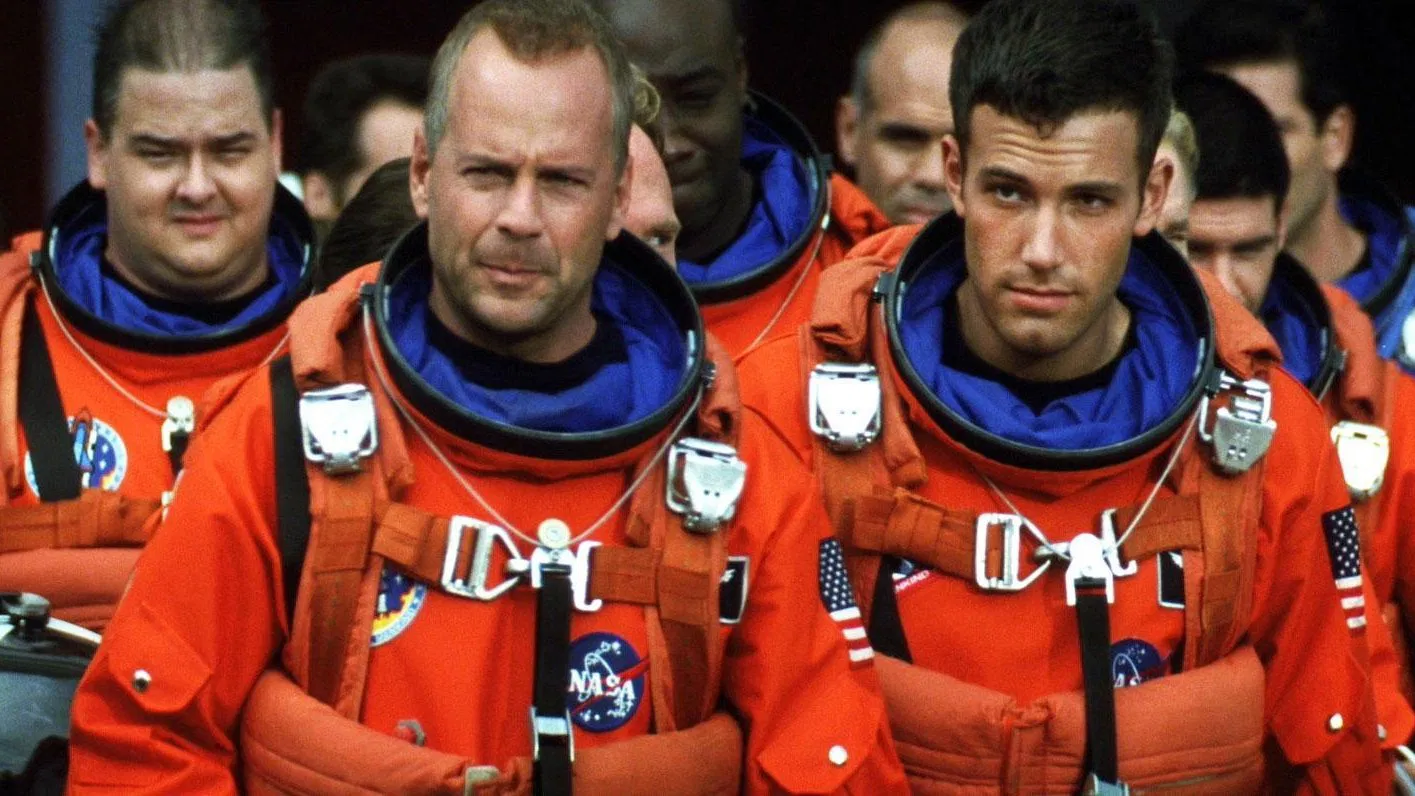
To be fair, Armageddon never pretends to be a documentary. It’s a $140 million summer blockbuster designed to make audiences cheer when Harry Stamper (Bruce Willis) manually detonates the nuke, sacrificing himself to save humanity. The film earned $553 million worldwide and spent four consecutive weeks at number one. But the film’s success created a problem: millions of people absorbed Armageddon’s version of how asteroids and space travel work. Some of those misconceptions persist. This is why the NASA training legend resonates so strongly with audiences and scientists alike.
THE CULTURAL LEGACY
Twenty-six years after its release, Armageddon occupies a unique space in pop culture. It’s simultaneously beloved and ridiculed, a genuine crowd-pleaser that serious film critics and scientists love to mock. The soundtrack, featuring Aerosmith’s power ballad and songs performed by the band’s lead singer’s daughter (Liv Tyler, star of the film), went multi-platinum. The image of Bruce Willis in a spacesuit, dramatically pushing the detonator button as Aerosmith wails about not wanting to miss a thing, became instantly iconic and defined an era of blockbuster filmmaking.
The film also launched a thousand internet debates about scientific accuracy in movies, the kind of passionate arguments that still rage in Reddit threads and YouTube comments. Some defend the film as pure entertainment that never claimed to be realistic. Others argue that big-budget Hollywood productions have a responsibility not to spread misinformation. What the NASA training legend adds to this conversation is a third perspective: even bad science can be useful if it sparks critical thinking. If showing Armageddon to new managers gets them questioning assumptions, then maybe Michael Bay accidentally created an educational tool while trying to blow up the biggest asteroid possible.
 Buena Vista
So did NASA really use Armageddon in management training? The honest answer is: we don’t definitively know. The evidence is thin, based on a single unsourced mention in a science magazine nearly two decades ago. But the legend persists because it feels true, capturing something essential about both the film and the organization supposedly showing it. NASA has always existed at the intersection of impossible dreams and rigorous science. The agency that put humans on the moon also calculates every decimal point of orbital mechanics.
Whether the training sessions happened or not, the conversation around them is valuable. It forces us to think about how we consume media, how entertainment shapes understanding, and how organizations use popular culture to teach critical thinking. In the end, Armageddon’s greatest achievement might not be its box office returns or its place in 1990s nostalgia. It might be creating a film so spectacularly, magnificently wrong that it became useful precisely because of its flaws. The next time you watch Harry Stamper drill into that asteroid while defying every law of physics, remember that somewhere, someone with a PhD in aerospace engineering is watching too, happily counting the errors.