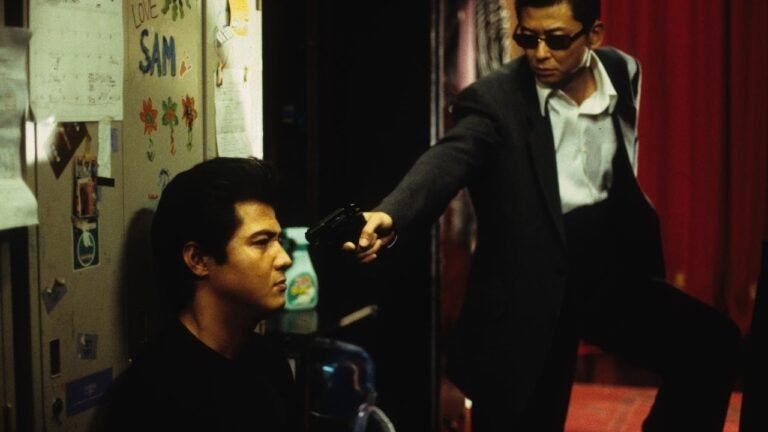
The best yakuza movies treat organized crime not as glamour but as autopsy. Born from postwar disillusion and codified by directors like Kinji Fukasaku and Seijun Suzuki, the genre has spent six decades dissecting loyalty, betrayal, and Japan’s uneasy relationship with its own underworld. From the candy-colored pop nightmares of 1960s Nikkatsu programmers to the Reiwa-era Hiroshima sagas of Kazuya Shiraishi, yakuza eiga remains a living tradition rather than a museum piece, and the genre’s reach extends far beyond Tokyo into the cinephile consciousness of Tarantino, Refn, Park Chan-wook, and Wong Kar-wai.

This curated ranking pulls together fourteen essential titles spanning ninkyo chivalry classics, the gritty jitsuroku revolution, Takeshi Kitano’s melancholy reinventions, and the boundary-shattering work of Takashi Miike. Readers chasing the philosophical dread that runs underneath the bullets should bookmark our companion roundup of existential Japanese gangster films built specifically for yakuza fans, which maps the broader auteurist crime adjacencies these directors orbit.

What Are the Best Yakuza Movies of All Time?

The best yakuza movies of all time include Kinji Fukasaku’s Battles Without Honor and Humanity, Takeshi Kitano’s Sonatine, and Takashi Miike’s Ichi the Killer. These three films span the genre’s evolution from gritty 1970s realism through 1990s art-house melancholy into 2000s manga-fueled extremity, defining yakuza eiga for international audiences across five decades of bold, uncompromising Japanese crime cinema.

Best Yakuza Movies

1

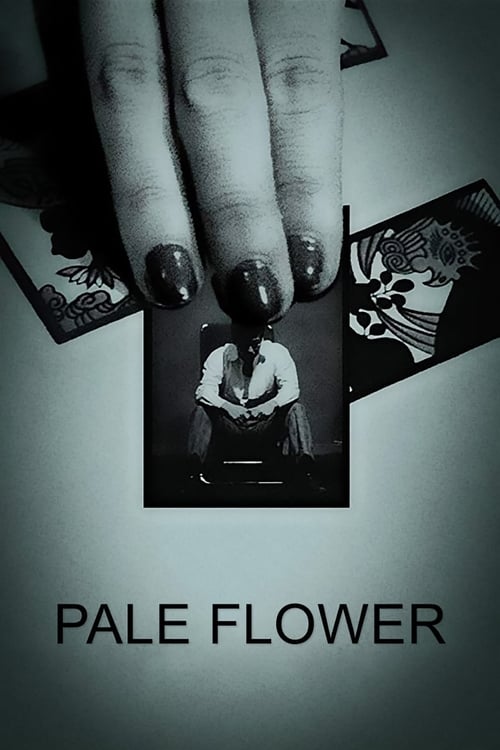
Pale Flower

1964 • Crime, Romance
7.3
The earliest entry on this list remains the most quietly devastating. Masahiro Shinoda's Japanese New Wave landmark films a soulless, weary hitman drifting back into Tokyo's underworld with the cool fatalism of a Camus protagonist. Toru Takemitsu's score blends jazz, electronic dissonance, and ambient card-game clatter into something genuinely uneasy. Cinematographer Masao Kosugi shoots smoke-filled gambling parlors in stark monochrome shadows that predate Jean-Pierre Melville's Le Samourai by three years. Lead Ryo Ikebe barely speaks above a whisper, yet his stillness anchors every frame. The Criterion Collection rightly preserved Pale Flower as foundational text for any serious crime cinema education.
Read More
2

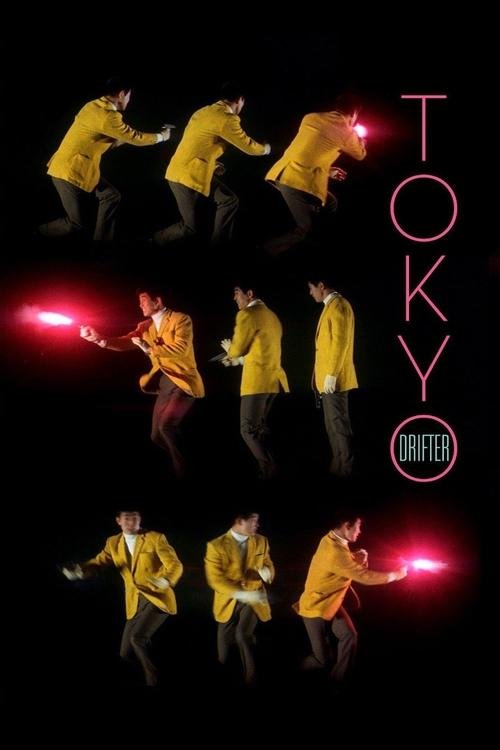
Tokyo Drifter

1966 • Action, Crime
7.1
Seijun Suzuki took a routine Nikkatsu programmer and weaponized it into a candy-colored pop-art riot. Tokyo Drifter stages gun battles inside white nightclubs, snowy yellow valleys, and saturated pastel sets that feel borrowed from a Roy Lichtenstein canvas. Lead Tetsuya Watari sleepwalks through danger in his powder-blue suit, humming the theme song as bullets fly. Cinematographer Shigeyoshi Mine treats every frame like a poster ready for the wall. The film flopped on release and contributed to Suzuki's eventual firing from the studio, yet today it sits among the most influential Japanese crime cinema artifacts ever produced. Wong Kar-wai, Quentin Tarantino, and Jim Jarmusch all owe it tribute.
Read More
3

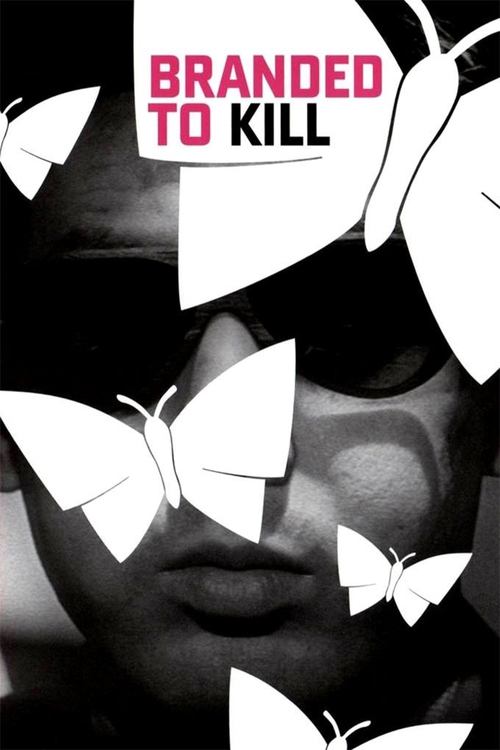
Branded to Kill

1967 • Action, Crime
7.2
A year after Tokyo Drifter, Suzuki delivered the film that ended his studio career and cemented his cult legacy in the same masterstroke. Joe Shishido stars as Hanada, the No. 3 Killer, a hitman with a fetish for boiled rice and a target on his back from the mythic No. 1. Narrative coherence dissolves into surrealist dream logic; bullets fly through sink drains, butterflies derail assassinations, and Shishido's surgically enhanced cheeks become a visual signature. Cinematographer Kazue Nagatsuka shoots every kill like a fever vision. Nikkatsu boss Kyusaku Hori called it "incomprehensible" and dismissed Suzuki on the spot. John Woo and Park Chan-wook later canonized it.
Read More
4
7.3
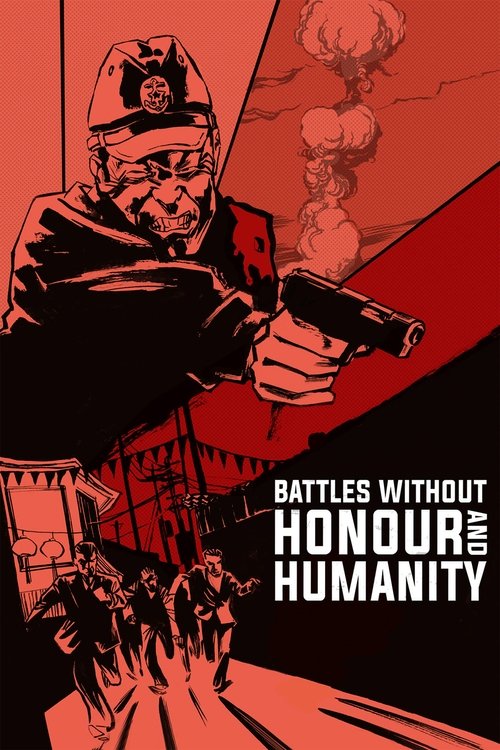
If the previous entries mythologized the yakuza, Kinji Fukasaku tore the myth apart with this jitsuroku (true account) earthquake. Drawn from real Hiroshima gang testimony, Battles Without Honor and Humanity replaced courtly ninkyo chivalry with handheld shaky-cam, freeze-frame body counts, and Bunta Sugawara screaming into the postwar wreckage. Toshiaki Tsushima's brass-stab theme is so iconic Quentin Tarantino lifted it for Kill Bill: Vol. 1. Fukasaku launched five films in two years, building a sprawling Hiroshima saga that reshaped the entire genre. Cinematographer Sadaji Yoshida captured rubble, sweat, and chaos with documentary urgency. This sits at the apex of any best yakuza movies discussion for anyone who treats crime cinema as social autopsy.
Read More
5

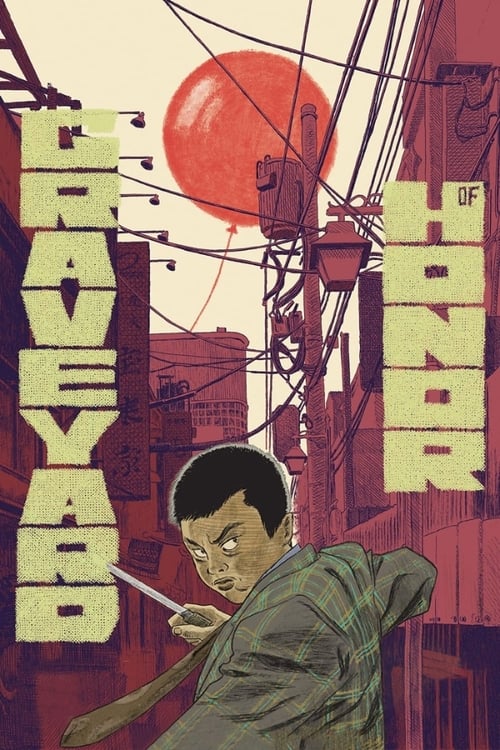
Graveyard of Honor

1975 • Action, Crime
6.6
Two years after Battles Without Honor and Humanity, Fukasaku doubled down on his anti-romantic vision with this scorched portrait of Rikio Ishikawa, a real postwar yakuza whose self-destructive arc reads like a Greek tragedy delivered through gunfire. Tetsuya Watari abandons the cool detachment of Tokyo Drifter and goes full feral, biting handlers, snorting heroin, and torching every loyalty oath in his path. Cinematographer Hanjiro Nakazawa frames Tokyo's underworld in sickly fluorescent greens and bruised purples. The film grossed modestly on release but built lasting cult status, prompting Takashi Miike to deliver his own bleaker remake in 2002. Required viewing for understanding yakuza eiga as character demolition.
Read More
6

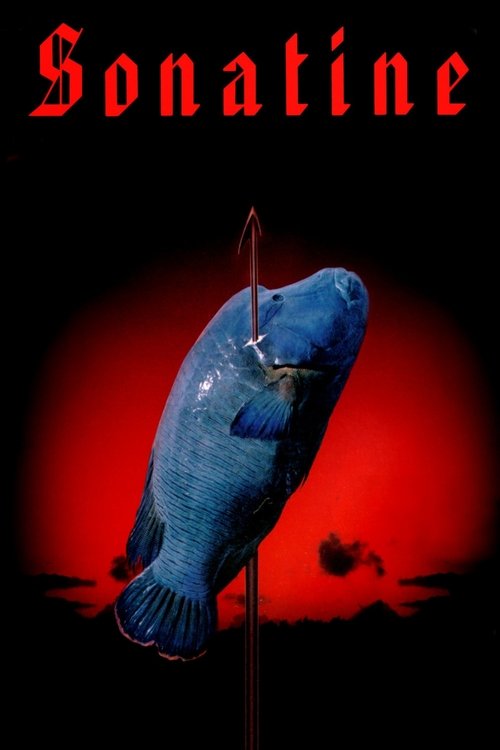
Sonatine

1993 • Action, Crime
7.5
Takeshi Kitano's third directorial outing remains the spiritual peak of his crime filmography and the film cinephiles cite first when defending modern yakuza cinema. Sent to Okinawa to mediate a gang dispute, Kitano's burnt-out enforcer Murakawa instead spends days playing beach games and staring into the surf, knowing the violence will arrive eventually. Joe Hisaishi's drifting score and Katsumi Yanagijima's sun-bleached cinematography turn dread into something almost tender. Quentin Tarantino's Rolling Thunder Pictures gave it US distribution in 1998, finally cracking the Western market open for Kitano. The sudden-beat editing rhythm influenced everyone from Nicolas Winding Refn to Jim Jarmusch.
Read More
7

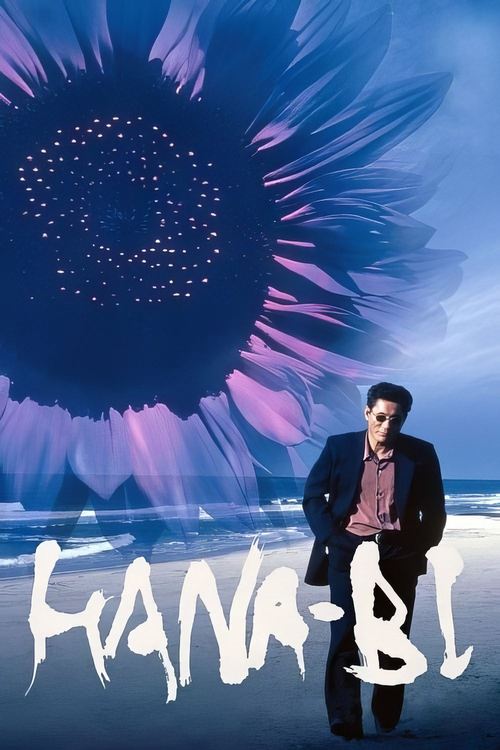
HANA-BI

1997 • Crime, Drama
7.7
Kitano followed Sonatine with the film that won him the Golden Lion at the 1997 Venice Film Festival and cemented his global art-house standing. Hana-bi alternates a corrupt ex-cop's road trip with his terminally ill wife and his wartime debt to a yakuza moneylender, splicing tenderness and atrocity in adjacent frames. Joe Hisaishi delivers one of his most heartbreaking scores, while Kitano's own colorful paintings, completed during recovery from a near-fatal motorcycle crash, hang throughout the film. Roger Ebert placed it on his Great Movies list. Few yakuza films balance brutality and grief with this much disciplined restraint.
Read More
8

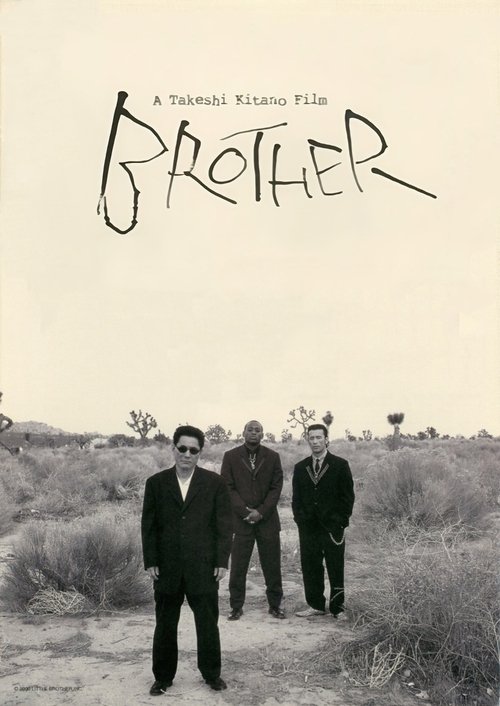
Brother

2000 • Crime, Drama
7.1
Kitano's English-language gamble relocated his deadpan yakuza archetype to a sun-blasted Los Angeles, pairing him with Omar Epps in a fish-out-of-water gangland tragedy. Studio backers FilmFour wanted accessibility; Kitano gave them the same staccato bursts of violence and silent contemplation that defined Sonatine, only now framed against Crenshaw rooftops. Cinematographer Katsumi Yanagijima reused his trademark static long takes. Critics split on the result, but Brother grossed over $25 million worldwide and introduced Kitano to a new generation of American viewers. Within the modern yakuza canon, it stands as the genre's most committed transpacific export, a Japanese gangster operating on foreign concrete.
Read More
9

Outrage

2010 • Action, Crime
6.9
After a decade of experimental detours including Takeshis' and Achilles and the Tortoise, Kitano returned to undiluted gangland fury with this Cannes-premiered onslaught. Outrage charts a chain reaction of betrayals between rival families, escalating from boardroom posturing to dental-chair torture with grim Kitano efficiency. The film deliberately strips out his usual lyrical pauses, replacing them with corporate yakuza realism modeled on actual mid-2000s Tokyo syndicate restructurings. Cinematographer Katsumi Yanagijima keeps every conference table flatly lit, every execution casual. The film grossed roughly $7 million domestically and spawned two sequels, making it the most commercially durable trilogy in modern yakuza cinema.
Read More
10

Dead or Alive

1999 • Action, Crime
6.4
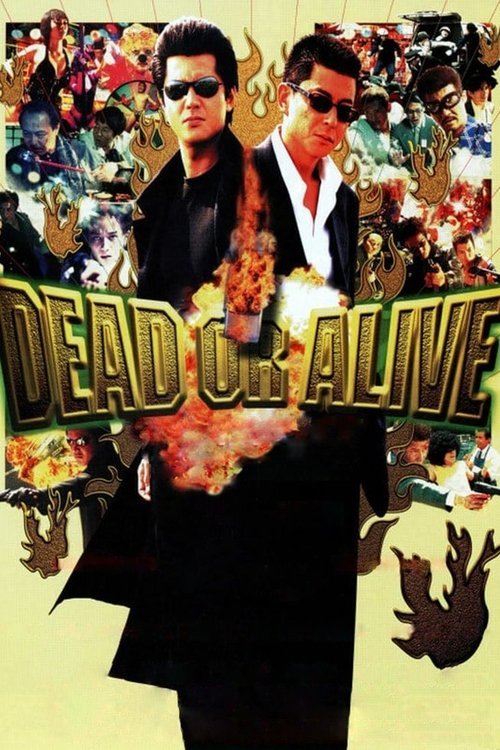
Takashi Miike's prolific late-90s run hit critical mass with this V-Cinema graduate that opens on a seven-minute kinetic crime montage of strip clubs, snorted lines, and sniper kills, and ends on a finale so absurd it ruptures the genre itself. Riki Takeuchi and Sho Aikawa play warring sides of Tokyo's Shinjuku underworld, one a Chinese-Japanese gang leader and the other a beleaguered detective. Miike shoots on grimy 16mm with cinematographer Hideo Yamamoto, drenching every alley in fluorescent decay. Made on a reported budget under $1 million, Dead or Alive launched a chaotic trilogy and announced Miike to international festivals as a Japanese crime cinema provocateur of historic ambition.
Read More
11

Ichi the Killer

2001 • Action, Crime
7.0
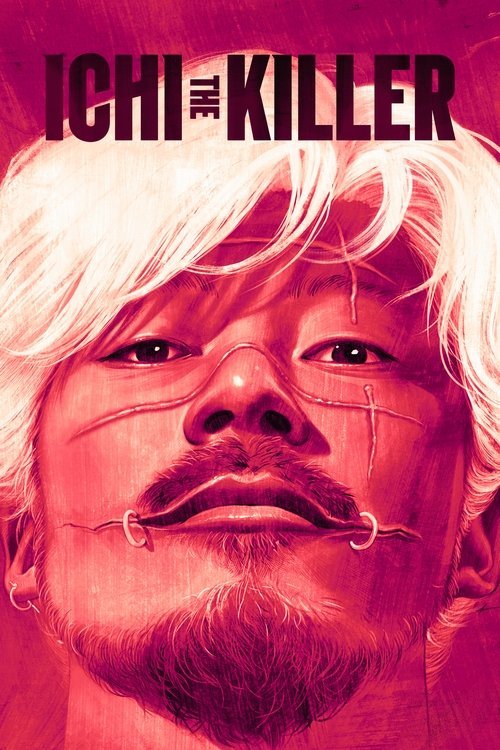
Adapted from Hideo Yamamoto's transgressive manga, Miike's Ichi the Killer remains the most controversial entry on any best yakuza movies list. Tadanobu Asano's masochistic enforcer Kakihara, with split jaw and pierced cheeks, hunts a weeping killer named Ichi who slices opponents apart with razor-tipped boots. Premieres at Toronto in 2001 reportedly required vomit bags handed out to attendees, while the BBFC, Hong Kong, and Norwegian censors hacked extensive footage or banned it outright. Cinematographer Hideo Yamamoto, no relation to the manga author, shoots Tokyo nightlife with a fluorescent acid palette. Beneath the shock, Miike critiques masculine violence as pure pathology. Asano's performance alone earned cult immortality.
Read More
12

The Blood of Wolves

2018 • Crime, Drama
7.2
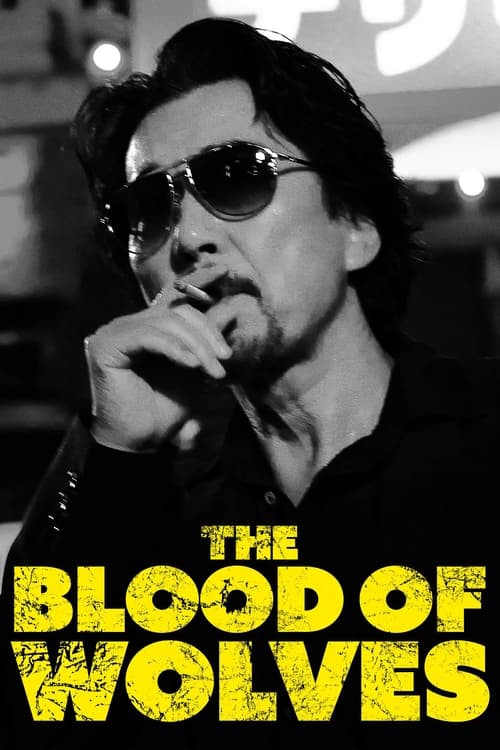
Kazuya Shiraishi's revival of jitsuroku tradition transports viewers to 1988 Hiroshima, where a corrupt detective played by Koji Yakusho operates inside the same gang networks Fukasaku immortalized fifteen years earlier. The film grossed nearly $9 million in Japan, drew six Japanese Academy nominations, and won Best Supporting Actor for Yosuke Eguchi. Cinematographer Takahide Shibanushi rejects digital sheen for grainy period textures that recall 1970s Toei output. Yakusho's volcanic performance ranks among the actor's best in a four-decade career. Shiraishi's screenplay quotes Battles Without Honor and Humanity directly, positioning the film as both homage and critique. Easily one of the strongest yakuza films of the past decade, it earned an immediate sequel.
Read More
13

Last of the Wolves

2021 • Action, Crime
7.1
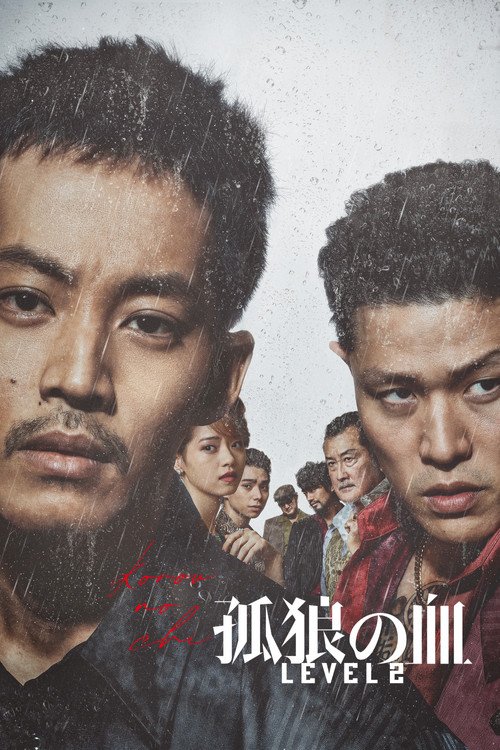
Three years after the original, Shiraishi returned with this expanded follow-up that hands the protagonist baton to Tori Matsuzaka's Detective Hioka and stretches the narrative into a 139-minute postwar saga. Released during pandemic-era Japanese cinemas, Last of the Wolves still grossed roughly $7.6 million and confirmed Shiraishi as the keeper of the Fukasaku flame. Cinematographer Takahide Shibanushi continues his grimy Hiroshima palette while expanding the geographical reach into Korean diaspora subplots that the first film only hinted at. Ryohei Suzuki's villain turn drew unanimous critical praise. Among recent best yakuza movies, this remains the most direct heir to the genre's politically charged 1970s roots without sliding into nostalgia.
Read More
14

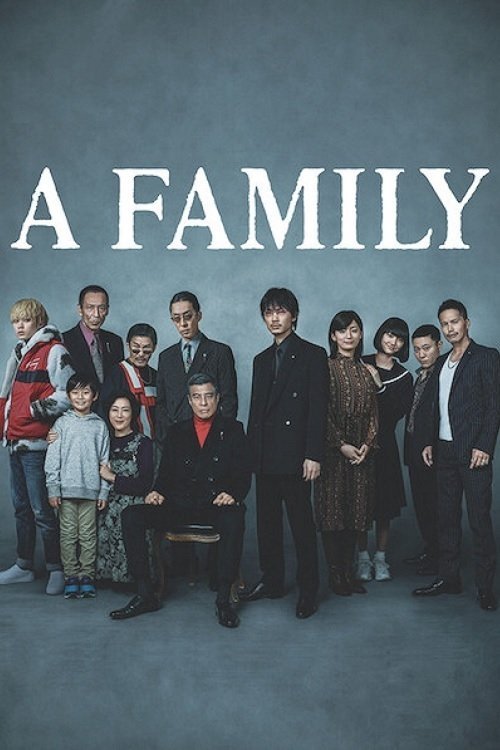
A Family

2021 • Crime, Drama
7.3
Michihito Fujii closes this list with a melancholy 19-year arc following Kenji Yamamoto, played by a career-best Go Ayano, from troubled 1999 teenager to released ex-yakuza struggling against modern anti-gang exclusion ordinances. The film ranks among the most thoughtful contemporary explorations of how Japan's 2011 Boryokudan Exclusion Ordinances economically isolated former gang members from rentals, banking, and even cellphone contracts. Cinematographer Yuta Tsukinaga shifts visual palettes across three eras, from saturated 90s teal to sterilized 2010s gray. Hiroshi Tachi delivers a career-late masterclass as the family's aging patriarch. A Family premiered on Netflix internationally and earned Japanese Academy nominations including Best Picture. Few recent yakuza films carry this weight of policy-aware pathos.
Read More

Why the Best Yakuza Movies Still Matter

Six decades after Pale Flower first crystallized the form, yakuza eiga continues to attract serious directors willing to interrogate Japanese identity through the lens of organized crime. Kazuya Shiraishi’s Wolves duology and Michihito Fujii’s A Family prove the genre still produces work of genuine cultural urgency, even as Japan’s anti-gang ordinances reshape what stories can be told and who can tell them.

Anyone serious about international crime cinema needs the best yakuza movies in their permanent rotation alongside Italian neorealism, Hong Kong heroic bloodshed, and South Korean revenge thrillers. For more on the chemically warped extremity Miike and Fukasaku built their reputations on, our companion list of altered-state crime films guaranteed to scramble your perception makes a strong double-feature pairing. Hungry for related territory? Our gritty 80s ninja deep-dive collects another underseen pocket of cult Japanese action cinema worth the rabbit hole.


Common Questions About the Best Yakuza Movies

What Are the Best Yakuza Movies for Beginners?

The best yakuza movies for beginners are accessible entry points like Sonatine, which balances Takeshi Kitano’s signature deadpan violence with melancholy beach interludes that ease viewers into the genre’s tonal rules. Newcomers should start with films featuring clear protagonists, restrained runtimes, and English subtitles widely available on Criterion Channel or Mubi. Skip the multi-film Hiroshima sagas until the basic genre vocabulary clicks.

Which Director Made the Best Yakuza Movies of All Time?

Kinji Fukasaku is widely regarded as the director who made the best yakuza movies of all time, particularly through his five-film Battles Without Honor and Humanity series that redefined the genre in 1973. Takeshi Kitano, Takashi Miike, and Seijun Suzuki round out the canonical four. Critical opinion splits between Fukasaku’s documentary realism and Kitano’s lyrical minimalism, with Miike claiming the cult-extremity throne.

What Makes the Best Yakuza Movies Different from Mafia Films?

The best yakuza movies emphasize ritualized hierarchy, finger-cutting yubitsume penance, and oyabun-kobun father-son bonds rather than the family-blood structures central to American mafia cinema. Yakuza films also engage explicitly with postwar Japanese identity, US occupation residue, and shifting anti-gang legislation. Where Coppola’s Godfather mythologizes immigrant capitalism, Fukasaku’s body of work treats organized crime as ongoing political wound.

🍿 What to watch next

Loved this vibe? Keep the binge going with:

8 TV Shows to Watch If You Loved The Night Manager